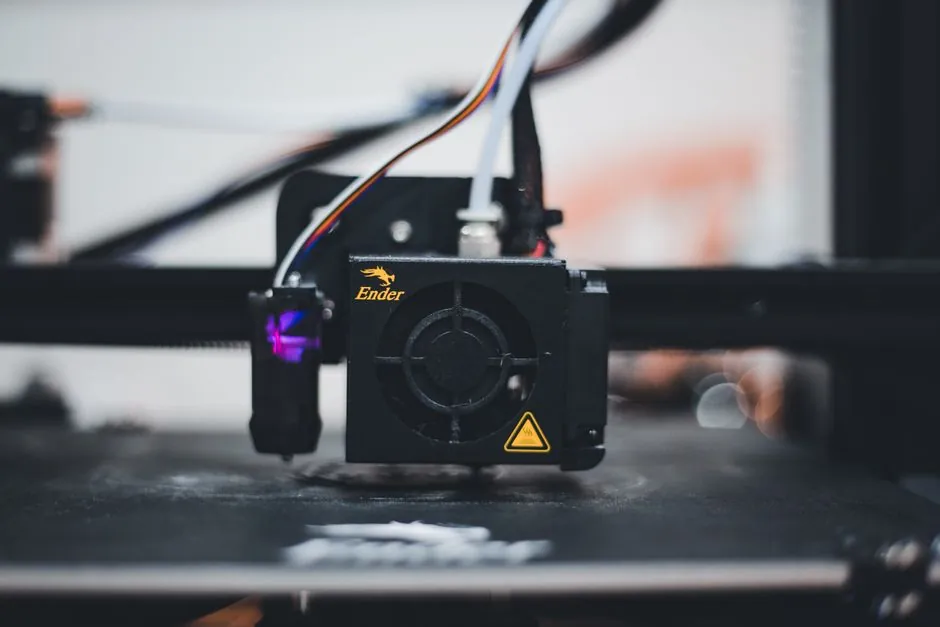
On a small stepper axis, the practical engineering question is not "which coupling is best" but "which failure mode are you designing against": a beam (slit) coupling transmits torque through a single piece of machined metal with helical cuts as the flexure, while a miniature jaw coupling transmits torque through a polyurethane or rubber spider sandwiched between two interlocking jaw hubs [S1][S4]. The two constructions sit on opposite sides of the same trade space defined by backlash, torsional stiffness, damping, and misalignment tolerance [S2][S3].
Beam couplings in the micro/servo range typically cover 0.3 to 22 N·m of rated torque with zero backlash, while miniature jaw couplings of the JM (zero-backlash servo) family span roughly 1.4 to 25 000 N·m, with general-purpose LM series sitting below 5 arc-min of backlash [S2]. For NEMA 8, 11, 14, 17 and 23 stepper frames driving lead screws, pulleys, small gearheads or encoder feedback shafts, both types are routinely offered in 3 to 16 mm bore combinations, which is exactly the band a procurement spec needs to bracket [S1][S4].
How Each Coupling Carries Torque
The Lovejoy miniature beam coupling is machined from a single piece of aluminum rod, so torque flows through the helical flexure with no wear surfaces, no lubrication, and no parts to replace, with angular, parallel, and axial misalignment all handled by the same flexure [S4]. Beam couplings therefore ship as zero-backlash, all-metal, constant-velocity elements with low reactionary load on the bearings, but they have no overload fuse: an excessive torque spike permanently deforms the slits [S4][S6].
A miniature jaw coupling is a three-part assembly: two metal hubs whose curved jaws engage an elastomer spider, normally polyurethane with Shore A hardness around 80 / 92 / 98 selected to tune stiffness and damping [S2]. The spider carries torque through compression, which is why jaw designs deliver measurable damping and shock absorption, and why the spider acts as a sacrificial fuse during a torque spike, but it also introduces the small backlash and torsional give that positioning loops can see as steady-state error [S2][S3]. A related reference, Miniature Flexible Jaw Couplings, 3 to 16 mm Bores: 2026 Spec and Sourcing Reference, covers the matching bore range and spider-grade options on the jaw side of this decision.
Backlash, Stiffness and Resonance on a Stepper Axis
Backlash is the single number that separates "works for positioning" from "works for general motion." Beam, bellows, disc, and pre-loaded JM jaw couplings are all backlash-free; general-purpose LM jaw couplings carry a small angular play, typically under 5 arc-min [S2]. Torsional stiffness, which sets the servo's or closed-loop stepper's resonance frequency, ranks disc and bellows highest, beam in the middle, and jaw and Oldham at the bottom of the all-metal group [S2][S3]. A practical consequence: a beam coupling between a stepper and a ball screw gives the loop the highest bandwidth it can get from a low-cost coupling, while a jaw coupling in the same spot trades bandwidth for damping of the stepper's natural torque ripple.
The torque envelope of a beam coupling in small servo and stepper sizes is the limiting factor here: published Wolfer tables list 0.3 to 22 N·m for the JT slit/beam family, against 1.4 to 25 000 N·m for the JM jaw family in the same catalog, so any stepper application demanding more than about 20 N·m continuous typically falls outside the beam's comfort zone and back into a jaw or disc design [S2].
Misalignment Tolerance in Real Panels
For a typical small stepper, a beam coupling accepts a few degrees of angular misalignment, a small parallel offset on the order of 0.1 mm, and a fraction of a millimetre of axial float, with exact figures set by bore size and helix cut [S4][S6]. The Wolfer JM/LM jaw series in the same miniature envelope accepts angular misalignment up to about 1°, with axial capacity near ±0.4 mm and radial near ±0.15 mm [S2][S3]. In practice, on a NEMA 17 or NEMA 23 face mounted to a thrust block, both can be installed with hand tools, but the jaw is the more forgiving part when the bracket has been stamped, not machined.
For encoder feedback shafts the comparison shifts: a beam coupling on the rear shaft of a stepper preserves the encoder signal because there is no elastomer to creep or age, while a jaw coupling on the same shaft is the spec pattern in many datasheets because the spider absorbs the small start/stop shocks that the encoder loop otherwise amplifies [S2]. The trade-off is covered in detail in Miniature Jaw Couplings for Encoder Feedback Shafts: Spec-Level Selection, which focuses on the spider hardness choice for that specific use case.
Decision Matrix: Jaw vs Beam on Five Criteria
On backlash, the beam and the JM jaw are tied at zero, while the LM jaw adds a small play of typically under 5 arc-min [S2]. On torsional stiffness, the beam sits in the medium band, the JM jaw is low but tunable by spider Shore A, and the LM jaw is similar with slightly more give [S2][S3]. On damping and shock absorption, the jaw is clearly ahead, because the elastomer spider is the only flexible element in the family that converts vibration into heat; the all-metal beam is intentionally low-loss in this regard [S3][S4].
On misalignment tolerance, the jaw is generally more forgiving in the angular and axial axes, with capacities near ±0.4 mm axial and ±0.15 mm radial in the JM/LM table, while the beam is comparable in angle but smaller in radial and axial float for the same bore [S2]. On service and field replacement, the jaw wins because the spider is a stocked wear part that can be swapped in minutes without removing the hubs, whereas a damaged beam is replaced as a complete unit [S3][S4]. On temperature and environment, the beam is all-metal and tolerates higher temperatures; the jaw is limited by the elastomer, with Hytrel grades pushing the upper end of that envelope [S3].
Where Each Coupling Fits a Stepper Application
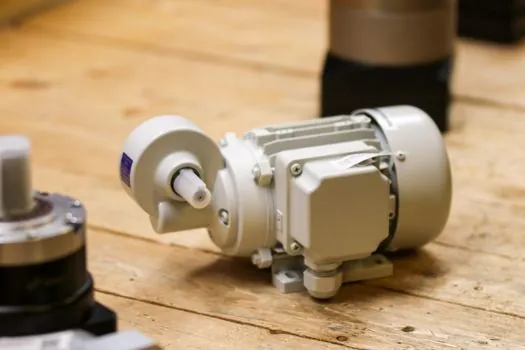
A beam coupling is the right pick for a NEMA 11 or NEMA 17 stepper driving a small ball screw or lead screw on a positioning stage, where the open-loop step resolution (or closed-loop encoder resolution) must not be eaten by backlash and where the load is smooth and well aligned [S1][S5]. It is also the standard pick for an encoder rear shaft on a stepper or micro servo, because zero backlash, no wear parts, and constant-velocity behaviour are exactly what an incremental encoder needs to produce a clean quadrature signal [S4][S6].
A miniature jaw coupling is the right pick for a NEMA 17 or NEMA 23 stepper driving a conveyor roller, small pump, indexing disc, or general automation actuator where start/stop shock is present, alignment is only fair, and the loop does not need sub-arc-minute accuracy [S1][S3][S5]. The spider grade lets the same hub body be retuned for higher torque (polyurethane), better low-temperature damping (rubber), or higher temperature service (Hytrel) without changing the mounting envelope [S3]. For applications that look like a jaw coupling use case but sit just outside the typical engineering scope, for example a 10 GPM at 3000 PSI hydraulic power unit motor mount, the 10 GPM at 3000 PSI: Motor kW Sizing for a Hydraulic Power Unit reference uses the same logic of picking a coupling whose damping matches the drivetrain's shock profile.
Limits, Failure Modes and Sourcing Notes
Three failure modes drive most field returns on miniature couplings, and they differ by type. On a beam coupling, the slits yield permanently under sustained torque overload, so the part is scrap; the failure shows up as a measurable angular softness that wrecks the positioning loop [S4][S6]. On a jaw coupling, the spider is the wear element: it hardens with age, cracks under repetitive shock, and ultimately shears, at which point the three-part "fail-safe" geometry on designs like the Lovejoy Miniature Jaw keeps the axis turning through metal-to-metal jaw contact, at the cost of much higher vibration [S4]. Misalignment beyond the rated value in either type shows up as premature bearing failure on the motor or driven shaft, which is why both datasheets and the wider motor-coupling literature treat alignment as a first-class spec, not a footnote [S3][S5].
Sourcing for the 3 to 16 mm bore band is mature: stepper-focused vendors (StepperOnline, SmoothMotor) catalog both beam and miniature jaw bodies with the same bores and the same clamping or set-screw hub styles, while general industrial suppliers (BDS/Lovejoy, Wolfer) cover the same range with engineering data sheets that list torque, misalignment and inertia [S1][S4][S5]. Procurement note for 2026: confirm hub bore, keyway, clamping style (set-screw vs split-clamp), and the spider Shore A on the jaw side, and confirm helix pattern and material (aluminum 7075 vs stainless) on the beam side, before locking a part number [S1][S4][S6]. The published torque tables to anchor a selection are 0.3 to 22 N·m for miniature beams and 1.4 to 25 000 N·m for the JM jaw family, with backlash at zero for the beam and the JM jaw, and below 5 arc-min for the LM jaw [S2]. Track two signals over the next sourcing cycle: whether suppliers add explicit vibration-damping curves (in N·m/rad and damping ratio) for miniature jaw spiders, and whether beam-coupling datasheets start publishing verified S-N fatigue curves rather than just static torque ratings, both of which would close long-standing gaps in miniature coupling spec sheets.
The underlying component specifications are covered under stepper drive, and stepper motor.