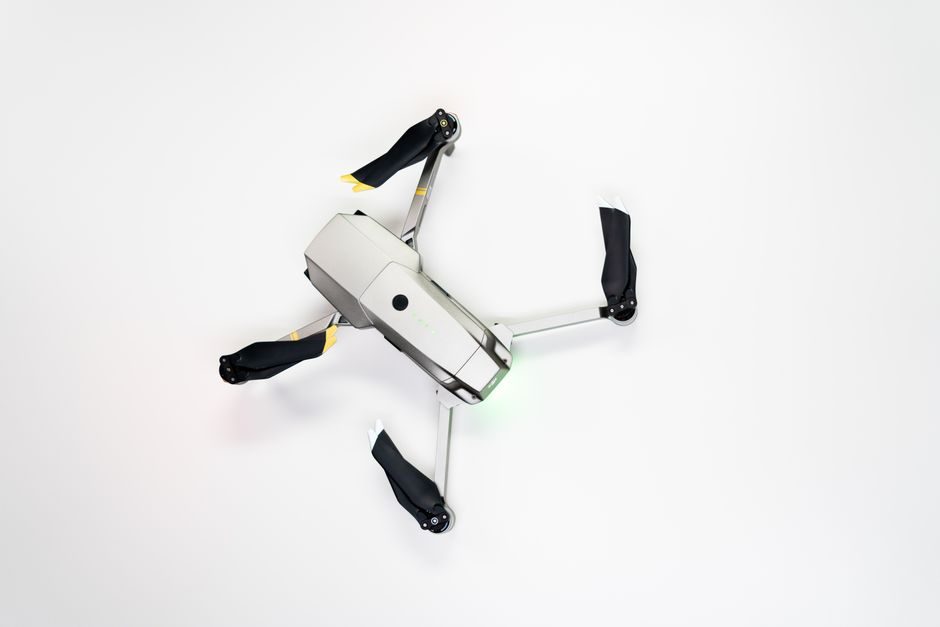
Drone smart manufacturing in 2026 is defined by the convergence of inline machine vision, model-based MES execution and end-of-line flight-test telemetry — a stack that has moved Chinese tier-1 OEMs from 60-70% first-pass yield on flight-controller PCBA to documented runs above 95% on calibrated multi-rotor assembly cells [S1][S3].
Scope of the change spans four production layers: bare-PCB AOI + SPI, SMT pick-and-place with closed-loop feeder verification, multi-rotor airframe jig assembly, and an outdoor or anechoic-chamber flight-test cell that streams IMU/ESC telemetry back to the line-side MES for parameter release [S2][S3]. Buyers specifying a new line in 2026 typically require OPC UA over TSN for the vision network, ISA-95-compliant MES, and a flight-test acceptance gate that holds the unit until attitude-loop step-response data clears a defined tolerance band.
Inline Vision Stack: From AOI to Pose Estimation
6-axis multi-rotor airframes require six to twelve camera stations per cell: top-down PCB AOI for 01005-component solder joint inspection, 3D AOI for BGA/QFN packages on flight-controller and ESC boards, and 2-4 station 3D profilometry over the carbon-fiber arm set for screw-torque witness marks and propeller-balance runout measurement [S2]. Typical AOI defect coverage targets sit at ≥99% for false-call rates below 0.5%, with smart camera modules now integrating 12 MP CMOS, on-board FPGA inference and PoE+ power over a single Cat6A drop.
For airframe metrology, structured-light and laser-line profilometers feed point clouds into a 3D pose-estimation pipeline that compares each rotor-arm clamp against the CAD master, flagging twist above 0.3° and arm-length deviation beyond ±0.5 mm — the geometric inputs that determine hover trim current on the bench [S2][S3]. Machine-vision integrators in the Southeast-Asia corridor now bundle these stations as turnkey cells, with cycle times between 45 s and 90 s per airframe depending on the number of vision stations and the conveyor-stop architecture [S2].
MES, ISA-95 and the Closed-Loop Flight-Test Cell
Modern drone MES is built on an ISA-95 model where Level 2 (line SCADA) feeds Level 3 (MES) work-order state, and Level 4 (ERP) issues the build recipe by serial number [S3]. A 2026 tier-1 cell typically records ≥120 data points per unit: torque values from smart tools, AOI pass/fail, ICT coverage, ESC firmware hash, motor KV verification, and a final flight-test record containing IMU gyro bias, accelerometer scale-factor linearity and attitude-loop step-response overshoot [S3][S4].
Flight-test acceptance now runs as a deterministic gate inside the MES rather than a separate QA bench: the unit rolls into a vibration-isolated test cell, runs a 90-second scripted throttle ramp, and the recorded telemetry is compared to a per-SKU golden profile with hard limits on gyro bias drift (commonly ±0.5 °/s), accelerometer bias (±5 mg) and step-response overshoot (under 10% with settling under 400 ms) — units outside the band route to a rework station automatically [S3]. Rockwell-class simulation tools complement this by stress-testing the line's throughput model and contingency routings before any physical build [S4].
Drone-Specific Assembly: Airframe Jig, ESC Calibration, Propeller Balance
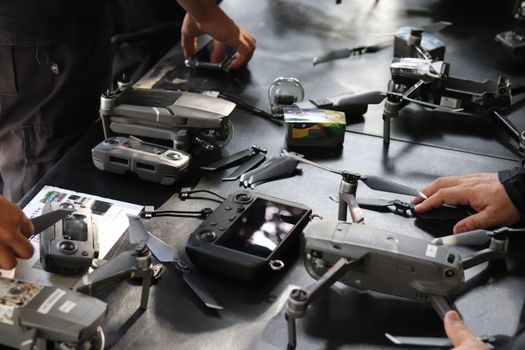
Airframe jig assembly relies on carbon-fiber layup fixtures with 6-8 pneumatic clamp points and torque-controlled smart tools that write each clamp value to the unit's digital twin; values outside ±0.05 N·m of spec abort the station and prevent downstream assembly, a pattern identical in principle to the cobot-mobot lines now used in adjacent electronics sectors like LED smart manufacturing. ESC calibration is moving from manual throttle-range scripting to MES-recipe-driven PWM-mapping, where the bench cycles each ESC through 16-32 throttle points and logs Kv, response time and current draw at hover, cruise and full-throttle setpoints [S3].
Propeller balance is the line's most sensitive metrology step: dynamic balancing to G2.5 at 6,000-8,000 rpm requires ±5 mg·mm residual unbalance to keep motor bearing life inside design envelope, and modern cells integrate the balancer as a vision-guided stop rather than a stand-alone offline station [S2]. Wireless data-radio modules for command-and-control links — historically discrete sub-assemblies using 300-1,200 bps FSK links and now N×64K to N×E1 digital software-defined links — are flashed and bound to the airframe serial on the same MES-recipe island, so the radio's frequency-hopping table is keyed to the unit at station, not at the bench [S6].
Radio Links, Flight-Controller Bring-Up and the Software-Defined Edge
Flight-controller bring-up is increasingly software-defined: the STM32H7-class MCU on the autopilot is flashed, IMU-calibrated and PID-tuned through a single test port that streams to the MES, replacing the legacy combination of jig programmer + separate CAN-tool [S3]. Telemetry radios and remote-control links now use 2.4 GHz / 5.8 GHz OFDM or frequency-hopping modules with on-board DSP; the radio brings up against the airframe's serial-numbered ground station, the test port records the link's RSSI, latency and packet-loss baseline, and the unit is released only when those baselines fall inside the SKU's acceptance window [S6].
For plants that also produce the supporting automation hardware — programmable logic controllers, servo drives, machine-vision stations and the radio link itself — the same MES coordinates the entire vertical stack, and engineering-change orders flow down as a single recipe delta rather than per-station rework [S3][S4]. The end result, as documented across Chinese tier-1 integrators, is a line that produces a fully flight-verified multi-rotor every 6-10 minutes with first-pass yield on the calibrated unit above 95% [S1][S3].
Selection Criteria: What a 2026 Drone Line Must Specify
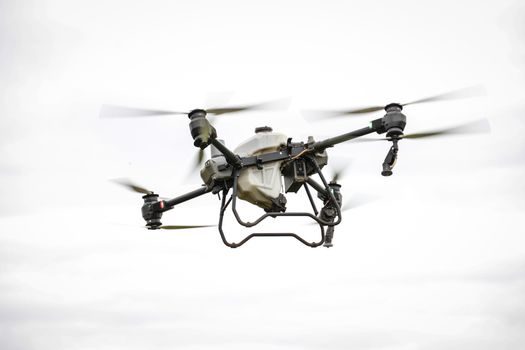
Vendors that cannot quote a deterministic flight-test acceptance band, or that treat vision as a stand-alone inspection island rather than an MES-integrated feedback loop, do not meet a 2026 tier-1 spec, regardless of the underlying pick-and-place throughput they can offer. The same vertical-integration principle that drives ball screw sourcing decisions on machine-tool cells is now driving flight-controller and ESC sourcing on drone cells — single-supply, recipe-driven and audit-traceable back to the MES [S3].
Limits, Failure Modes and the Honest Caveats
Three failure modes dominate post-install: (a) lighting drift on the airframe vision station when shop-floor LED arrays age and change CCT, which inflates false-call rates on carbon-fiber specular highlights; (b) RF interference inside the flight-test cell from the SMT reflow ovens' 13.56 MHz and 27 MHz spurs, which can corrupt the ground-station link during the acceptance ramp; (c) MES recipe-version drift when a firmware hash changes on the ESC mid-build and the golden profile has not been re-baselined, producing false-rejects at the gate [S2][S3][S6].
The 95% first-pass-yield figures published by Chinese tier-1 OEMs [S1] are at the line level, not the flight-test gate in isolation — a single rework loop at the gate typically costs 8-15 minutes of cycle time and re-routes the unit through a partial re-test, so the gate itself must be tuned carefully to balance escape-rate against throughput loss [S3]. Plants running mixed-SKU lines (e.g. agricultural multi-rotor alongside fixed-wing survey) also face golden-profile proliferation, and should budget for a profile-management database from day one rather than retrofitting it after the second SKU is in production [S3][S4].
Vendors, Standards and the 2026 Sourcing Map
On the equipment side, Rockwell-class automation platforms dominate the MES/simulation layer, Polaris-Automation-class MES suites serve mid-tier drone OEMs, and regional system integrators in Indonesia, Malaysia and Vietnam now deliver turnkey vision + MES cells for sub-tier-2 manufacturers [S2][S3][S4]. Chinese service companies such as EBIT in Chengdu are positioning as full-stack low-altitude-drone service centers covering sales, leasing, maintenance, business outsourcing, spare parts, consulting and pilot training — a service layer that increasingly feeds field-failure data back into the MES golden-profile maintenance loop [S7].
Underlying academic programs at universities such as Shenyang Aerospace University's School of Automation have, since 2008, anchored research in automatic control, pattern recognition, measurement-and-control instrumentation and UAV systems, supplying the engineering pipeline that sustains these lines [S5]. Standards to anchor in a 2026 RFQ: ISA-95 for MES integration, OPC UA over TSN for the Level 2/3 bus, IEC 61508 SIL-2 or higher on any safety-rated flight-test cell, and the relevant national radio-type-approval regime for the command-and-control link in the destination market [S3][S4][S6].
The next trackable signal is the publication of vendor-side benchmark data on OEE and first-pass-yield by mid-2026, particularly from Chinese tier-1 OEMs releasing their 2025 line performance into the public domain [S1]. A second signal is the standardisation of OPC UA companion specifications for UAV assembly, which would allow MES vendors, vision integrators and flight-test bench suppliers to ship interoperable cells without custom adapter development [S3][S4].
For component-level specifications, see additive manufacturing material, and smart meter.