
Single girder cranes in the 2-20 t band cover the bulk of sawmill, log yard, and wood processing duty, with typical spans of 10-26 m and working classes A3-A5 per FEM/ISO classification [S5].
Forestry sites usually have intermittent cycles, abrasive dust, and outdoor exposure, which makes a lightweight single-beam bridge or gantry the economical default before stepping up to a double girder build [S1][S3].
Why Single Girder Fits Most Forestry Loads
Single girder overhead and gantry cranes are widely used where the required capacity, span, and duty cycle do not demand a double girder system, and forestry wood processing fits that envelope: green log weights, lumber packs, and chip bins rarely push past 15-20 t per lift [S1][S2]. Amsak Cranes quotes single girder EOT builds from 1 to 20 t, while double girder EOT builds run up to 300 t, a 15:1 capacity split that mirrors the duty split between wood lines and steel or mill service cranes [S6]. The single-beam configuration gives lower wheel load on existing runway steel, simpler runway foundations in portable yards, and faster commissioning when a mill retools a line [S5].
For forestry buyers, the practical ceiling is set by three numbers: log/bundle weight, span between runway columns, and the FEM/ISO duty class the operation will actually run. Most softwood and hardwood mills sit in A3 (light) to A5 (medium), which is the working class A3-A5 envelope a standard single girder gantry is designed for [S5].
Overhead vs Gantry: Picking the Right Format for the Yard
Overhead single girder cranes need an existing building with runway beams and adequate headroom, and they keep the floor clear for forklifts and log decks [S1]. A single girder gantry crane runs on ground rails or rubber tires and suits outdoor log yards, portable sawmill sites, and small mills that lack permanent steelwork, with compact structure, lighter weight, and low wind resistance cited as key advantages for light lumber or infrequent log lifts [S3]. A rubber-tyred gantry (RTG) configuration adds relocatability between log piles, while a rail-mounted gantry suits fixed sorting bays [S5].
A single girder gantry covers 2-32 t at spans of 10-26 m and lifting heights up to 20 m, which is the band where most green-chain, transfer-deck, and lumber-stack operations live [S5]. When the bay already has runway beams and the mill wants to free floor space, the overhead EOT format is the better fit; when the site is outdoor, semi-permanent, or remote from main building steel, the gantry format avoids the runway capital cost [S1][S3].
Spec Boundaries: Capacity, Span, Headroom, Duty
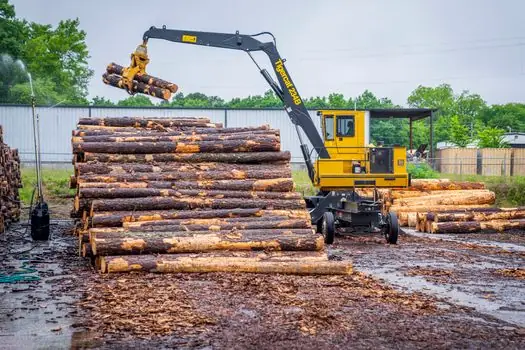
Capacity drives the rest. Single girder EOT cranes are preferred for lifting capacities up to 15-20 t due to their lightweight construction, economical design, and reduced dead weight, per manufacturer guidance published in 2026 [S2]. Above 20 t the build starts to compete with a light double girder, so the cutover is a real procurement decision, not just a price preference [S2][S6].
Span and headroom are the next constraints. The single girder gantry envelope of 10-26 m span and up to 20 m lift height matches most sawmill log decks and chipper-feed bays [S5]. Where the column-to-column span exceeds 26 m or the lift must clear stacked lumber and bins above 20 m, double girder is the honest answer because the single beam section modulus runs out before deflection limits. The general selection rule: single girder until span, capacity, or hook height forces a stiffer box section, then move to double girder [S1][S5].
Duty class and hoist type round out the spec. A3-A5 single girder gantries are paired with wire rope or electric chain hoists sized to the load chart [S5]. For dusty, outdoor forestry sites, an IP55 hoist enclosure, sealed bearings, and a corrosion-resistant paint system (often C3 or C4 per ISO 12944) are the minimum to keep the crane inside its maintenance interval, and these are typically quoted as options rather than standard inclusions.
Comparison: Single Girder Overhead, Single Girder Gantry, Double Girder Gantry
For a side-by-side spec view, the three formats line up against capacity, span, mobility, and best-fit forestry application as follows, drawing on manufacturer data published in mid-2026: [S1]
Single girder overhead EOT: 1-20 t capacity, span set by existing runway, no ground mobility, best fit for indoor mills with runway beams already in place [S1][S6].
Single girder gantry: 2-32 t capacity, 10-26 m span, up to 20 m lift height, A3-A5 duty, rail- or rubber-mounted for outdoor yards and portable lines [S3][S5].
Double girder gantry: up to 80 t or more, larger span and lift, accepts grabs, magnets, and lifting beams, but adds cost and foundation mass that forestry operations rarely need [S5].
For green-chain, lumber sort, and chip-handling duty the single girder gantry is the workhorse, and the overhead EOT is the right answer only when the building already has the steel. Detailed selection formulas and decision charts for these formats are covered in our single girder crane selection for mining auxiliary lifting reference, which mirrors the same A3-A5 envelope used in sawmill duty.
Selection Criteria: What to Lock Down Before Ordering
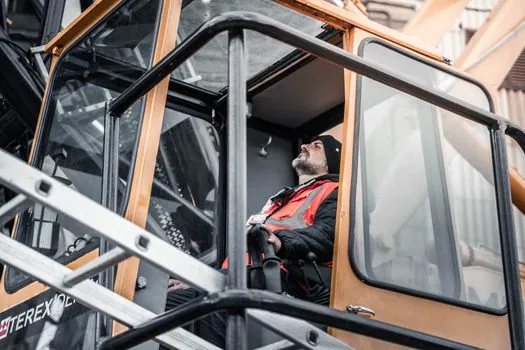
Safe working load is the first number, and it should be set above the heaviest realistic bundle, not the average log, to absorb wet-season weight gain and species mix changes. Span is set by the runway column spacing or the gantry leg track, and it must be checked against the wheel load and foundation bearing pressure, especially for outdoor RTG units on compacted gravel [S5]. Lifting height has to clear the tallest log pile or the highest bin lip with at least 1 m of hook clearance for safe sling work.
Duty cycle drives the FEM/ISO class. A mill running two shifts on green chain is typically A4-A5, while a seasonal portable yard running a few hours a day is A3, and underspecifying duty is the most common way to burn out a hoist prematurely [S5]. Hoist type (wire rope vs electric chain) is set by capacity and headroom; wire rope handles heavier logs and gives higher hook travel, chain hoists suit lighter lumber packs where headroom is tight. Power supply, control method (pendant vs radio), and travel speed round out the spec sheet, and they are all cheaper to set correctly at quote stage than to retrofit after install [S1].
Limitations and Failure Modes in Forestry Duty
Single girder cranes have real boundaries in forestry service, and ignoring them is how projects run over budget. The first is moisture and sap: outdoor gantries see constant humidity cycles that attack unpainted steel and unsealed hoist brakes, so a C3 or C4 paint system and IP55 hoist enclosures are the minimum, not an upgrade [S3][S5]. The second is abrasive dust: sawdust and wood chips infiltrate open gearing and trolley rails, which means enclosed gearboxes and regular rail sweeping should be written into the maintenance plan, not left to the operator.
The third limit is hook height: a single girder hoist sits under the beam, which costs headroom compared with a double girder where the hoist rides on top of the beams. Mills with high log piles or tall sorting bins can find the single girder hook cannot reach the top of the stack, and this is where the 20 m lift height figure becomes a real ceiling rather than a marketing number [S5]. The fourth limit is duty: a single girder gantry rated A5 is not a 24/7 crane, and pushing it into continuous chip-bin duty will burn through the FEM/ISO service-life calculation well before the design interval [S5].
The fifth limit is deflection and span: past 26 m of span a single beam section starts to deflect more than the L/500 to L/750 range typically expected for crane runways, and at that point a double girder box section is the structurally honest answer, not a heavier single beam [S5]. Buyers who try to stretch a single girder across a wide log yard to save on legs usually pay for it in vibration, trolley skew, and cracked welded joints.
Standards, Sourcing, and What to Ask the Supplier
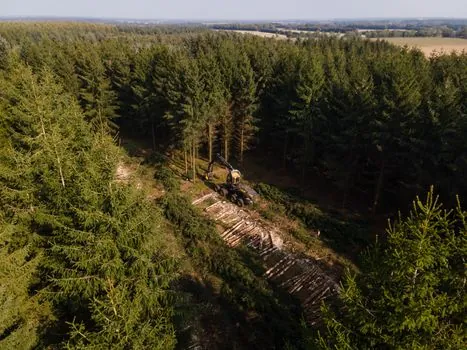
Single girder crane specs in 2026 are typically quoted against FEM/ISO duty classification (A1-A8 with A3-A5 covering most forestry duty) and the supplier's own design code, while structural steelwork follows ISO 12944 for corrosion protection and the relevant regional welding standard [S5]. Buyers should request the FEM/ISO duty class in writing, the hoist enclosure IP rating, the paint system ISO 12944 corrosivity category, and the wheel load for foundation design, because these four numbers drive both compliance and long-term cost of ownership.
Single girder gantry price ranges published in mid-2026 sit in the order of USD 16,500-26,500 for small-format builds, with cost rising on span, capacity, and duty class [S5]. Portable and yard-scale units can come in below that band, while indoor EOT single girder builds are quoted per bay after a site survey [S1]. A typical procurement shortlist for a new sawmill line runs three suppliers, asks each for the same load chart, span, headroom, and duty class, and checks the FEM/ISO class on the nameplate against the operating hours the mill actually runs, a step that catches most of the chronic over- or under-spec problems before the crane is built.
For a deeper dive on selection boundaries in adjacent outdoor industries, our single girder crane selection for landfill operations reference applies the same spec-first logic to corrosive, dusty duty. Where a mill is adding an indoor line under existing runway steel, the single girder crane specs for tunneling guide covers headroom and capacity trade-offs that translate directly to a sawmill overhead EOT. For the underlying single girder crane format definition, duty class definitions, and trolley/hoist layout options, the encyclopedia entry is the place to start.
Trackable signals for the next planning cycle: published 2027 FEM/ISO duty classification updates for outdoor gantry service, and any sawmill OEM shift from single girder gantry to hybrid single girder overhead EOT as new mills build with embedded runway steel.
For the relevant spec sheets and selection criteria, see crane scale, and crawler crane.