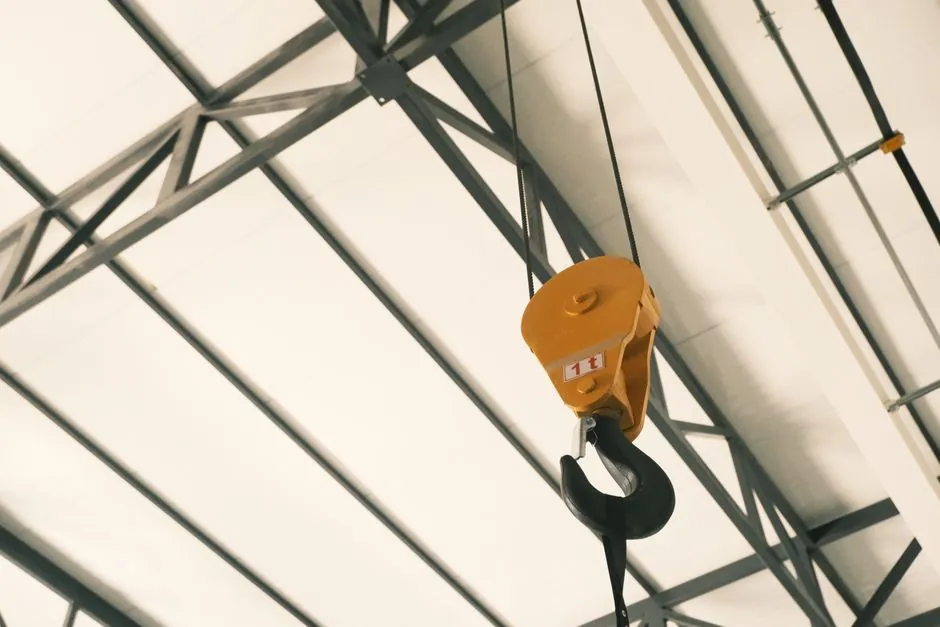
A single girder crane with a rated capacity of 5–10 t and a span of 10–20 m is the most commonly specified package for municipal and industrial snow-removal depots, provided the structure and electrical package are cold-climate rated [S1][S2].
Snow handling imposes three unusual loads on a lifting device: dense wet snow at roughly 200–500 kg/m³, frozen chunks that can shock-load the hoist, and long idle periods followed by short high-intensity runs after a storm [S2].
Defining the duty envelope for snow-removal work
Snow-removal yards are outdoor, low-altitude sites with ambient temperatures that drop to roughly −20 °C in cold regions and to −40 °C or colder in Russia, Canada, and northern China, where winter is long and the ground stays frozen for months [S2].
Typical handling tasks are stockpile loading, salt/sand bin refilling, and lifting plow trucks and snow blowers for blade changes; the dominant lift is below 10 t, but vehicle extraction after a storm can spike demand [S1].
For orientation, a single girder overhead crane is a low-headroom top-running or under-running bridge with one main load-carrying beam, a hoist trolley, and an end-carriage at each side, which is the architecture this article assumes throughout.
Capacity, span, and hoist selection criteria
Selection for snow removal starts with three numbers: the heaviest single load (vehicle, plow truck, or bulk bin), the building span or yard width, and the lifting height needed to clear dump bodies and service racks [S2].
The widely-used breakpoint is 10 t: below it, an electric wire-rope hoist on a single girder is the most cost-effective solution; above 10 t, most engineering teams move to a double-girder bridge or a gantry crane on rails so the higher-capacity hoist can be serviced without removing the beam [S1].
Hoist type matters: a standard CD1/MD1 wire-rope hoist rated for −20 °C is fine for most municipal yards, but at −30 °C and below the gearbox lubricant, brake linings, and motor insulation should be the cold-climate variant, and a thermal cutout set about 10 °C tighter than the standard unit is common practice [S2].
Power supply deserves attention too: a 380 V / 50 Hz three-phase supply is standard, but at remote depots a 460 V / 60 Hz supply, a diesel genset, or a 24 V DC battery hoist may be the only options, and the control panel must be matched to that supply before the rest of the spec is frozen [S2].
Cold-climate package: materials, lubrication, and electrical
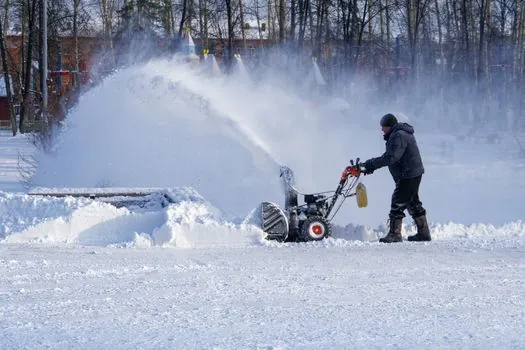
Three cold-climate items are non-optional for outdoor snow-removal duty: low-temperature steel with documented −40 °C Charpy impact values for the main girder and end carriages, heated control cabinets with IP55 or higher ingress protection, and cold-grade grease in the gearbox and wheel bearings [S1][S2].
Cable reels and pendant pendants are a common winter failure point, so a festoon system with arctic-grade PVC or rubber cable (typically rated to −30 °C or −40 °C) and a self-retracting reel are standard inclusions, not options [S1].
Outdoor cranes should also carry rail clamps, anemometers with alarms around 20 m/s, and storm-warning protocols, because a single girder left free on its rails in a 25+ m/s gust is a documented incident pattern in cold regions [S1].
Painting and corrosion control follow the same logic: a zinc-rich primer plus epoxy topcoat to a total DFT of about 120–160 µm, with particular attention to weld seams where melt-salt brine collects after a truck returns from the road [S1].
Who should and who should not pick a single girder
A single girder crane is a strong fit for indoor or sheltered yards with spans up to roughly 20 m, lifts up to 10 t, and moderate duty, and for cost-sensitive municipalities running two-shift winter operations [S1].
It is a poor fit where the duty cycle exceeds FEM 2m / M4, where the span exceeds 25 m and trolley deflection becomes a control problem, where the lift exceeds 20 t, or where the crane must travel between separate unheated buildings with long outdoor rails [S2].
For a similar spec exercise in a different outdoor service environment, the single girder crane selection for landfill operations case applies the same low-headroom logic to waste-transfer stations, while pipeline construction sizing is the right reference when hazardous-area certification, not cold, is the primary constraint.
Comparison: single girder vs double girder vs gantry for snow duty

The three options line up against the four decision points that drive snow-yard procurement: cost, capacity ceiling, low-headroom behaviour, and outdoor serviceability [S1][S2].
On capacity, single girder cranes top out around 20 t in commercial configurations, double girders run to 50 t and beyond, and mobile or rubber-tyred gantry cranes cover 100 t and up at the cost of larger yard footprints [S1][S2].
On headroom, the under-running single girder is the lowest of the three because the hoist sits between the beams rather than under them, which is the decisive advantage in older depots with limited hook lift.
On outdoor serviceability, a rail-mounted gantry crane without a building envelope is the easiest to maintain because there is no runway structure to heat or weatherproof, but it pays for that advantage in higher wheel loads and longer rail foundations.
Failure modes, sourcing, and standards
Reported winter failure modes cluster in three areas: hoist brake sticking below −20 °C from condensed moisture, pendant cable jackets cracking at the flex point, and rail-clamp cylinders leaking because the seal material was not specified for cold service [S1].
Standards that usually govern this equipment include FEM 1.001 for duty classification, ISO 4301 for classification by utilisation, EN 15011 for mechanical requirements of overhead cranes, and IEC 60079 for any component that ends up in a classified hazardous area such as a fuel depot [S2].
For procurement, the minimum information the supplier needs to quote accurately is the rated load in tons, the span in meters, the lifting height, the indoor or outdoor classification, the temperature range, the supply voltage and frequency, and the expected working level from A1 to A8, with the working level, structure type, and configuration level all directly moving the final price [S2].
Two trackable signals to watch: more cold-climate retrofit kits bundling heaters, arctic cable, and low-temp grease as a single factory option rather than a field add-on, and more municipal tenders bundling the crane, runway, and storm-warning rail clamps into one contract, both of which the spring 2026 supplier messaging is starting to surface [S1][S2].