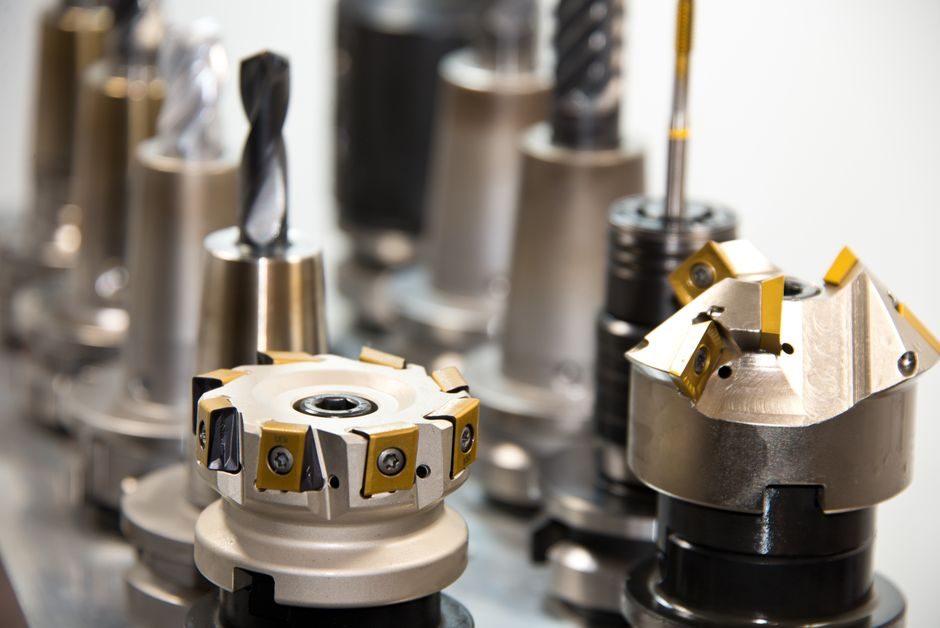
A mold base is a catalog steel frame assembly — A-plate, B-plate, support pillars, guide bushings, return pins and ejector plate — supplied to a toolmaker as a near-finished subassembly; a die casting die is the one-off engineered tool that bolts to, and is built around, that frame, with shaped cavity inserts, water-cooled cores, slides, ejector pins and shot-sleeve interface sized for a specific part geometry and a specific cold-chamber or hot-chamber machine [S3][S4].
Specifying both wrongly inflates lead time and cost: a precisioner diecasting mold quote for an ADC12 protective cover (48.3 × 116.1 × 30.7 mm, petroleum service) is built on a custom die casting mold base sized to the part envelope and shot weight, not on a generic stamping die set [S2]. For buyers comparing stamping die set, standard mold base and customized die casting mould base offerings from suppliers such as Taikin and Ningbo Fuxin, the decision starts with shot weight, alloy and required cavitation — not with the frame [S1][S4].
What a mold base actually is — and what it is not
A mold base is a pre-machined steel frame: A-plate (cavity retainer), B-plate (core retainer), support pillars (set of four), guide bushings (typically four, self-lubricating), support pillars' bushings, heel blocks, return pins, sprue bushing seat and ejector plate assembly — all dimensioned to a catalog standard such as DME, Hasco or LKM and sold to the toolmaker for assembly [S3][S4]. Catalog offerings include "Standard Moldbase", "Stamping Die set" and "Customized moldbase / die set" per Taikin's product lines, with sizes stepped by plate width and length (e.g. 250 × 250, 300 × 300, 350 × 350, 400 × 400 mm) [S1].
A mold base is not a complete production tool. It carries no cavity geometry, no cooling channels, no slide or lifter action and no ejector pins sized to a specific part — those are machined into the die or mold by the toolmaker. Chinese-machined mould bases from suppliers such as Ningbo Fuxin are typically quoted on a per-customer-2D/3D basis, with 25–30 day lead time and material specified to the buyer's requirement, including zamak and aluminum die casting mould base variants [S4]. For a process engineer, the right mental model is "buy the frame, build the tool."
What a die casting die actually is — and where the frame ends
A die casting die is a complete, one-off production tool engineered for a specific cast part, alloy and machine. It includes the cavity block (typically H11 or H13 tool steel, pre-hardened 38–42 HRC or hardened to 46–48 HRC for high-volume aluminum runs), water-cooled core inserts, slides, overflow wells, vacuum valves (where used), ejector pins, die-side shot sleeve interface and tie-bar clearance matched to the locking tonnage of a specific cold-chamber or hot-chamber machine [S3][S5].
High pressure die casting (HPDC) is split into two process families: hot-chamber machines for low-melt alloys (zinc, magnesium, lead) and cold-chamber machines for higher-melt alloys (aluminum ADC12/A380, brass) [S3]. The mold base underneath the die is sized to handle the full clamp tonnage (often 800–2,500 kN) without deflection, and is selected from the catalog once the tool footprint is fixed [S1][S4][S5].
Mold base vs die casting die — six decision criteria lined up

Side-by-side, the two items are different artifacts, and a buying decision on either has to answer different questions. The table below lines them up against the criteria a process engineer actually uses. [S1]
Catalog vs custom: mold base is a catalog part in standardized footprints; die casting die is a one-off engineered tool, typically sole-source to a toolmaker [S1][S3][S5]. Steel grade: mold base frames are commonly S50C / S55C (pre-hardened ~175–220 HB) or 1.1730 / 1.1731 carbon steel; die casting die cavity blocks are H11 / H13 (1.2343 / 1.2344) hot-work tool steel [S3][S4]. Lead time: standard mold base 5–15 days ex-stock Asia, custom mold base 25–30 days, die casting die 60–120 days for a new part depending on slide count and trials [S1][S4]. Cost: standard mold base in the few-hundred to low-thousand USD band; custom die casting mould base higher depending on footprint; a complete HPDC die for an aluminum part commonly runs into five-figure USD and up, dominated by CNC sinking, EDM and trial time [S1][S4][S5]. Lifespan: mold base frame is reusable across many part programs (often >500,000 cycles if the frame is sound); die casting die cavity life is alloy-dependent — aluminum HPDC dies commonly 100,000–250,000 shots before refurbishment, zinc dies substantially longer. Repair scope: mold base repair is plate-flattening and bushing replacement; die repair covers cavity welding, re-sinking EDM, slide re-fit and cooling-line descaling [S3][S5].
Who the mold base is for — and who it is not for
The mold base is for toolmakers and OEM in-house tooling shops that need a dimensionally controlled, pre-machined frame to build a complete mold or die on. It is also for short-run stamping jobs where a standard die set is bolted under a simple punch plate. The reference to a "Stamping Die set" alongside "Standard Moldbase" in Taikin's catalog makes this overlap explicit [S1]. A die casting mould base from Ningbo Fuxin is the same idea, sized to handle aluminum or zamak die casting clamp loads and pre-cut with utility holes for ejector and cooling plumbing [S4].
The mold base is not for an end-customer who wants a working production tool delivered: a bare frame cannot cast a part, cannot stamp a panel and cannot be handed to a production line. A process engineer buying a "mold base" without follow-on cavity, slide and cooling work is buying a steel box. For a deeper look at the cost levers on a related but different process, see the sand casting mold price & cost guide 2026, which breaks down alloy, tolerance and MOQ bands on sand tooling.
Who the die casting die is for — and the alloy envelope it covers
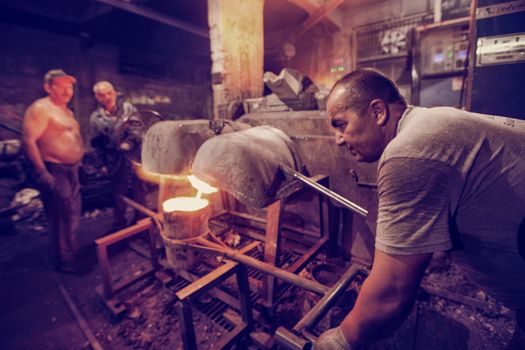
The die casting die is for any production program running aluminum ADC12 / A380 / A383, zinc Zamak 3 / 5 / 7, or magnesium AZ91D in HPDC, or for low-pressure and gravity permanent-mold jobs where a hardened die with cooled cores is still required [S3][S5]. The Precisioner example — ADC12 protective cover, 48.3 × 116.1 × 30.7 mm — is a typical small-footprint aluminum HPDC part, oil-and-gas service, with a castings structure complicated enough to need slides [S2].
The die casting die is not for short prototype runs (3D-printed sand molds or low-pressure steel-faced tooling are usually cheaper at <500 pieces), not for parts requiring >0.8 mm wall thickness where porosity is unacceptable (HPDC's gas porosity is a known limit), and not for high-temperature alloys (cast iron, copper-based alloys) which exceed the thermal fatigue life envelope of H11/H13 die blocks. Process engineers choosing between a die and a permanent mold also weigh the sand casting mold vs mold base trade-off for low-volume iron and steel castings, where the mold base concept is replaced by a flask and pattern system.
Real use cases and the sourcing path
For an automotive aluminum HPDC transmission housing or a 3C electronics zinc die cast housing, the path is: (1) lock the part geometry and draft; (2) select a standard mold base or specify a custom die casting mould base footprint from a frame supplier (Taikin, Ningbo Fuxin, DME, Hasco) [S1][S4]; (3) the toolmaker sinks the cavity, EDM's the slides, machines the cooling lines and fits ejector pins; (4) the die is bolted to a specific cold-chamber or hot-chamber machine and trialed. Hhwmold and similar suppliers package this as "Die casting mold / Cutting mold / Mold trial and small batch production / Mold Maintenance / Mold Repair / Mold Refurbishment / Mold Optimization" — i.e. the full lifecycle, not just the frame [S5].
For a stamping job on a thin steel panel, the same "mold base" frame is used, but the cavity block is replaced by a punch-and-die set, and the ejector plate is repurposed as a stripper. The catalog overlap with stamping die sets is exactly why Taikin's menu lists both side by side [S1]. For a buyer of complete die casting tools, see the CNC machine supply chain 2026 page for the capacity and pricing map that drives die-build lead time, and the tool and die steel buying guide 2026 for the H11/H13/D2 grade decisions inside the cavity block.
Limitations, failure modes and the standards that govern the work
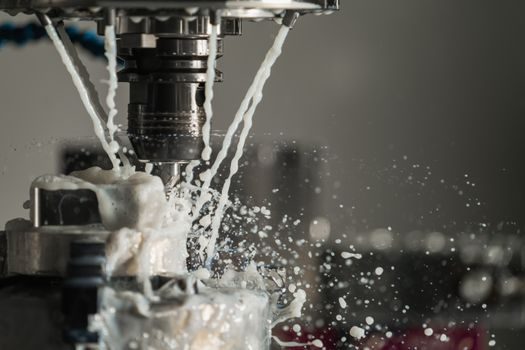
Mold base frames fail by plate deflection (insufficient thickness for clamp tonnage), guide-bushing wear (>0.02 mm clearance growth is a rebuild trigger) and surface flatness loss from improper storage. Die casting dies fail by thermal fatigue (heat-checking on the cavity surface after typically 50,000–100,000 aluminum shots in hot-spot zones), soldering (alloy sticking to the cavity, often in deep ribs), ejector-pin galling and slide-score from lubrication breakdown. Aluminum HPDC dies are routinely pulled for refurbishment at 100,000–250,000 shots, and the cavity block can be re-sunk 2–3 times before the frame itself is retired [S3][S5].
Standards that govern the work include ISO 8065 (die casting die terminology and acceptance), NADCA #201 (die materials and heat treatment, dominant in North America), the relevant die steel designations under ISO 4957 for 1.2343 (H11) and 1.2344 (H13), and the machine-side lockup geometry set by the cold-chamber / hot-chamber OEM. For buyers evaluating supplier capability, NADCA membership and ISO 9001 tooling-shop certification are the baseline filters. Hhwmold and similar Chinese suppliers position their offering around the full die-build + maintenance chain, with refurbishment and optimization as recurring revenue after the die ships [S5].
Selection shortcut — what to specify first
Start with the cast part: alloy (aluminum ADC12 vs zinc Zamak 3 sets the machine family and shot-sleeve size), projected area in cm² (sets clamp tonnage and frame size), wall thickness uniformity (drives cooling layout and slide count), and annual volume (sets the die-block hardness target and the refurbishment budget). With those four numbers fixed, a standard mold base catalog selection (or a custom die casting mould base RFQ) becomes a 25–30 day lead-time item, and the die-build scope is what dominates the schedule at 60–120 days [S1][S4][S5].
Trackable signals to watch in the second half of 2026: (1) NADCA and ISO 4957 revisions on H11/H13 hardness targets for aluminum HPDC cavity blocks, which have been drifting upward for high-volume runs; (2) Chinese die casting mould base suppliers pushing shorter lead times (currently 25–30 days per Ningbo Fuxin) as the standard mold base catalog offering broadens [S4]; (3) growth in vacuum-assisted HPDC dies for structural automotive parts, which adds a vacuum valve circuit to the die and a tighter interface to the mold base cooling plumbing [S3][S5].