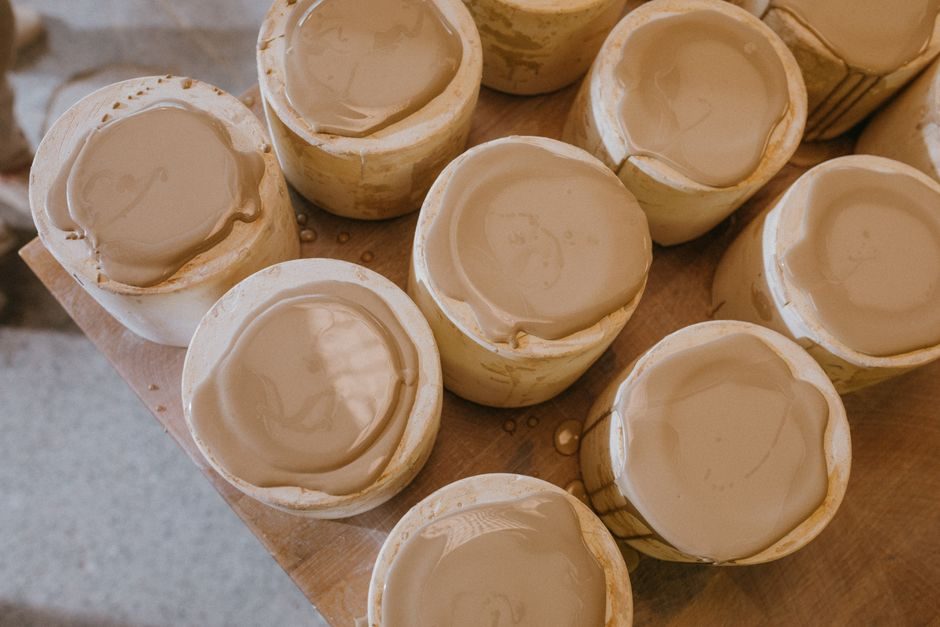
A sand casting mold is a one-off, expendable tool — bonded silica, chromite, zircon, or resin-sand aggregate formed around a pattern — that defines the geometry of a single cast part, with typical mold life measured in tens to a few hundred pours before the mold is broken away. A mold base is a standardized, reusable steel frame (A-plate, B-plate, support plate, cavity plate, guide pillars, bushings, ejector housing) that mounts the cavity-and-core inserts of an injection or die-casting tool and is usually re-used for 10,000–1,000,000+ shots [S1][S4]. Mixing the two up on a BOM is one of the most common line-item errors in foundry and plastics sourcing, and the cost bands are not even on the same order of magnitude.
The two items live in different supply ecosystems: casting mold work is dominated by foundries and pattern shops producing custom sand, investment, or die tools, while mold base units are catalog SKUs in 1.0–2.5 m standard lengths from names such as Meusburger, HASCO, DME, Misumi, Polimold, and Chinese specialists like Mudebao/Moldburger [S1][S4]. For a 2026-spec process engineer, the real question is which one belongs on the RFQ for a given part, and what the verifiable selection levers and cost bands are.
Definition and Scope: Two Tooling Categories, Two Life Cycles
A sand casting mold is, by definition, single-pour tooling: the green-sand, resin-shell, or no-bake sand body is destroyed during shake-out after the metal solidifies [S2][S6]. A mold base is, by definition, a permanent tooling sub-assembly: the frame survives every cycle and only the cavity / core inserts are changed when a new part is launched [S4]. The distinction matters because lifecycle cost, lead time, and storage footprint follow the tool, not the part. For a working overview of the casting-side process envelope, see the sand casting mold buying guide for 2026.
Sand mold body materials are specified by alloy and pouring temperature: silica sand for gray iron and most non-ferrous work below ~1450 °C, chromite or olivine for manganese steel and high-temperature pouring, and zircon where low thermal expansion and low reactivity with nickel-bearing alloys are required [S2]. A standard mold base, by contrast, is almost always P20 (1.2311, 2738) or S50C / S55C carbon steel, with H13, 1.2343, or 1.2344 reserved for hot-runner or die-casting bases; the supplier catalog (Meusburger, HASCO, Misumi) lists sizes in 1–2.5 m lengths, 250–800 mm widths, and 200–600 mm stack heights with bolted or pre-hardened construction [S1][S4].
Selection Criteria: Pattern vs Frame, Geometry vs Life
Selecting a sand casting mold comes down to pattern type (match-plate, cope-and-drag, boxless, 3D-printed binder-jetted), sand system (green, furan no-bake, phenolic urethane cold-box, shell), and pouring alloy — each combination pinning the binder chemistry, draft, and section-thickness envelope [S2]. Selecting a mold base comes down to platen size, clamping force, ejector layout, guide-pillar style, and shot count — a parameter set that maps to the press, not the part geometry [S1][S4].
Draft, finish, and tolerance budgets also differ by an order of magnitude. Sand castings typically specify CT8–CT11 (ISO 8062) achievable as-cast tolerances of roughly ±0.5–2.0 mm on small–medium features, with surface Ra 6.3–25 µm; injection or die-casting carried on a standard mold base holds ISO 2768-m or tighter, often ±0.02–0.05 mm, with mold surface finish 0.05–0.8 µm Ra achieved by EDM and polishing [S1][S3]. If your drawing calls out ±0.03 mm on a 400 mm feature, you are buying a mold base + machined cavity insert, not a sand mold.
Who Each One Is For — and Who Should Walk Away
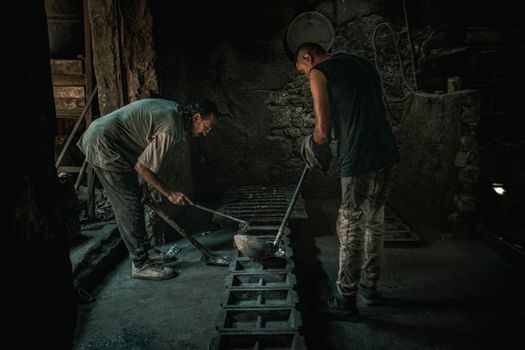
Sand casting molds are the right answer for low-to-mid volume ferrous and non-ferrous castings, prototype runs, parts with internal cavities too complex for tooling, and short-run job-shop work where pattern re-cut cost dominates per-piece cost [S2][S5]. They are wrong for high-tolerance, thin-wall consumer or automotive parts in volumes that justify hard tooling economics — that is the mold base's territory. If your annual volume is below ~1,000 pieces or your alloy is cast iron / ductile iron / high-chrome / copper-base, sand is almost always the cheaper envelope.
Standard mold bases are the right answer when you are building an injection mold for thermoplastics, a die-casting tool for aluminum or zinc, or any compression mold where the cavity inserts will be machined but the frame, guides, and ejection should be a catalog item, not a custom fabrication [S1][S4]. They are wrong for one-off castings, very large castings exceeding catalog platen size, or runs so short that even a pre-engineered frame cannot be amortized. Catalog mold base pricing in 2026 from Chinese OEMs (Mudebao/Moldburger, Suzhou A Mould) is typically quoted negotiable from a US$1.00–500.00 per-piece range for standard frame configurations, while custom die-casting and casting mold work scales with cavity count and surface treatment [S3][S4][S5].
Cost and Lead-Time Bands — Catalog Frame vs Custom Sand Tool
Standard mold base lead time is dominated by the catalog assembly and pre-hardening, not by the frame itself: 3–6 weeks for a standard 250 × 300 to 600 × 800 mm frame from a European or Japanese supplier, 2–4 weeks from Chinese catalog houses, with mold base plate CNC machining driving the schedule for any custom A/B-plate geometry [S1][S3][S4]. Sand casting mold lead time is pattern-lead-time-bound: 2–6 weeks for a wooden or resin pattern, 1–3 weeks for a CNC-machined aluminum pattern, and only hours-to-days for binder-jetted 3D-printed sand molds produced directly from the CAD file with no physical pattern [S2][S6].
Cost bands reflect the same asymmetry. A standard mold base unit (frame only, no cavity work) from Polimold, Novagum, or BLEND-class suppliers catalogs in the low-thousands-USD range, while a finished custom sand casting mold (pattern + sand tooling + first pour) is quoted against the casting weight, alloy, and complexity — the Made-in-China price index for casting molds and custom die casting moulds lists a wide spectrum from sample-order to mass-production pricing, with aluminum die casting moulds often the dominant category [S1][S3][S5]. For specifiers who want a process-level map of how the casting fits into the wider metal-flow chain, the steel production technology map is the right adjacent reference.
Limitations and Failure Modes
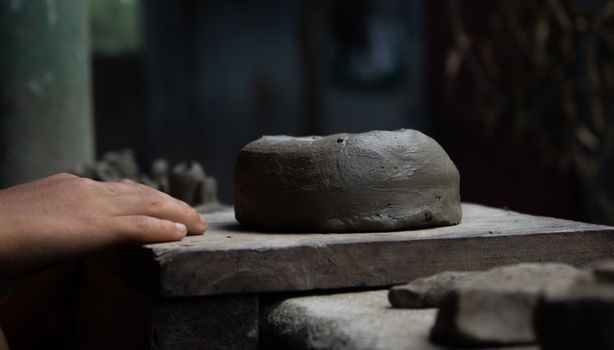
Sand casting mold failure modes are sand-side: mold-wall erosion and burn-on, gas defects from excess binder, sand fusion with high-Mn or high-Cr alloys, veining from sand expansion, and dimensional drift as the aggregate breaks down pour-by-pour [S2]. Control is via sand AFS grain-fineness number (typically 50–80 for iron), binder content (1.0–1.8 % phenolic-urethane for cold-box, 1.5–3.5 % furan for no-bake), and pouring temperature vs thermal-shock envelope of the chosen sand system [S2].
Standard mold base failure modes are steel-side: guide-pillar/bushing wear after ~100,000–500,000 shots, ejector-pin galling, sprue-bushing burnout on hot-runner or die-casting tools, and plate flatness loss on P20 frames pushed past their through-hardened limit (~30–36 HRC) [S1]. A P20 base is rated for plastic injection to ~300–500 k shots in typical ABS/PP service, while 1.2343 / 1.2344 hot-work bases for die casting are specified to 1,000 k+ shots with proper nitriding [S1][S4]. When failures occur, the frame can usually be re-machined or re-nitriding-treated; the sand mold, by definition, is scrap the moment the pour is complete.
Standards, Sourcing Reality and a Comparison
The standards pulling the two categories apart are also distinct. Sand castings are qualified to ISO 8062 (dimensional/geometric tolerances), ASTM E23 / E8 (tensile and impact) on test bars, and customer-specific CT-grade callouts. Mold base frames are sourced against supplier catalog dimensions (L × W × H), guide-pillar spacing standards, and steel-grade certification to DIN 1.2311 / 1.2738 / 1.2343 / 1.2344. Industry-standard supplier codes (HASCO, DME, Meusburger, Misumi) effectively become the de facto compatibility standard for cavity insert interchangeability [S1][S4].
Direct comparison on the four decision axes that matter to a 2026 specifier: (1) Lifecycle — sand mold is 1–~500 pours, mold base is 10,000–1,000,000+ shots; (2) Per-piece tooling amortization — sand mold cost is paid out of pattern + first mold, mold base cost is paid out over the entire production run; (3) Geometric complexity — sand mold handles 3D-printed binder-jetted lattice and helical sprue geometries impossible in a steel tool [S2], while mold base + machined insert handles tighter tolerances and thinner walls; (4) Sourcing path — sand mold is a per-part RFQ to a foundry, mold base is a catalog SKU plus a per-part cavity insert RFQ. The two are not substitutes; they are different layers of the same tooling stack, and the wrong one on the BOM will cost you weeks and a 5–10× swing in unit cost.
The next trackable signal is the 3D-printed sand-mold roadmap: binder-jetting machines are now moving from research labs to job-shop floor production, and the 2024–2026 literature in the International Journal of Metalcasting has been dominated by smart-mold instrumentation and binder-cure monitoring, with the upstream mining and mineral envelope covered separately in the mining equipment industry map for 2026 for specifiers who need to track sand and binder supply.