
Motion controller selection is a four-axis decision problem in its own right: number of coordinated axes, bus/protocol fit, closed-loop servo update rate, and feedback device type. Chassis-based controllers from the Newport XPS family scale by sliding driver cards into the back of the chassis to drive individual positioners, per OEM guidance on driver modules [S1].
For a buyer, the choice collapses to three architecture classes — standalone/PAC chassis, PC-based controller cards, and distributed drive/controllers on EtherCAT or PROFINET — and each class maps to a different mix of axes, deterministic cycle time, and integration cost. Application fit, not headline spec sheets, decides the build [S2].
Axis Count, Chassis Slots and Modular Scaling
Standalone motion controllers are sold in fixed-axis blocks — 1, 2, 3, 4, 6, 8 axes being common commercial breakpoints — and expand via add-on cards or external drives. The XPS controller line drives Newport positioners through separately purchased driver module cards that slide through the back of the chassis, letting users pay only for the axes they need to actuate [S1]. When axis count exceeds the chassis slot budget, the architecture must shift to a PC-based or distributed topology.
A practical gate: if the machine needs more than 8 coordinated axes, or axes are physically distributed across a long machine frame, a distributed EtherCAT or PROFINET servo topology is usually more economical than stacking chassis cards. For under-8-axis, sub-metre machines, a single chassis is still the lowest-latency, lowest-integration-cost option [S1].
Servo Loop Rate and Determinism
Servo loop rate — the frequency at which the controller reads feedback, computes the control law, and writes a new command — is the spec that most directly bounds machining accuracy and settling time. Standalone PAC-class controllers typically run position loops in the 1–8 kHz range; PC-based soft-motion platforms can push current/velocity loops above 16 kHz on dedicated cores [S2]. Loop rate must be quoted at the position-loop level, not just the bus cycle: a 250 µs EtherCAT bus cycle does not guarantee a 4 kHz position loop inside the drive.
For high-dynamic applications — CNC machining, semiconductor wafer handling, laser steering — look for the controller that publishes its position-loop update rate and its minimum commanded-jitter figure, both with units. Vague language like 'high-speed' or 'real-time' is not a substitute for a number in kHz [S2].
Bus Protocol and Field-Level Integration
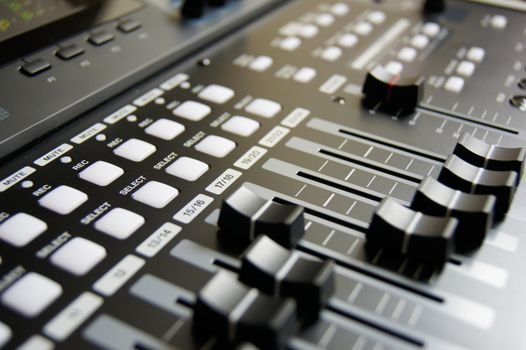
EtherCAT, PROFINET, EtherNet/IP, and traditional pulse-and-direction each imply a different wiring topology and a different scan/conformance test burden. EtherCAT's distributed-clock mechanism is the workhorse for sub-millisecond multi-axis coordination; PROFINET IRT and EtherNet/IP CIP-Sync play the same role in their respective vendor ecosystems. Pulse-and-direction remains the lowest-cost option for stepper systems and short cable runs, at the price of cable count and noise immunity. [S1]
The decision matrix used in motion-controller selection typically scores each candidate against 6–10 weighted criteria — axes, loop rate, bus type, feedback type, programming environment, and per-axis cost — and the bus dimension is where vendor lock-in is strongest. Switching buses mid-life-cycle usually means new drives, new cables, and a new commissioning toolchain, so it pays to pick a bus that the plant's PLC/SCADA layer can already talk to, as covered in this PLC buying guide.
Feedback Devices: Encoder, Resolver, and Absolute
Feedback device choice is dictated by environment, resolution, and the controller's input hardware. Incremental quadrature encoders (TTL or RS-422) cover most clean-room and lab applications; absolute encoders (BISS-C, SSI, EnDat, Tamagawa) are mandatory where the machine must know its position after a power cycle without a homing move; resolvers survive temperatures, vibration, and oil that would destroy an optical encoder. [S2]
Standalone chassis units typically expose a fixed set of feedback ports per axis card; PC-based platforms can add feedback channels via dedicated counter or FPGA cards. The 1 Vpp sine/cosine analog encoder interface gives sub-micron resolution through interpolation but requires the controller to support it natively — a feature that is not universal even on flagship motion controllers [S1].
Programming Environment and Application Stack

Two camps dominate: IEC 61131-3 languages (ladder, structured text, function block) on PAC-class controllers, and C/C++/Python/.NET APIs on PC-based platforms. PLC programmers coming from the PLC selection criteria world default to ladder or structured text; machine builders targeting vision-guided or robotic kinematics usually need a PC-based stack with a real-time OS or a dedicated motion kernel. [S3]
Autotuning has become a meaningful differentiator. Advanced autotuning tools claim to identify the load, set servo gains, and validate following error in a single guided routine rather than the manual gain-schedule loop engineers used to run by hand [S2]. Treat the autotuner as a productivity multiplier for new machine bring-up, but verify it can be overridden and that it exposes the underlying gain values for field re-tuning.
Selection Criteria Matrix: Architecture vs Application
Lining the three architecture classes up against the four decision gates gives a fast triage table. Chassis-based PAC controllers win on integration cost, deterministic packaging, and traditional PLC-style programming; PC-based controllers win on raw loop rate, complex kinematics, and integration with vision/AI stacks; distributed EtherCAT/PROFINET servo networks win on machine footprint, cabinet space, and axis count above 8. The same machine rarely needs all three — pick the architecture whose top two strengths match the application. [S4]
Re-running the matrix with the same weights across two or three shortlisted candidates usually surfaces the right controller within one revision of the spec [S1][S2].
Constraints, Failure Modes and Sourcing
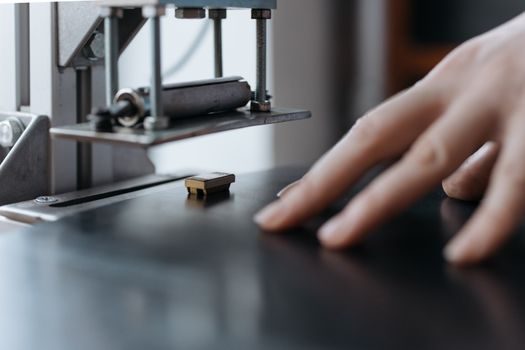
The dominant failure modes in the field are not catastrophic electronic faults — they are loop-rate starvation under bus contention, encoder noise on long cable runs, and firmware mismatches between the controller, drive, and feedback device. A standalone chassis with on-board DSP per axis is largely immune to the first; PC-based platforms need a real-time OS and core isolation to keep the position loop from being starved by HMI or vision threads. [S1]
Sourcing discipline: confirm the controller, the matching driver card, the feedback cable, and the firmware version are all on the same vendor's active catalog, and that the EOL/PCN policy is published. For builds that must run 7+ years, prefer a vendor that publishes a product-change-notification window of at least 12 months and ships replacement driver modules as a stockable spare — the XPS driver-card architecture is an example of a field-replaceable module rather than a board-level swap [S1].
Trackable signals for the next 6–12 months: vendor roadmaps around multi-axis EtherCAT slave controllers with on-board functional-safety (FSoE) support, and tighter integration between PC-based motion kernels and machine-vision pipelines, including vision controller co-processing. Engineers who want a broader process-control grounding before locking in a motion platform can also revisit the motion controller and PID controller reference pages for the loop-tuning fundamentals that sit underneath any motion build.