
Natural gas manufacturing quality is governed by four overlapping frameworks: API Q1 10th edition for equipment QMS, ISO 9001 for general management, EPA NESHAP MACT standards for hazardous-air-pollutant control, and the pipeline-quality composition rules set by major transmission operators [S3][S1][S2].
A gas processing plant is a facility designed to clean raw natural gas by separating impurities and non-methane hydrocarbons, producing pipeline-quality dry natural gas and recovering natural gas liquids (NGLs) such as ethane, propane, butane, isobutane, and natural gasoline [S2]. End-use gas is composed almost entirely of methane, a stark contrast to wellhead gas [S2].
What "Pipeline-Quality" Actually Means
Major transportation pipelines impose hard restrictions on the composition of natural gas admitted to their systems, and processing plants are designed to hit those targets before the gas enters transmission [S2]. Four main process steps do the work: oil and condensate removal, water removal, separation of natural gas liquids, and sulfur and carbon dioxide removal [S2].
Upstream of the plant, heaters and scrubbers are installed at or near the wellhead to prevent hydrate formation when temperatures drop, and to strip sand and other large-particle impurities [S2]. Hydrates are solid or semi-solid compounds resembling ice that can impede the passage of natural gas through valves and gathering systems, which is why dew-point and water-content control sit at the top of every plant's operating-procedure list [S2].
API Q1 10th Edition: The QMS for Petroleum and Natural Gas Equipment
API Q1 is a quality management system standard developed specifically for the petroleum and natural gas industry, created by the American Petroleum Institute to set rigorous requirements for organizations involved in the manufacturing and supply of oil and gas equipment and services [S3]. It applies to equipment manufacturers, component suppliers, assemblers, distributors, and service providers supporting product realization, and goes beyond ISO 9001 by addressing the unique risks and operational challenges of the energy sector [S3].
The 10th edition introduces major updates that expand its impact across the industry, including risk-based thinking, more explicit requirements for contingency planning, and tightened controls over outsourced processes [S3]. For a procurement engineer auditing a valve or compressor vendor, asking for an API Q1 10th-edition certificate is now the table-stakes pre-qualifier, and pairing it with ISO 9001 quality management requirements on the supplier's general QMS remains a common pattern in equipment RFQs [S5].
EPA NESHAP: Emissions Compliance at the Production Site
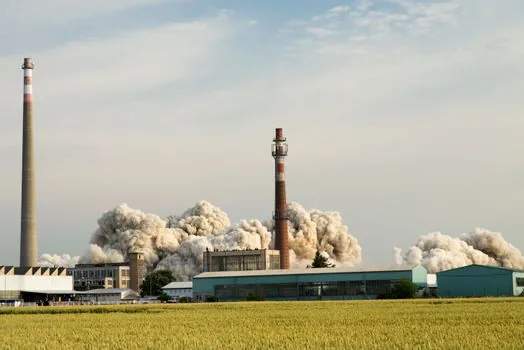
The EPA set maximum achievable control technology (MACT) standards for the Crude Oil and Natural Gas Production major source category in 1999, and those NESHAP rules remain the federal floor for hazardous-air-pollutant emissions from upstream and processing equipment [S1]. The April 22, 2026 Federal Register entry continues the periodic review and revision of those MACT standards, which cover fugitive emissions, storage vessels, and glycol dehydration units among other emission points [S1].
For an operator, NESHAP compliance intersects with API Q1 on the QMS side (documented leak-detection-and-repair programs, calibration records on monitors that often feed a gas analyzer or gas detection device), and with pipeline-quality specs on the chemistry side, because controlling VOC and HAP emissions is inseparable from controlling gas composition in the first place [S1][S2].
Workforce, Safety, and Environmental Monitoring
Quality is not only a paperwork exercise; it depends on certified personnel running the equipment. Common industry certifications in oil and gas operations include Oil and Gas Chief Technical Officer (Katek/Wakatek), First Aider, H₂S Safety Officer, Fire Fighting, and Hazardous and Toxic Waste (B3 Waste) Management Responsible Person [S4]. Each certification supports safe operations, with the Katek/Wakatek credential specifically ensuring that technical supervision of oil and gas operations is carried out in accordance with established safety standards [S4].
Environmental monitoring is conducted on a six-month cadence across ambient air quality, noise levels, water quality, and other parameters, with results shared with local communities for transparency [S4]. Periodic air monitoring typically relies on a stationary or portable air quality monitor at each of four designated locations surrounding the operational area, and H₂S safety relies on a fixed gas detection network tied to plant shutdown logic [S4].
Selection Criteria: Which Standard Applies When

For a quality engineer choosing the right framework, the decision rule is by function: API Q1 10th edition for any organization manufacturing or supplying equipment and services into petroleum and natural gas operations, ISO 9001 as the baseline QMS for service and trading companies that are not API-spec, EPA NESHAP MACT for any facility emitting hazardous air pollutants above the major-source threshold, and the buyer's pipeline tariff for any gas that will enter a transmission system [S3][S1][S2]. A company does not pick one; it stacks them.
On the analytical-instrument side, the same logic applies: gas chromatograph skids verify hydrocarbon composition against the pipeline tariff, power quality analyzer instruments verify compressor-driver supply against the utility interconnection, and the gas analyzer chain validates the BTU and sulfur content that ultimately determines marketability [S2][S7]. For hydrogen-blended or hydrogen-quality gas streams, ISO 14687:2025 is the additional reference for PEM-fuel-cell downstream uses, with sulfur-based impurities capped to protect membrane life [S7].
Limitations, Failure Modes, and Traceable Signals
The biggest practical failure mode is a gas that meets the chemical spec but is water-saturated and forms hydrates in the gathering system, so plant designers should always re-check the water-dew-point spec against the line's actual operating pressure [S2]. A second failure mode is paperwork-only quality: an API Q1 certificate that is not backed by a current audit and a list of registered products will not survive a buyer-side audit, and the supply chain disruption is usually a 6 to 12 month re-qualification [S3]. A third is a NESHAP MACT review that is read once and filed; the standard is revisited periodically and the 2026 Federal Register activity is the signal to re-baseline emission inventories now [S1].
Trackable signals over the next quarter: the next round of NESHAP MACT revisions for the Crude Oil and Natural Gas Production major source category, the first wave of API Q1 10th-edition surveillance audits on valve and compressor suppliers, and the continued integration of ISO 14687:2025 hydrogen-fuel-quality requirements into gas-quality labs that already run gas chromatograph methods for hydrocarbon speciation [S1][S3][S7]. For procurement teams sourcing process equipment into a natural gas service, the ball valve TCO analysis and the related ball valve selection criteria coverage map directly onto API Q1 10th-edition supplier-qualification requirements.