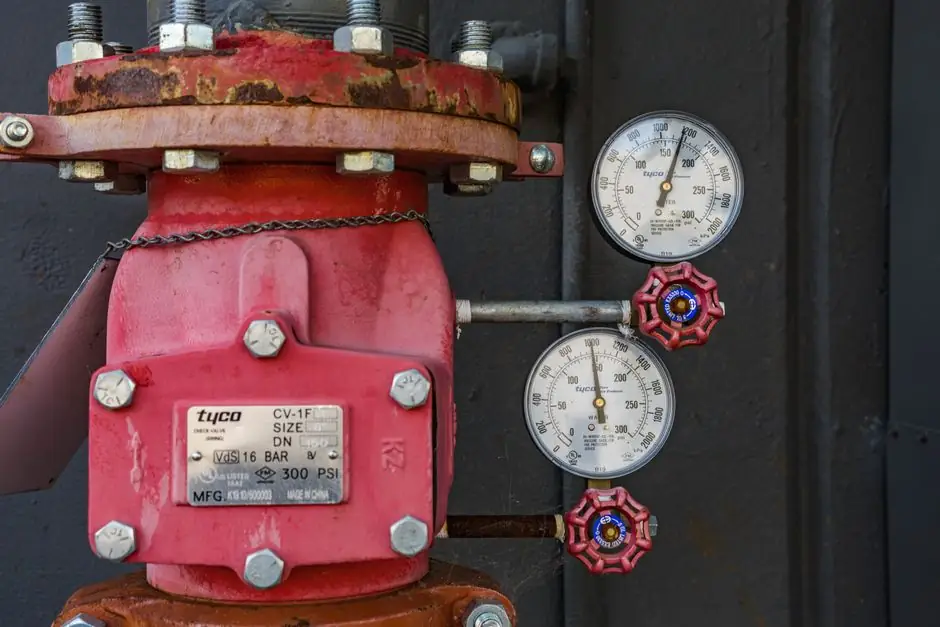
Natural gas process control rests on four instrument families wired into a SCADA layer: pressure, level and temperature transmitters on the asset, gas composition analyzers on the stream, flow computers at custody transfer, and pneumatic or electrical controllers driving the final control element. The US EPA identifies gas-powered pneumatic controllers as one of the largest sources of vented methane emissions from the natural gas industry, with continuous-bleed and intermittent-bleed designs behaving very differently under fast vs slow process dynamics [S1].
The market also measures gas as a product, not a fluid, which is why composition, heating value and flow are coupled. In June 2026, AZoM documented a shift toward real-time process Raman spectroscopy paired with flow computers to replace traditional gas chromatography (GC) at natural gas monitoring points, eliminating carrier gas, sample conditioning and analytical columns while delivering compositional data within seconds [S3].
Instrument Stack by Segment: Upstream, Midstream, Downstream
Upstream instrumentation has to survive solid media, impulsive vibration and high differential pressure at the wellhead; formation pressure and temperature gauges fixed along the wellhead feed the surface control system, and hammer-union pressure transmitters rated 0-5,000 to 0-20,000 psig with Inconel wetted parts are commonly specified for cementing, acidizing and high-pressure injection lines [S2][S4]. Midstream custody transfer is dominated by flow computers paired with gas analyzers, while transmission segment pneumatic controllers regulate liquid level in compressor scrubbers, gas flow, line pressure, and actuate isolation valves per EPA's Natural Gas STAR framing [S1].
Downstream processing, LNG and offshore manned platforms more often use instrument air rather than gas-driven pneumatics, because a clean air supply avoids combusting the fuel gas and removes one vented-emissions pathway [S1]. On a process control system the same loop topology appears at every segment: sensor, transmitter, controller, final element, with the failure mode and proof-test interval tuned to the segment's safety integrity level.
Composition Analysis: GC vs Process Raman
Gas chromatography remains the workhorse for custody transfer: it gives highly accurate compositional data, but a typical installation demands carrier gas cylinders, calibration gas, sample conditioning, heated sample lines, pressure reduction hardware, and frequently a primary plus backup analyzer to maintain uptime [S3].
Process Raman spectroscopy removes most of that overhead by interrogating the process stream directly with a laser and converting the molecular fingerprint into compositional and property data via chemometric models, with measurements inside a second rather than on a periodic GC cycle [S3]. The same Raman platform also derives heating value (BTU), specific gravity and energy content, so a single analyzer can serve natural gas, LNG, NGL and refined product streams, reducing the number of separate analyzers the operator has to maintain [S3].
The decision rule most engineers apply: keep GC where fiscal metering rules require it, deploy Raman where speed, multi-stream coverage and reduced sample system maintenance dominate the trade-off [S3].
Pneumatic Controllers: Continuous vs Intermittent Bleed
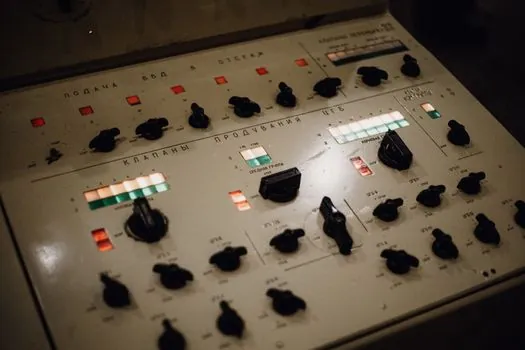
EPA's Natural Gas STAR guidance splits gas-driven pneumatic controllers into two classes with opposite emissions profiles [S1]. A continuous-bleed controller vents at a steady rate while the valve is stationary and bleeds actuator gas when the spring strokes the valve, so a slow process with little valve movement still emits continuously. An intermittent-bleed controller only vents when the valve actually moves; in a fast dynamic process with frequent cycling, that design can vent more than the continuous design, while in a slow process the same controller can sit closed for long periods with minimal emissions [S1].
EPA also notes that condition is a stronger indicator of emissions potential than age: a well-maintained controller emits far less than a worn one [S1]. The practical consequence for spec writing is to require the bleed class (continuous vs intermittent) and the supply gas pressure on the data sheet, then size instrument air or route to electrical actuation wherever vented gas creates a methane or fire hazard [S1]. A typical multifunction process calibrator bench test on these loops verifies the actuator stroke, the bleed rate at rated supply pressure, and the controller setpoint linearity before deployment.
Selection Criteria for Pressure, Level and Temperature Instruments
NOSHOK's July 2026 oil and gas portfolio groups the workhorse instruments into four lines: hazardous-location pressure transmitters, mechanical and electronic (IO-Link) pressure and temperature switches, level instruments, and manifold valves, with CSA-approved intrinsically safe hammer-union transmitters rated to 0-20,000 psig for acid and high-viscosity well-service media [S2]. Kyue's May 2026 applications guide pushes the same point one step earlier in the lifecycle, at instrument selection: every device must carry the right hazardous-location certification for its zone, with ATEX and IECEx governing mechanical/explosion-protection requirements in EU and global projects and NEC Article 500 classifying flammable-gas locations into divisions and groups [S4].
Five selection criteria consistently drive the right call: (1) wetted-part material matched to the service (Inconel for acid and sour service [S2]), (2) proof pressure and safe overrange versus the maximum possible process excursion, (3) hazardous-location class and group versus the installed zone, (4) signal protocol (4-20 mA analog, HART, IO-Link, Foundation Fieldbus) and (5) Total Cost of Ownership across calibration interval, spare parts and Mean Time Between Failures, because field experience places a single failed pressure indicator on an offshore drilling asset at around five million dollars per day of lost production [S4]. Reference process calibration practices for the calibration-interval input to that TCO model.
Flow Measurement, Custody Transfer and Energy Content
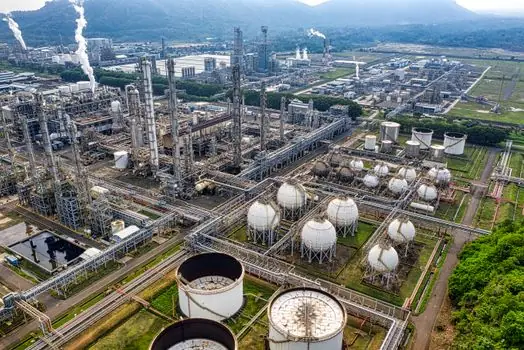
At custody transfer, the flow computer is the integrating element: it takes live composition, line pressure and temperature from upstream analyzers and PT/TT instruments, then computes standard-volume flow and energy content for billing. Raman-driven composition streams push heating value, specific gravity and energy content into the flow computer on a sub-minute cycle, which is a real change versus the periodic GC update that used to feed the same calculation [S3].
NOSHOK frames pressure data as the safety interlock backbone in this same loop: "accurate, stable pressure data for process control, safety interlocks, and equipment protection in refining and chemical processing units" is the exact role differential pressure transmitters play in flow metering, level in vessels and filter-status monitoring [S2]. On the v-process line at a gas plant, the same transmitter often feeds both the control loop and the safety instrumented function, so redundancy and proof-test interval need to be specified alongside accuracy.
Standards, Compliance and the 2026 Signals
Four standards frame almost every natural gas instrument spec on the desk: API RP 551 for process control instrumentation recommended practice, ATEX (EU) and IECEx (global) for explosion-protection construction, and NEC Article 500 for North American hazardous-location classification into divisions and groups [S4]. Specifying without naming the zone class and group on the data sheet is the most common cause of rejected submittals, and non-compliant instrumentation can void insurance coverage as well as put personnel at risk [S4].
Three 2026 signals are worth tracking. First, the move from periodic GC to continuous Raman at non-fiscal natural gas monitoring points is gaining documentation in trade press through mid-2026 [S3]. Second, methane emissions reduction programs are pushing operators to replace or retrofit continuous-bleed pneumatics with intermittent-bleed, instrument-air, or electrical actuation, with EPA continuing to treat pneumatics as a top vented-methane category [S1]. Third, hazardous-location transmitter portfolios are broadening to cover upstream well-service vehicles, midstream gas compression, custody transfer, downstream refining and offshore platforms from a single supplier line, simplifying spares across a multi-segment fleet [S2]. A natural gas spec-first sourcing plan for capacity expansion is mapped in this 2026 capacity-planning brief, and the connector side of the same instrument stack is broken down by contact count and IP rating in Connector Specs for Process Control and Instrumentation.