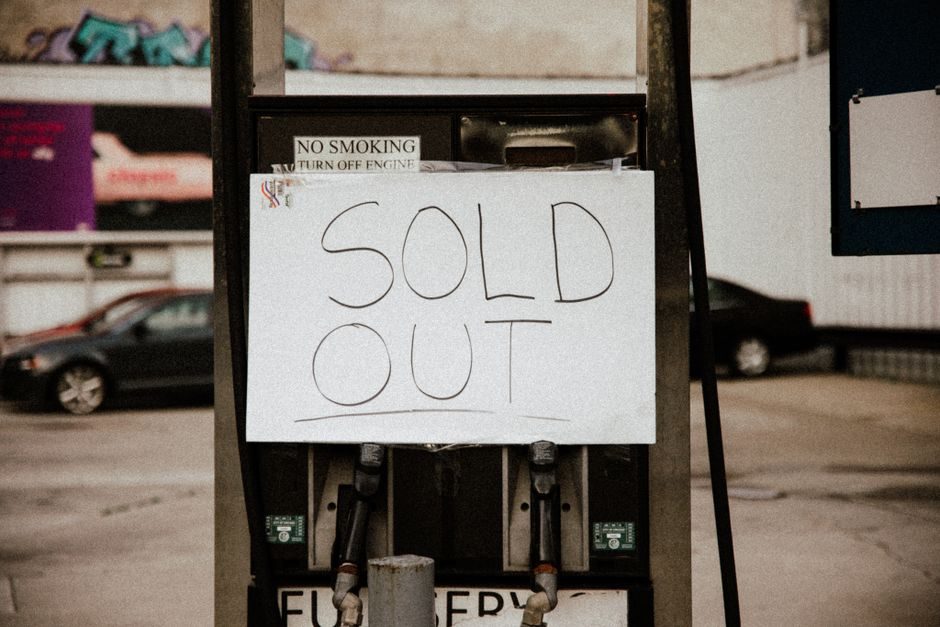
On 2026-07-01 a North American commercial natural-gas supplier opened its summer "Market Update" webinar (scheduled 30 July 2026, 11:00 a.m. CDT) under the banner "Eliminate market risk for your natural gas supply," explicitly positioning 2026 as a year of active supply-risk management rather than abundance [S1]. The same operator confirms the 2026 Choice Gas selection window for Nebraska and Wyoming ran 2–22 April 2026, locking in commodity exposure for a full year on a fixed-supplier basis. For industrial procurement teams, the signal is unambiguous: physical gas molecules, not just price, are now the constrained resource.
Structural risk persists. The IEA's December 2022 report "How to avoid gas shortages in the European Union in 2023," co-presented with European Commission President Ursula von der Leyen by IEA Executive Director Fatih Birol, quantified the potential EU supply-demand gap at 27 bcm, with a "potential shortfall of nearly 30 billion cubic meters" in the worst scenario [S2]. The 27–30 bcm band became the reference envelope for EU storage-fill targets, LNG terminal commissioning, and demand-reduction regulation that still constrains Asian spot LNG pricing in 2026. For an industrial buyer, that translates to a real possibility that firm transport capacity is rationed during peak winter demand even when pipeline utilisation is below 80% on the annual average.
Where the 2026 shortage risk actually lives: pipeline, LNG and grid coupling
Three distinct failure modes dominate the 2026 risk register, and each demands a different engineering response. The first is pipeline-network shortfall: a 2023 study in the Journal of Physics: Conference Series (vol. 2661, 012026) on "Unit Commitment Considering Long-term Supply Risk of Natural Gas Pipeline Network" models the coupling of power-system unit commitment to gas-pipeline hydraulics, confirming that long-term supply-side risk in gas networks directly drives power-sector dispatch decisions [S5]. The second is the well-documented Beijing precedent from December 2015, when the Beijing Municipal Commission of City Administration and Environment cut public-building heating supply and halted industrial gas deliveries after a CNPC LNG cargo was unable to unload in heavy fog — a single cargo, a single weather window, an immediate industrial cut-off [S6]. The third is the operational layer addressed in the 2017 Energy paper (Mikolajková, Saxén, Pettersson), where MINLP optimisation of distribution networks with LNG injection points and extension candidates shows how network topology itself can be reshaped to relieve localised supply stress [S3].
For instrument engineers, that layering matters because the gas detector count, the gas analyzer coverage, and the metering philosophy at each custody-transfer point must be designed against the highest credible stress — not the average. A network optimised only for nominal flow will be blind to a fog-bound LNG slot that suddenly re-routes 8% of regional supply. Procurement should specify industrial gas filtration, pressure regulation, and analyser redundancy on the assumption that the next 12 months will include at least one abnormal operating week.
Selecting a mitigation posture: physical supply, financial hedge, or both
Buyers in mid-2026 have three commercially distinct options, and the criteria below separate them cleanly. Option A is a physical fixed-price supply contract via a Choice Gas-style or equivalent regulated supplier programme — the 2026 selection window referenced above ran 2–22 April 2026, with contracts typically written on a 12-month term indexed to a published tariff band rather than spot. Option B is a financial hedge (basis swap, NYMEX Henry Hub futures, or fixed-price swap with a marketer) layered on top of index-priced physical transport, which preserves the flexibility to switch pipelines or fuels. Option C is dual-fuel capability — typically natural gas plus LPG, diesel, or propane-air backup — sized for the firm's critical load. [S1]
The decision pivots on three criteria: (1) the duration of the buyer's price-risk horizon, (2) the regulatory regime governing the buyer's pipeline (FERC-regulated interstate, state-jurisdictional intrastate, or municipal LDC), and (3) whether the buyer's process can tolerate fuel-switching transients. A buyer with a 12-month horizon on an interstate pipeline with hot-restart-capable burners will favour Option B; a buyer with a long-horizon contract on a municipal LDC with a gas chromatograph-based calorimeter will be pushed toward Option A.
Hardware specification under supply stress: what buyers should be specifying now

Supply stress is the right time to harden hardware specifications, not loosen them. Three categories deserve immediate attention. First, custody-transfer metering: ultrasonic meters with redundant paths and on-line gas chromatography for heating-value determination outperform turbine meters under off-spec or highly variable gas quality — important when LNG cargoes and pipeline commingling push Wobbe index out of nominal band. Second, pressure regulation: pilot-operated regulators with active monitors and slam-shut valves sized for the full MAOP of the inlet, not just the typical operating point, allow a site to keep drawing gas during a transient overpressure event rather than tripping offline. Third, detection and analyser coverage: catalytic-bead and infrared gas detectors at every regulator station, with at least one electrochemical or NDIR analyser for low-range measurement, provide the situational awareness needed when supply quality drops. [S2]
Control-power reliability is the second-order risk often missed. Pressure regulators, solenoid valves, and switching power supply units for control panels must be on UPS or DC-bus backup sized for at least 4 hours of station operation, because a supply-stress event is almost always also a grid-stress event. For sites with no UPS today, a 24 VDC DC power supply with at least 20% nameplate headroom and an externally-mounted battery enclosure is the lowest-cost upgrade. Buyers that link procurement across multiple sites should standardise on one regulator family and one analyser platform to reduce spares holding — a discipline that pays off sharply when the same OEM allocates scarce supply first to strategic accounts.
Use cases where supply-risk design pays back fastest
Four industrial archetypes concentrate the payback. The first is the combined-heat-and-power (CHP) host: a 5–20 MW gas engine with heat recovery supplying a process loop, where a fuel interruption of more than 30 minutes forces a controlled shutdown and a 6–12 hour restart. Specifying dual-fuel capability and a hot-standby gas train pays back in 12–18 months on avoided downtime alone. The second is the heat-treatment or metallurgical line, where atmosphere composition is part of the product specification — a 2% drop in methane heating value can push carbon potential out of control band. Closed-loop trim control with an in-line analyser and a reference gas chromatograph is the standard mitigation. The third is the food or pharmaceutical steam user, where boiler turndown and fuel flexibility are constrained by the LP/HP steam balance; pre-mixed propane-air standby fuel trains sized for full boiler load are the typical fix. The fourth is the merchant gas buyer — typically a utility, mid-stream operator, or large co-generator — where the procurement team must operate a physical-and-financial book in parallel and therefore needs metering, scheduling, and telemetry that the other three archetypes can get away without. [S3]
Broader sourcing context for the industrial gas buyer, including pipeline and mid-stream spec bands relevant to 2026 procurement planning, is mapped in the natural gas supply chain sourcing spec for 2026. Downstream demand growth, including the chemical-cluster feedstock pull that competes with industrial buyers for the same molecules, is tracked in the gas-chemical cluster push in Xuanhan. For buyers whose supply-stress plan also touches electrical infrastructure, the China cable and wire supplier map for 2026 is a useful cross-reference on the power-cable side.
Limitations, failure modes and what the data does not yet show
Three honest caveats apply. The 2026 supply-risk picture is structurally similar to 2022–2023 but the data is thinner: 2026 half-year inventory reports and storage levels are not yet in the research corpus, and any forward statement on the next 6 months is necessarily qualitative. The IEA's 27–30 bcm EU figure is 2022-vintage and was calculated for a specific weather-and-demand scenario — it should be read as a sizing reference for worst-case planning, not as a 2026 forecast [S2]. The Beijing 2015 cut-off illustrates mechanism, not magnitude: a single cargo lost in fog is qualitatively different from a structural 27 bcm gap, and the hardware response should be scaled accordingly [S6]. Finally, the MINLP network model in [S3] is a planning tool, not a real-time controller — it is useful for capital-stage decisions about LNG injection points and pipeline extensions, not for week-ahead operational hedging.