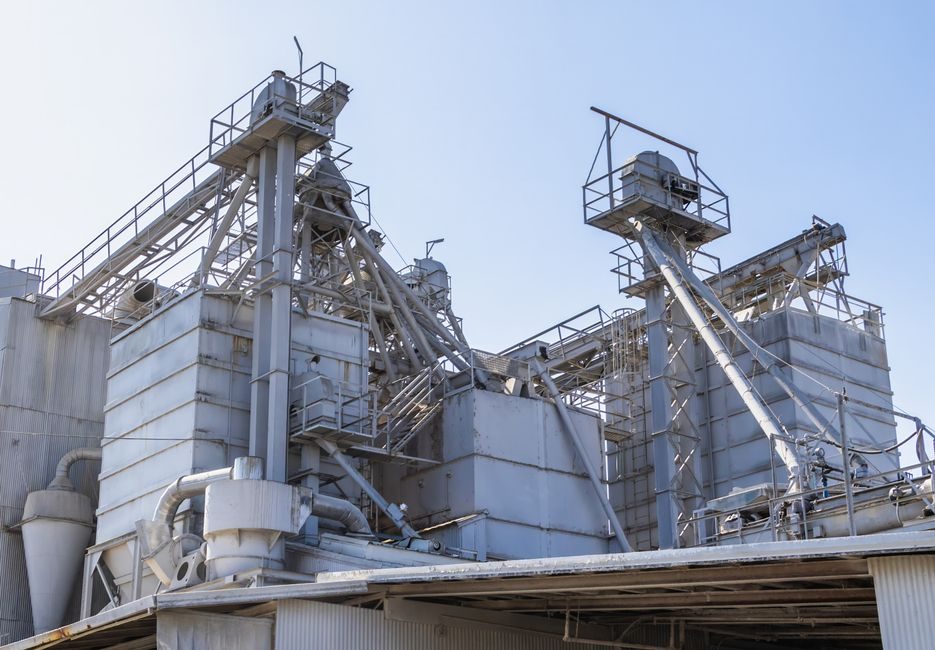
Nickel was first identified by Alex Cronstedt in 1751 and entered commercial production in the United States in 1857 [S4]. Today, the metal is produced from two mineralogically distinct feedstocks — magmatic sulfides and weathered laterites — and the chosen extractive route is dictated almost entirely by ore mineralogy, not by market preference.
The sulfide route supplies roughly 60% of mined nickel units through froth flotation concentrate plus pyrometallurgical matte refining; laterite routes — pyrometallurgical rotary-kiln/electric-furnace ferronickel and hydrometallurgical HPAL — supply the balance, with HPAL first commercialised in Western Australia in 1998 [S3]. This split matters because the two families have radically different reagent, energy and capex profiles.
Sulfide Ore Route: Concentrator → Smelter → Matte Refining
Sulfide ores (pentlandite/chalcopyrite/pyrrhotite matrices) are crushed, ground and floated to a 6–14% Ni concentrate that is then smelted in flash or electric furnaces to a 40–70% Ni matte [S6]. The matte is slow-cooled to coarse Ni₃S₂–Cu₂S crystals, separated by magnetic separation/leaching, and refined to LME-grade nickel via the carbonyl process (Mond) at Vale Sudbury or via electrowinning at Norilsk-style operations [S4].
For mixed Co–Ni–Fe laterite feeds a chloride leach has also been demonstrated at bench scale, with operating conditions tuned for selective iron rejection before nickel–cobalt recovery — a route developed as an HPAL alternative for low-iron (<15% Fe), 1.7–2.3% Ni limonitic ores [S6].
Laterite Ore Route: Pyrometallurgical vs HPAL Decision
Laterite deposits are layered, with high-iron, low-nickel limonite on top and low-iron, high-nickel saprolite below; ore type dictates the process block [S6]. Saprolite ore with low iron (<15% Fe) and 1.7–2.3% Ni is treated pyrometallurgically [S6].
Limonite (~1.0–1.5% Ni, high Fe) cannot economically yield ferronickel because of the high iron penalty; instead it is processed by HPAL at 245–270 °C and 35–45 bar in titanium-clad autoclaves with sulfuric acid, producing a mixed Ni/Co sulfate solution that is then neutralised, impurity-stripped and refined to battery-grade NiSO₄·6H₂O and CoSO₄·7H₂O [S3]. The 1998 commercial debut of HPAL at Western Australia's Murrin Murrin/Three Hubs complexes is widely cited as the inflection point that made laterite-driven battery-grade nickel viable at scale [S3].
SX/EW, Solvent Extraction and Battery-Grade Sulfate
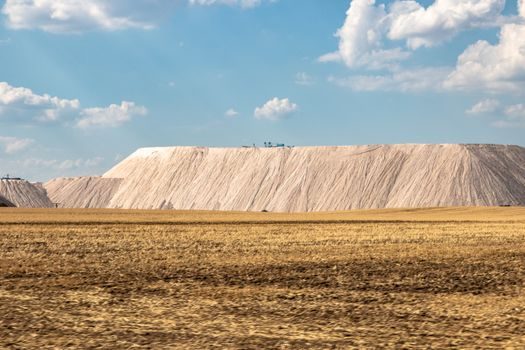
Regardless of the upstream route, the modern end target for a growing share of mine output is Class I nickel sulfate, not ferronickel — and that means the solution must be purified by selective solvent extraction. Kola MMC process research shows neodecanoic acid (Versatic 10) loaded in its sodium form, used to strip and separate nickel from sulfate–chloride pregnant leach solutions under controlled pH and O/A ratio, is a proven extractant family for this duty [S1].
Companies such as Nickel Industries (ASX: NIC, share price A$0.915 on 29 June 2026) operate a portfolio that includes rotary-kiln/electric-furnace NPI lines for the stainless-steel supply chain and is positioning downstream assets into the EV/battery supply chain — a typical split between pyrometallurgical ferronickel capacity and hydrometallurgical refining investment [S2]. The trade-off for an SX circuit is reagent make-up (NaOH for saponification, sulfuric acid for stripping) and crud management, both of which scale with the Fe/Al/Mn impurity load entering the extraction stage.
Process Selection Criteria: Ore, Energy, Reagent, Off-Take
Four engineering criteria decide the route for a given deposit: nickel grade, MgO/Fe ratio, impurity penalty (especially Co, Mn, Al, Cr), and off-take specification (Class I LME nickel vs ferronickel vs NiSO₄) [S3]. High-MgO saprolite (>25% MgO) is a hard feed for HPAL because of sulfuric-acid consumption; low-MgO limonite (<5% MgO) is the preferred HPAL feed and is the reason most operating HPAL plants sit on tropical laterite belts (Indonesia, Philippines, New Caledonia) [S3].
A practical comparison for a process engineer: (1) Ferronickel route — feed Ni 1.7–2.3%, capex heavy on rotary kiln + SAF, energy ~16–20 GJ/t ore, output FeNi 15–40% Ni, off-take = stainless steel. (2) HPAL route — feed Ni 1.0–1.5%, capex heavy on titanium autoclaves, energy ~10–14 GJ/t ore, output mixed Ni/Co sulfate, off-take = batteries. (3) Sulfide matte route — feed Ni 6–14%, capex mid-range, energy ~8–12 GJ/t concentrate, output LME Ni cathode or briquette, off-take = plating alloys + stainless + battery precursor [S3][S4][S6].
Material and Equipment Demands
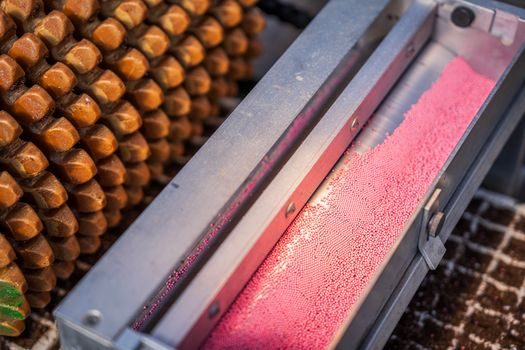
HPAL autoclaves are clad in titanium grade 2/grade 12 to survive 245–270 °C, 35–45 bar sulfuric acid with chloride, fluoride and abrasion service; the agitators, flash-letdown valves and downstream pipework share the same metallurgy [S3]. Pyrometallurgical ferronickel lines need heavy electrode pastes, Söderberg or pre-baked, plus 50–100 MVA submerged-arc furnace transformers, and dry/cooler dust handling for kiln discharge at 700–900 °C [S3].
For sulfide concentrators the workhorse equipment is SAG/ball milling, column flotation cells for fine pentlandite recovery, and concentrate thickeners; the smelter step depends on whether the operator runs a flash furnace (Outokumpu/INCO flash smelting) or an electric furnace for matte. The end-of-line refinery — whether Outokumpu chlorine leach-electrowin, Mond carbonyl, or Sherritt-Gordon ammonia pressure leach — sets the utility, reagent and waste-handling envelope [S4].
Limitations, Failure Modes and Tailings Risk
HPAL's principal failure mode is autoclave scaling (Fe-Na sulfate jarosite), which depresses nickel extraction and forces acid consumption upward; Murrin Murrin, Ravensthorpe and Goro have all publicly cycled through these excursions and recoveries have historically sat in the 88–95% band [S3].
Sulfide operations are lower-risk on the extractive side but concentrate on managing SO₂ capture (acid plant) and tailings dam stability; deep-sea tailings placement in the tropical Pacific has also attracted regulatory pushback that effectively bars the option for new projects [S3][S4]. Across all three routes, the deliverable for an engineer evaluating a nickel project is the same: ore mineralogy, recovery to payable product, reagent and energy intensity per tonne of contained Ni, and the cost of bringing the metal to market specification.
Standards, Sourcing and Next Verification Points
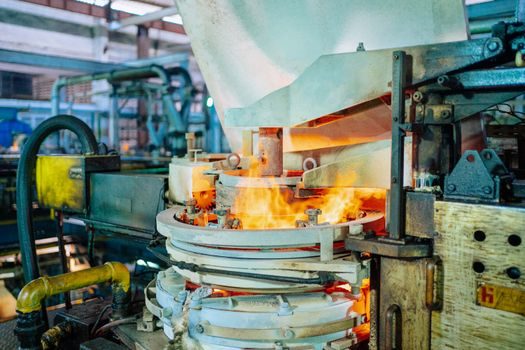
Class I nickel is traded on the LME under the Nickel 99.8% specification (≥99.8% Ni, with named impurity ceilings for Cu, Co, Fe, S, C and P); ferronickel grades (15–40% Ni) are sold under direct producer/stainless-mill contracts with no single universal norm but with reference to ISO/EN standard test methods for Ni, Co, S, P, Si and C [S4]. Battery-grade nickel sulfate typically targets ≥22% Ni and ≤10 ppm Cu/Fe/Zn, with cobalt as a priced by-product [S1].
For further process-engineering cross-references the nickel-class stainless and battery materials pipeline overlaps with the broader metals and process-equipment supply chain covered in our heat pump supply-chain 2026 sourcing levers breakdown and with the nickel alloy material family. Two trackable signals to watch in the next 6–12 months: further ASX/NIC disclosure on the company's Hengjaya/Nickel Industries HPAL-class downstream capacity, and any new 2026 disclosure on Kola-style Versatic 10 SX pilot data for low-iron, high-MgO limonite [S1][S2].
For component-level specifications, see pressure transmitter, and flow meter.