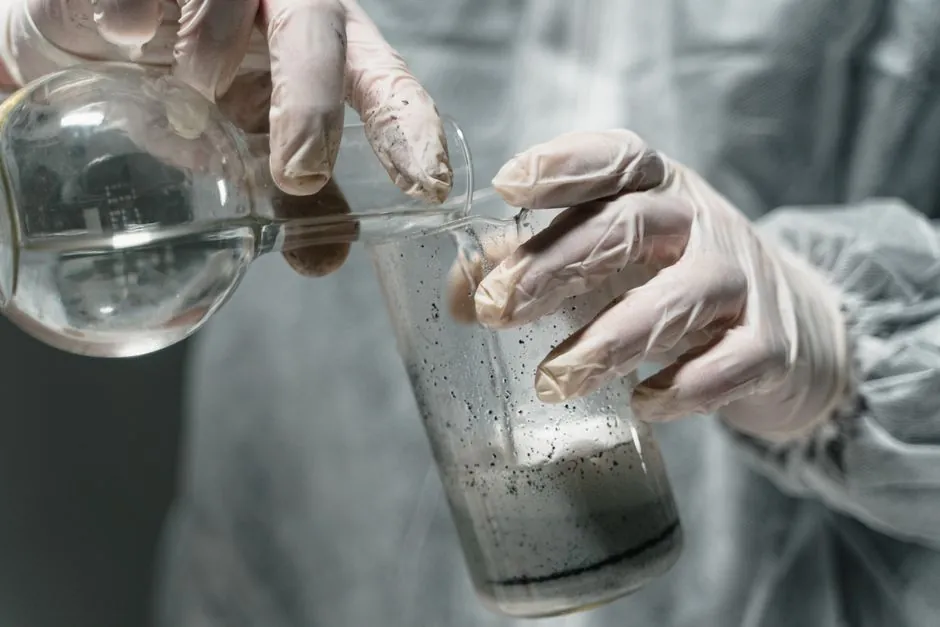
Electrolyte is the single highest-leverage wet-chemical input in any lithium-ion or solid-state program, and the OEM-versus-ODM decision now determines who owns the formulation IP, who signs the UN 38.3 and IEC 62133 file, and how fast a new cell can reach a dry-room first fill.
Most buyers conflate the two models, then discover too late that an ODM salt-solvent package is locked to one cathode chemistry, or that an OEM recipe cannot be shipped under a toll-blend exclusivity clause. The 2026 rule of thumb from contract-electrolyte suppliers: ODM when the program tolerates an off-the-shelf LiPF6-in-EC/EMC/DMC recipe on a 1.10–1.30 g/cm3 window, OEM when the cell needs a custom additive package, a low-impedance interface, or a solid-polymer matrix that the supplier does not already list in its catalog [S1][S2][S5].
Defining OEM and ODM for the electrolyte specifically
An Original Equipment Manufacturer (OEM) electrolyte supplier produces to a recipe, specification, and impurity envelope supplied by the buyer; the buyer owns the formulation IP, the supplier owns the process know-how, and the production line is a toll-blend service with the buyer's name on the Certificate of Analysis (COA) [S3][S4].
An Original Design Manufacturer (ODM) electrolyte supplier designs the salt-solvent-additive package, retains core formulation IP, and lets the buyer relabel, rebadge, or request limited deltas such as additive concentration, water content under 20 ppm, or a custom color code for drum traceability [S1][S2][S3]. The ODM is the right home for buyers who do not have an in-house electrochemist and want a catalog SKU with a known specific conductivity (typically 8–12 mS/cm at 25 C for standard LiPF6 1 M) and a known oxidative stability window above 4.3 V vs Li/Li+ [S6].
Selection criteria: IP, scale, certification, and time
Four engineering criteria decide the model: IP ownership, annual volume, certification scope, and lead time to first qualified liter. On IP, OEM gives the buyer full freedom to switch suppliers, file patents, and audit every raw-material lot, while ODM locks the buyer into the supplier's design unless a buyout clause is negotiated up front [S3][S4][S5].
On scale, OEM batches typically start at 200–500 kg per campaign (useful for pilot and small-series ESS), while ODM production runs in 1–20 t batches tied to a single formulation, which is why ODM is preferred for residential and C&I storage SKUs that already have a bill of materials [S1][S2]. On certification, an OEM file is built around the buyer's UN 38.3, IEC 62133, and UL 1973 deliverables, while an ODM supplier usually arrives with those certificates pre-issued for its base formulation, shaving 6–12 weeks off the cell-design cycle [S5][S6]. On lead time, an ODM catalog SKU can ship in 4–8 weeks for an initial batch, while an OEM recipe typically needs 12–20 weeks for sample qualification, dry-room trials, and COA hand-off [S5].
Decision matrix: when OEM wins, when ODM wins
Pick OEM when the program is a new solid-state or semi-solid cell, a high-nickel NMC811 or NCA chemistry above 4.35 V, a sodium-ion or lithium-sulfur program, or any application where the additive package (VC, FEC, PS, DTD) is the differentiator; in these cases the buyer must own the recipe because it is the moat [S1][S2][S6].
Pick ODM when the program is a standard LFP or NMC532 consumer cell, a residential ESS with a fixed BoM, a C&I rack needing fast UL 9540A entry, or a forklift/AGV battery that runs on a catalog recipe; here the supplier's existing qualification package is worth more than a custom recipe, and the buyer can redirect engineering time to pack integration, BMS tuning, and the related pressure transmitter and flow meter loops that govern electrolyte filling and dry-room humidity [S1][S2][S5][S7].
Cost, tooling, and MOQ reality check
OEM electrolyte projects carry higher up-front costs: recipe development, electrolyte-grade raw material qualification, small-scale LiPF6 handling under argon, and pilot batches that typically run $15,000–$60,000 in non-recurring engineering before any commercial liter is shipped, with a typical MOQ of 200–500 kg per campaign [S5][S6].
ODM electrolyte purchases are essentially a per-kilogram buy with low NRE: $1,000–$10,000 in branding and paperwork fees, MOQ as low as 50–100 kg for a standard LiPF6 1 M in EC/EMC (1:1 by volume), and per-kg pricing in the $12–$35 range depending on purity, HF tolerance, and water specification [S1][S2][S5]. The ODM trade-off is margin compression: because the supplier amortizes its R&D across many buyers, the per-kg price is stable but the buyer's differentiation evaporates, which is why consumer ESS brands rarely recoup premium pricing on an ODM electrolyte [S1][S4][S5].
Use cases on the line in 2026

A North American ESS integrator building a 5 MWh C&I rack on UL 9540A and a 10-year warranty typically goes ODM: an LFP cathode, a graphite anode, a standard 1 M LiPF6 in EC/EMC/DMC with 2% VC and 1% FEC, filled under flow-meter controlled dosing at 2.0–2.5 g/Ah, dry-room dew point below -40 C, and cell formation at C/20; this program ships inside a quarter because the electrolyte is off-the-shelf [S1][S2][S5].
An Asian cell maker qualifying a 350 Wh/kg semi-solid pouch goes OEM: a custom LiFSI salt blend, a fluorinated solvent carrier, an additive stack tuned for 4.4 V cycling, and tight specs on Fe and Cu below 1 ppm each; the recipe is the moat, the supplier is a toll blender, and the COA is signed in the buyer's name [S3][S4][S6]. Both are defensible, but the contract structure is fundamentally different and the audit trail has to reflect that from day one.
Limitations, failure modes, and what to watch
The OEM failure mode is supplier dependency on a single toll blender: if that plant goes down or changes its LiPF6 source, the buyer's cell yield drops and the recipe cannot be ported overnight because the supplier holds the process IP for blending, filtering, and moisture control [S3][S4].
The ODM failure mode is formulation lock-in: a buyer running a private-label ODM recipe cannot easily add a third-party additive without re-qualifying the entire cell, and any reformulation by the ODM (often driven by raw-material cost) can invalidate a year of cell-cycle data; this is also why ODM contracts should carry a 12–24 month change-control clause and a fallback option to license the formulation at exit [S1][S2][S5]. For both models, the practical quality gate is a COA that specifies water below 20 ppm, HF below 50 ppm, and a conductivity window at 25 C matched to the buyer's formation profile, with the pressure sensor and PLC controlled dry-room interlocks documented in the quality manual [S5][S6].
Sourcing signals to track next
A second verifiable signal is the regulatory clock on PFAS in the EU and several US states, which by end-2026 is forcing additive reformulation for any electrolyte that uses long-chain fluorinated solvents or fluorinated anti-wear additives; programs that picked ODM in 2025 will need a contract clause that obliges the supplier to bear the cost of the next reformulation, while OEM programs can absorb the change inside their own R&D budget [S5][S6]. Engineers who want a related process-side view can compare the OEM/ODM choice with the battery electrolyte process control spec map for filling, soaking, and dry-room loop sizing.