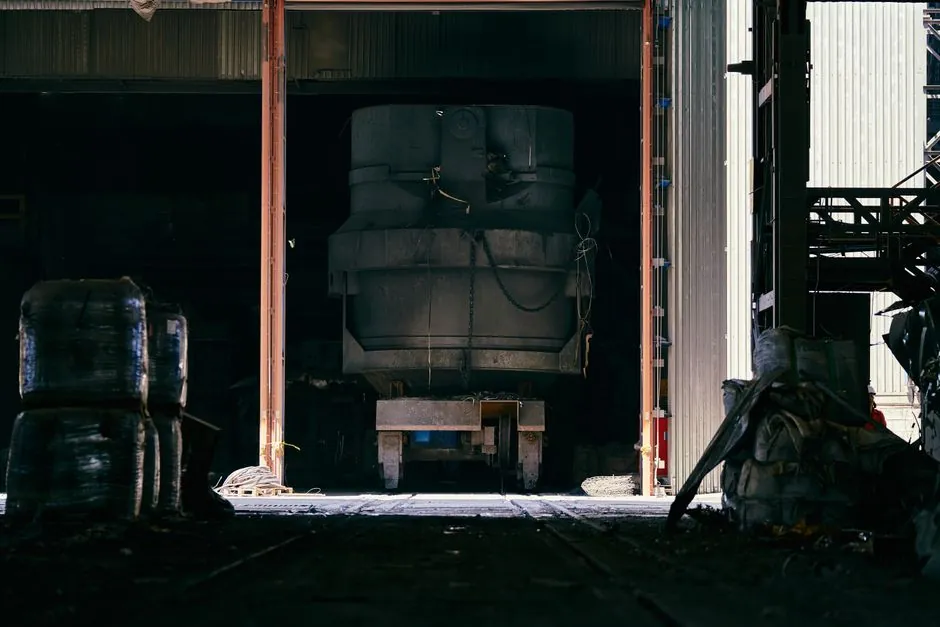
Industrial coatings procurement in 2026 hinges on one structural question: does the buying brand own the resin system, pigment package, and substrate-prep protocol, or does the supplier ship a finished, rebranded formulation? OEM puts that ownership on the buyer; ODM keeps it on the factory, with the buyer adding only label, color, and packaging changes [S2][S3].
Coatings are an unusually high-stakes sub-category because a wrong spec drives failure modes (cohesion loss, sub-film corrosion, dielectric breakdown) that surface only after months in service. That risk is why the ODM sample-led-time advantage (5–7 days on existing line, versus 2–4 weeks after tooling for OEM) is often traded away by spec-driven industrial buyers [S2].
Definition and IP split in coatings contracts
OEM in coatings means the brand issues the technical data package: resin chemistry (epoxy, polyurethane, fluoropolymer, silicone), solids content, DFT/wet-film ratio, cure schedule, and substrate-prep grade. The factory's role is to compound, mill, filter, and pack to that data package. The brand owns the formula IP and can move production between qualified suppliers [S1][S5].
ODM means the factory already holds a working formulation with documented performance (salt-spray hours, pencil hardness, adhesion per ASTM D3359 crosshatch, or chemical-resistance panels). The buyer selects from that portfolio, applies its own label and color card, and sells under its name. The factory retains the right to sell the same base to other buyers, which is the structural risk the OEM model exists to eliminate [S2][S3][S4].
The ODM and OEM distinction sits inside a wider electronics-coatings and contract-manufacturing cluster that also includes EMS (full design-to-distribution service) and CEM (contract electronic manufacturer) providers. For a coatings buyer, EMS-style full-service outsourcing rarely applies; the meaningful choice is still OEM-versus-ODM, with additive manufacturing material selection becoming a related discipline when wear-resistant orifices, impellers, or jigs need coated surfaces.
Decision matrix: OEM vs ODM on cost, lead time, and control
The directional trade-offs in paint-brush OEM/ODM engagements, drawn from 60-country sourcing experience, transfer cleanly to coatings because the contract structure is the same [S2]:
OEM carries a tooling/NRE charge the buyer funds, customization depth across geometry and material, higher MOQ because new tooling amortises over volume, sample lead time of 2–4 weeks after tooling, first-run production of 8–12 weeks, low IP risk, longer time to market, and a higher entry cost. ODM carries zero tooling/NRE, limited customization (label, color, packaging), lower MOQ because the line is already running, sample lead time of 5–7 days, production of 4–6 weeks, medium IP risk, shorter time to market, and a lower entry cost [S2].
For a coatings buyer, the "geometry and material" column maps to resin system, hardener ratio, pigmentation loading, and substrate-prep grade, and the "sample lead time" column maps to drawdown-card availability and Q-panel salt-spray data. The 5–7 day ODM sample window is feasible only because the factory has already compounded, filtered, and stabilized the formula; OEM 2–4 week samples are essentially a first-article lab run [S2][S3].
Coatings-specific OEM profile: when to push the spec

OEM is the right call when the coating has to meet an external performance spec the catalogue cannot satisfy: NACE MR0175 / ISO 15156 sour-service compatibility for downhole tubular coatings, FDA 21 CFR 175.300 for direct-food-contact can coatings, or a customer-specific salt-spray requirement above 1,000 hours per ASTM B117 [S5].
In all of these cases, owning the data package is the only way to enforce batch-to-batch reproducibility and to qualify alternate factories later.
The cost consequence is concrete: JLC CNC's 2026 guidance is that OEM supports higher margins, while ODM trims upfront investment at the price of tighter per-unit profit, especially on engineered or fabricated goods [S6]. For coatings, that margin gap typically widens on technical rather than commodity SKUs.
Coatings-specific ODM profile: when catalogue speed wins
ODM is the right call for distributors, paint retailers, and private-label hardware brands launching a baseline exterior or decorative SKU where the factory's existing formulation already passes a recognized standard (for example, a stocked acrylic-emulsion exterior wall paint tested to ISO 2813 gloss and ISO 6504 contrast ratio). The ODM path lets the buyer skip the lab-and-pilot phase entirely [S1][S3].
ODM also fits accessory-tier items, like a stock anti-slip floor coating or a general-purpose industrial buzzer enclosure coating, where cosmetic branding matters more than formulation novelty. The trade-off the buyer accepts: the same base formulation may be sold to other brands, so price competition is structural rather than incidental [S2][S3].
The ODM model's risk profile is medium because the supplier may sell the same base formulation to other labels; that is the IP characteristic the OEM model is designed to remove [S3][S4].
Tooling, MOQ, and lead-time mechanics in coatings runs

OEM runs in coatings almost always require a custom pigment grind: a sand-mill, bead-mill, or basket-mill pass tuned to a target Hegman fineness (commonly 7+ on the Hegman scale for high-gloss industrial finishes). That mill setup, plus the let-down tank and filtration train, is the "tooling" the buyer funds under OEM NRE [S1][S5].
ODM runs use the factory's existing mill, let-down, and filtration train, so MOQ drops to a single drum in many cases and the sample-to-PO loop closes in under three weeks. For a procurement team that has to launch a colour card ahead of a selling season, that compression is the deciding factor [S2][S3].
Wevolver's 2025 engineering guide frames the broader principle: OEM keeps the IP and BOM under the buyer's control while the factory handles production; ODM consolidates design and production on the supplier side, with the buyer contributing brand and limited spec changes [S5]. The same division of labour shows up in industrial camera module sourcing and in most contract-manufacturing engagements Suntronic documents for electronics [S4].
Limitations, failure modes, and qualification gaps
OEM's failure mode is schedule: first-article lead times of 8–12 weeks stretch when pilot batches miss adhesion, gloss, or corrosion targets and a reformulation cycle is needed. ODM's failure mode is differentiation: the same base formulation is available to competitors, so margin compression is structural rather than cyclical [S2][S6].
Neither model replaces the buyer's own incoming-QA loop. ASTM D3359 crosshatch adhesion, ASTM B117 salt-spray, ASTM D3363 pencil hardness, and ISO 1522 pendulum damping are the minimum panel-level checks a coatings QA lab should run on every qualification batch, whether OEM or ODM. Importivity's 2026 sourcing guide notes that the OEM/ODM choice "affects cost, speed, customization options, risk level, and long-term brand potential" [S3], and that risk is verified at the panel, not on the contract page.
ODM suppliers can also lease or lightly modify their own designs for white-label sale, which keeps the IP on the supplier side even when the buyer's brand is on the drum; the buyer should confirm in writing whether the supplied base is exclusive to that account or shared [S4].
Per-use-case recommendation for 2026 coatings buyers
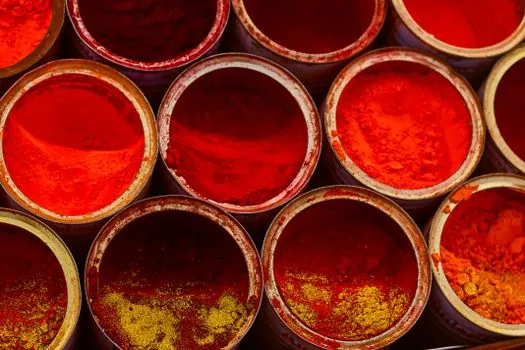
Pick OEM for: technical coatings tied to NACE MR0175, FDA-contact, ATEX/IECEx-marked equipment enclosures, industrial borescope sheath coatings, or any application where the formulation is itself the product differentiator. Pick ODM for: decorative and protective SKUs, hardware-store-tier industrial paints, private-label aerosol cans, and seasonal colour launches where speed beats exclusivity. [S1]
Run both, in sequence, for brand-builders following the pattern ROLLINGDOG documents for paint brushes: ODM for baseline SKUs to keep the catalogue moving, OEM for a proprietary line once volume justifies the NRE [S2]. That dual-track approach is also the model most Asian ODM-heavy electronics ecosystems use to compress time-to-market while still building defensible IP [S3][S4].
Trackable signals to watch over the next two quarters: (1) whether ODM suppliers begin offering exclusive-derivative options to defend against the IP-leakage complaint, and (2) whether OEM NRE quotes continue compressing as CAD/CAE and pilot-run automation reduce first-article cost. The 2025–2026 sourcing-guide cluster, including industrial wireless module sizing guidance and the additive-manufacturing material selection map, all point the same direction: factory capability, not contract label, is the actual decision variable.