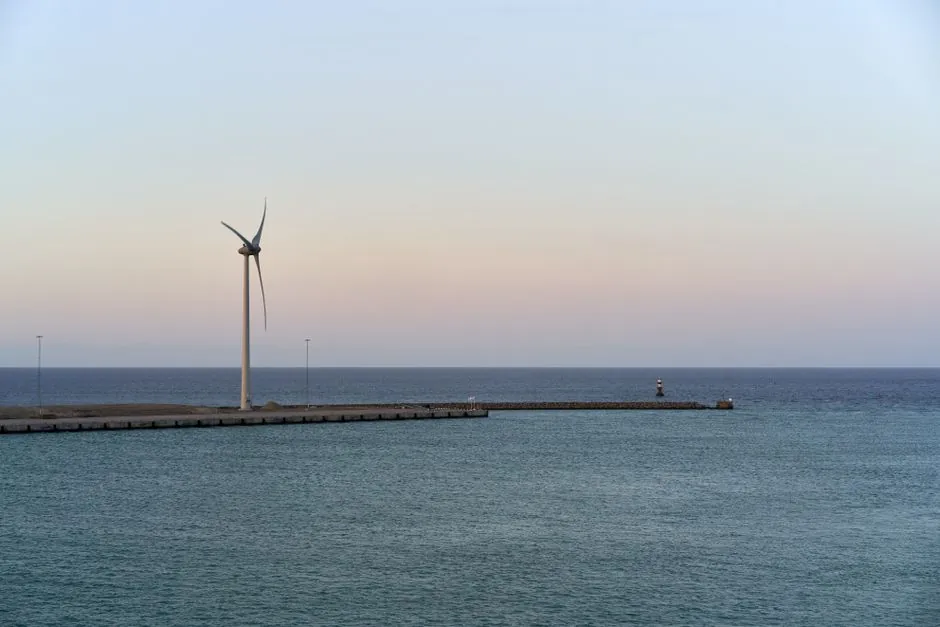
Fixed-bottom foundations accounted for 99.62% of the offshore wind foundation market by installation volume in 2025, and within that segment mainland Chinese fabricators supplied 26% of all turbine foundations installed globally outside Asia-Pacific, up from virtually zero in 2020 [S2][S4].
Global offshore wind spend is forecast to grow from USD 45.2B in 2026 to USD 93.5B by 2033, a compound annual growth rate consistent with the 15.4% CAGR MarketsandMarkets projects to USD 208.33B by 2035 [S3][S8]. That demand wave is pulling foundation fabricators, monopile rolling mills, and jacket-assembly yards into a bottleneck that determines whether 15 MW–20 MW turbine orders actually get installed on schedule.
Where the Volume Sits: Fixed-Bottom Versus Floating
Fixed platforms commanded 99.62% market share by foundation type in 2025, while floating semi-submersibles occupy the remaining share but are projected to grow at a 42.1% CAGR through 2031 [S2]. The split is structural: most operating offshore wind capacity sits in water depths of 10–60 m, the design window for monopiles and jackets, with floating concepts reserved for sites past roughly 60 m where fixed steel becomes uneconomic.
By turbine class, units above 6 MW held 66.55% of the market in 2025 and the same class is advancing at a 22.35% CAGR to 2031, which directly raises monopile diameter and wall-thickness requirements [S2]. For buyers of pressure sensor instrumentation on hydraulic pile-up cylinders and grout monitors, the implication is a step up in cycle pressures and vibration bandwidth.
Monopile Capacity: Who Actually Rolls the Steel
CS WIND Offshore (Denmark) holds approximately 20% of the global monopile foundation market, making it the single largest supplier; the top tier also includes Haizea Wind Group (Spain) and Rainbow Heavy Industries (China) [S6]. That single-vendor concentration of roughly one-fifth of the world’s monopile output is the central supply-chain risk most procurement plans under-count.
Westwood’s April 2026 insight quantifies the structural shift: Chinese foundation fabricators went from near-zero non-APAC market share in 2020 to 26% in 2025, a 5-year build-out driven by domestic yard expansions, large-diameter plate rolling capability, and competitive EUR-denominated bids on European tenders [S4]. For projects sourcing through 2027, flow meter selection on grout lines now needs to handle a wider vendor mix and longer transit routes from Chinese yards to North Sea marshalling ports.
Selection Criteria: Steel Sourcing, Plate Thickness, and Yard Geography
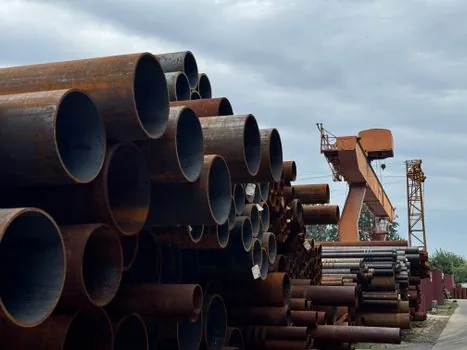
Three decision criteria dominate monopile sourcing in 2026. First, plate availability: heavy-gauge steel above 100 mm wall thickness is the binding constraint, with European mills and CS WIND holding the deepest order books. Second, yard geography: marshalling port draught and proximity to the wind farm reduce barge tow cost more than headline unit price, which is why Spanish and Chinese yards compete aggressively for Mediterranean and Asia-Pacific tenders. Third, weld procedure qualification: EN 1090-2 EXC3 or EXC4 execution class is now the default ask for primary tubular joints, with project-specific fatigue spectra layered on top. [S2]
For jacket and tripod substructures, the comparison shifts: weight per foundation runs 800–1,200 t versus 800–1,500 t for a current monopile, but the fabrication is more distributed and tolerates a broader supplier base [S5]. Engineers specifying hydraulic actuators and industrial valve packages on jack-up installation vessels should plan for that distributed supply chain rather than single-source monopile mills.
Regional Split: Asia-Pacific Dominance and North America’s Catch-Up
Asia-Pacific commanded 54.35% of the offshore wind market by geography in 2025, while North America records the highest projected CAGR at 103.6% through 2031, a function of the US 30 GW federal target and streamlined permitting [S2][S7]. Europe remains the second-largest region, anchored by the UK, Germany, the Netherlands, and Denmark, where strike prices under EUR 40/MWh in Denmark’s latest tender kept project economics inside bankable range [S2].
China’s domestic build is the hidden driver: 15 MW+ platforms are entering serial production at Mingyang, Goldwind, and Envision, which means Chinese yards can bid international monopile contracts with marginal-cost pricing on top of already-depreciated plate-rolling lines [S4][S5]. For related scale context, see our Wind turbine gearbox demand 2026–2030 coverage of the 1,299 GW global fleet build-out.
Use Cases and Failure Modes: What Trips Up Foundation Sourcing
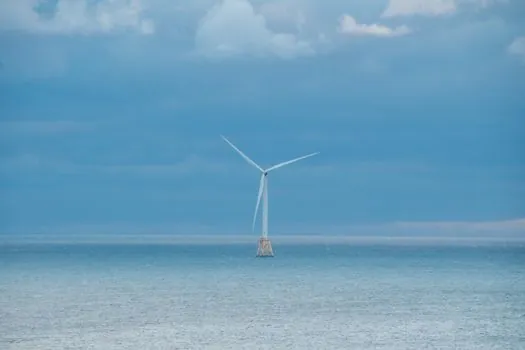
Monopile over-run at the steel mill is the most common schedule failure: a 12–18 month rolling slot means procurement must lock plate chemistry (typically S355ML or S420ML per EN 10025-4) and heat-treatment spec 12 months before the scheduled tow-out. Project owners that assumed European mill capacity in 2024 have shifted orders to Asian yards with longer transit but reliable rolling slots. [S5]
Foundation engineering risks are less about the steel itself and more about secondary systems: grouted connections between monopile and transition piece need real-time pressure and flow monitoring, where a pressure transmitter with HART 7 and ATEX IECEx zone 1 certification is the typical spec on North Sea installations. Foundation scour protection, often specified with rock armour of 5–40 kg graded stone, also demands accurate level and density instrumentation on the placement vessel.
Standards, Sources, and Trackable Signals
Two design standards govern the bulk of current monopile specification: DNV-ST-0126 for support structures and API RP 2A-WSD for fixed offshore platforms, both referenced indirectly through project certification bodies in the source material. UL Solutions and AWS Truepower (now UL) have run the US Met-Ocean Data Center for Offshore Renewable Energy (USMODCORE) under the DOE market-acceleration programme, providing the wind and wave boundary conditions that drive fatigue load cases on every modern monopile [S1].
Trackable signals for the next 6–12 months include: (a) whether CS WIND Offshore’s roughly 20% monopile share shifts as Chinese yards take incremental European slots, (b) any US BOEM lease auction that triggers jacket demand past the 60 m contour, and (c) the first 15 MW+ foundation orders under the Japan Round 3 auction framework. Foundation procurement that locks plate-rolling capacity and qualified yards in Q4 2026 will beat the 2027–2028 install queue. Related spec context for adjacent capital projects is in our Grid-Scale Battery Storage 2026 and Sourcing Solid-State Batteries From China coverage, where similar Chinese-supplier penetration dynamics are playing out in parallel.