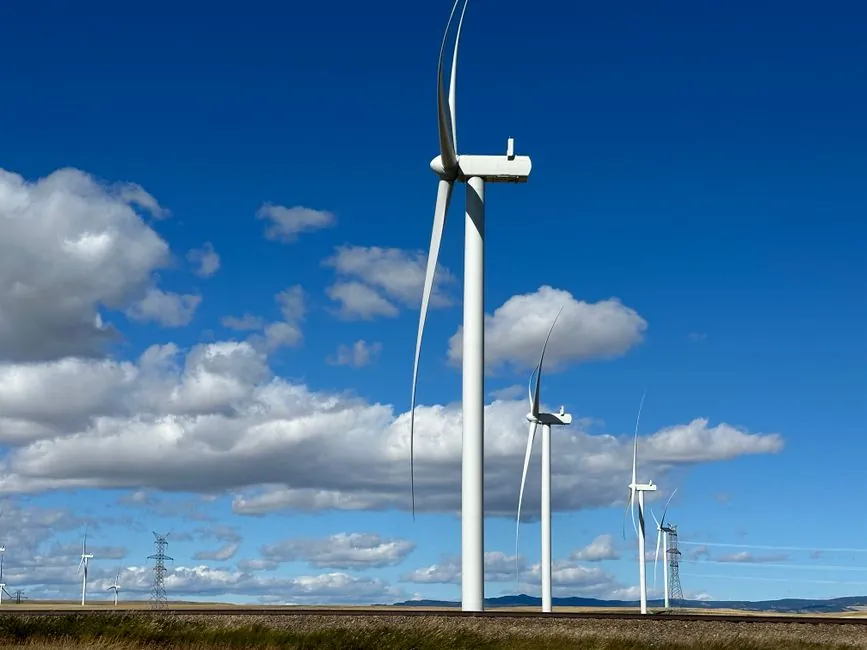
The wind turbine gearbox market is valued at USD 23.92 billion in 2024 and is forecast to reach USD 45.48 billion by 2033, advancing at a 7.4% CAGR, with the global installed base expected to accumulate roughly 85,434 units by 2026 at a 6.67% CAGR [S1].
That headline growth, however, masks a structural shift: the wider wind turbine market reached USD 118.2 billion in 2025 and is tracking toward USD 264.6 billion by 2035 at an 8.4% CAGR, while Asia-Pacific alone holds 58.7% of revenue and onshore installations account for 81.3% of new build share [S2]. Inside that envelope, the gearbox-versus-direct-drive split is the single most consequential competitive variable.
Market Sizing and the Replacement Cycle
The gearbox segment is sized at USD 25.69 billion in 2025 and is on track to hit USD 45.48 billion by 2033, implying an incremental value pool of roughly USD 20 billion over the eight-year window [S1]. Unit demand is also expanding: the segment is projected to reach about 85,434 units by 2026 at a 6.67% CAGR, with the higher unit number reflecting capacity additions in 3-6 MW onshore platforms common across China and India [S1].
Replacement demand, not greenfield orders, is the structural floor. Original equipment suppliers are increasingly positioning for service and retrofit revenue as the first-generation fleets installed during the 2005-2014 build cycle approach 20 years of service, the typical design horizon after which planetary stages, high-speed-shaft bearings, and lubrication systems require major overhaul [S1]. The horizontal-axis configuration still dominates at 94.1% of installed turbines, and rotor blades alone represent 21.3% of total wind-turbine component revenue, both indicators that the upstream drivetrain supply chain is concentrating around a few high-volume architectures [S2].
Direct-Drive Architectures as a Competing Path
Direct-drive turbines represent the most credible substitution threat, with the segment valued at USD 24.31 billion in 2026, up from USD 21.74 billion in 2025, and forecast to reach USD 42.44 billion by 2031 at an 11.80% CAGR, faster than the geared market [S5]. Permanent-magnet synchronous generators hold 87.90% of the direct-drive generator mix, while the 3-8 MW class controls 43.25% of installed direct-drive capacity and the above-15 MW class is expanding at a 21.96% CAGR, the clearest signal that the leading edge of the industry is moving past the gearbox step-up entirely [S5].
Onshore still commands 69.80% of direct-drive revenue, but floating offshore is the fastest-growing sub-segment at 33.18% CAGR through 2031, where simplified drivetrains cut service visits in harsh marine conditions and the maintenance premium of a remote gearbox swap can exceed USD 1 million per vessel mobilization [S5]. For buyers weighing gearbox vs direct-drive, the comparison collapses into four decision criteria: rated power (geared still wins below 8 MW), LCOE sensitivity (direct drive below USD 0.033/kWh in 2024 LCOE average for wind, with gearbox maintenance removed), weight per MW (gearbox drivetrain lighter at small ratings, direct drive heavier but less complex), and rare-earth supply exposure (87.90% of direct drive uses NdFeB permanent magnets, a known concentration risk) [S5].
Patent Landscape: Who Actually Files on Reliability
The 2015-2026 patent landscape for wind-turbine-gearbox reliability is narrow and concentrated: only 57 published records cover the topic, and the top five assignees control the majority of filings [S4]. Ricardo UK Ltd leads with 19 records, followed by Solvay Specialty Polymers Italy (11), Vestas Wind Systems (9), Honeywell International (7), and US Synthetic Corp (4), with Rolls-Royce and Transactiva tied at 2 each [S4].
Two patterns are notable for specifiers. First, filing activity peaked at 10 records in 2021 and fell to 1 by 2024, a 90% drop, indicating that the technology has matured to incremental improvement rather than breakthrough IP [S4]. Second, the International Patent Classification breakdown shows F03D (wind motors) at 47.4% of records, testing and structural balance (G01M) at 19.3%, lubricants (C10M) at 17.5%, and shafts, bearings, and couplings (F16C) at 15.8%, meaning the IP frontier sits in lubricant chemistry, condition-monitoring test rigs, and planet-bearing fatigue rather than in gear geometry [S4]. A representative granted claim, US8980811B2, covers a perfluoropolyether lubricant for gearbox service, filed by Solvay Solexis, which has become a standard reference for premium synthetic oil selection in the industry [S4].
Bearing Adjacency and Drivetrain Integration
Wind turbine bearings are a closely coupled adjacency: the global market was USD 9.8 billion in 2024 and is forecast to reach USD 22.1 billion by 2033 at a 9.5% CAGR, outpacing both the gearbox and the wider turbine market [S3]. Bearings enter the drivetrain at the main shaft, gearbox planet and high-speed stages, generator, and pitch and yaw systems, and the move to turbines above 10-15 MW offshore has forced a step-change in load distribution, fatigue life, and surface treatment [S3].
The pressure sensor and condition-monitoring stack inside the gearbox is now a differentiator, not an accessory. Integrated smart sensors feeding vibration and temperature analytics into predictive maintenance platforms are described in supplier guidance as central to reducing unplanned downtime, and hybrid ceramic rolling elements with extended-life lubrication systems are positioned as the path to multi-year service intervals on offshore units [S3]. Direct-drive turbines, which eliminate the gearbox but require large-diameter main bearings, are simultaneously reshaping the bearing demand mix, a point that bearing suppliers are tracking as a structural shift in their order book [S3].
Specification Levers for Procurement Teams
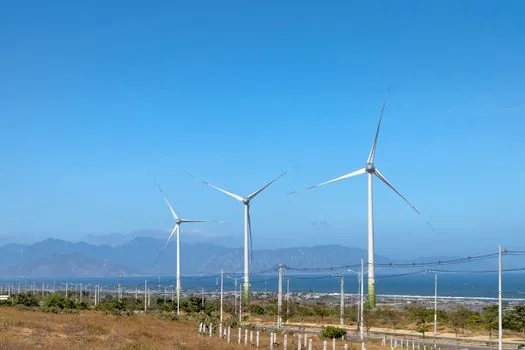
For project engineers, the 2026 specification debate reduces to a small number of hard variables. The flow meter and instrumentation that feed the gearbox's lubrication and cooling loop must be rated for sustained low-flow monitoring of high-viscosity synthetic oils, and a turbine flowmeter is a common pick for the lube-circuit duty cycle because of its low minimum flow and fast response under pulsating conditions typical of planet-stage splash-fed gearboxes. [S1]
Material selection is converging on through-hardened and case-carburized gear steels with cleanliness ratings aligned to ISO 4406 for the lubrication system, and surface treatments such as shot peening and super-finishing are now standard for high-speed-stage pinions. For offshore units above 12 MW, suppliers are pushing for vacuum-degassed bearing steels with retained austenite control and DLC coatings on planet bearing rollers, all of which appear in the F16C subclass of recent patent filings [S4]. A side-by-side: geared vs direct-drive at 8 MW rating, the geared drivetrain weighs roughly 30-40% less and has lower first cost, while the direct drive eliminates the gearbox failure mode entirely but adds 80-100% generator mass and binds the design to a permanent-magnet supply chain dominated by NdFeB at 87.90% of the generator mix [S5].
Standards, Reliability, and What to Watch Next
No single IEC or ISO standard governs the wind-turbine gearbox as a black box, but the surrounding design envelope is anchored by AGMA 2006 (gear rating), ISO 6336 (calculation of load capacity for spur and helical gears), ISO 4406 (hydraulic fluid cleanliness), and the bearing-life methodology in ISO 281, all of which are routinely cited in supplier design reports and in the testing claims that fall into G01M of the patent mix [S4]. Offshore, the certification overlay from DNV, TÜV, and UL is what gates serial production, and the move to above-15 MW platforms is forcing updates to those certification frameworks, a process visible in the rise of full-scale gearbox test rigs at OEM and independent labs.
The competitive landscape, when read through patent assignees and supplier guidance, narrows to a small set of credible Tier 1s, and the near-term signal worth tracking is the 2025-2026 publication wave of 2024-2025 filings, which is expected to clarify whether the 90% post-2021 drop in reliability-patent activity was a genuine cooling or a lag artefact (the typical 18-month publication delay means 2024-2025 filings surface through 2026 and 2027) [S4]. On the demand side, watch the 11.80% CAGR divergence between the direct-drive market (USD 24.31 billion in 2026) and the geared market (USD 25.69 billion in 2025): the two lines will cross inside the forecast window, and the crossover year is the cleanest single metric for the substitution pace [S1][S5]. Replacement-driven gearbox service revenue and the offshore direct-drive ramp remain the two structural forces shaping supplier order books into 2030.
For related coverage, see Battery Cell Production Line Design: Stages, Cell Formats, and 2026 Spec Levers.