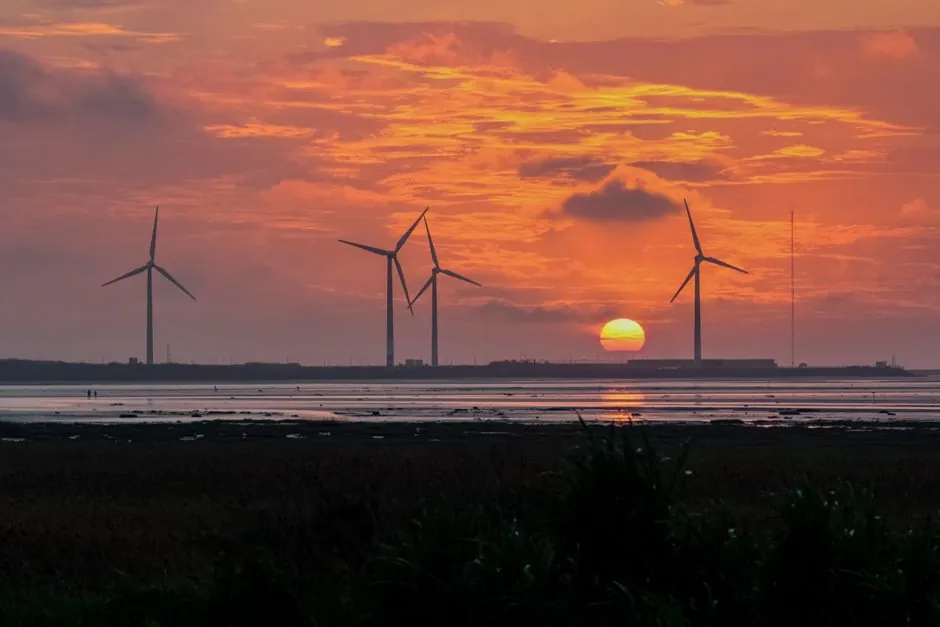
The offshore wind foundation market is fragmenting along water depth: monopiles still anchor the fixed-bottom segment, jackets handle the mid-depth transition, and floating archetypes (spar, semi-submersible, TLP) are stepping in beyond 60 m where steel cannot be driven economically [S2][S5].
Global offshore wind added 6,773 MW of new capacity in 2025, with 644 monopiles and 145 jackets installed and turbines above 13 MW accounting for 67% of all units installed [S3]. The foundation segment alone is sized at USD 1.81 billion in 2026, projected to USD 3.93 billion by 2035, while the wider offshore wind market is valued at USD 45.2 billion in 2026 on its way to USD 93.5 billion by 2033 [S4][S5].
Three Foundation Archetypes, Three Depth Bands
Fixed-bottom monopiles dominate shallow sites with water depths up to roughly 50 m and remain the default low-cost option where seabed geotechnics allow driving large-diameter steel tubes; the 644 monopiles installed in 2025 reflect this baseline [S2][S3].
Jacket structures (lattice steel trusses pinned to the seabed with piles) cover the transition band where water depth or seabed conditions rule out a monopile, and 145 jackets were installed in 2025 alongside the monopile count [S3]. Floating foundations take over beyond 60 m: spar-buoy (deep-draft ballast-stabilized), semi-submersible (column-stabilized with broad waterplane area), and tension leg platforms (TLP, tendon-stabilized with constrained heave/pitch) are the three canonical archetypes, with barge and hybrid designs as a fourth [S2].
Selection is site-driven: an Analytical Hierarchy Process study cited in the PatSnap landscape found semi-submersibles preferred for low-traffic sites and spars for high-traffic sites, with mooring fatigue, dynamic aero-hydro-servo-elastic response, and installation weather windows as the recurring engineering constraints [S2]. For an engineering cross-cut of how process instruments map to a steel substructure, see this foundation vehicle reference, and for the controls and instrumentation interface see the PLC spec page.
2025 Installation Numbers That Define the Competitive Field
Siemens Gamesa installed 62% of all wind turbines in 2025 with the SG 14 platform leading, while Vestas and GE Vernova filled the second tier across Europe, APAC, and the United States [S3].
On the foundation side, DEME's Orion and Seaway7's Seaway Strashnov were the most active installation vessels, placing 100 and 89 monopiles respectively, while eight new jack-up vessels (including four new Cadeler units, one for DEME, APAC additions, and a U.S.-compliant vessel for Dominion Energy) entered the global fleet in 2025 [S3]. Cadeler installed 230 turbines in 2025, capturing nearly half of global turbine installation activity, with Jan De Nul and DEME following [S3].
On-position installation duration stretched to a 3.85-day average (2.61-day median), with U.S. projects averaging around 6.20 days because of new-market ramp-up and weather constraints, a clear signal that execution risk now matters as much as design choice [S3]. A broader spec map for the foundation demand cycle sits in this monopile, jacket, and floating demand article.
Floating Pilots: Where Spar, Semi-Submersible, and TLP Actually Compete
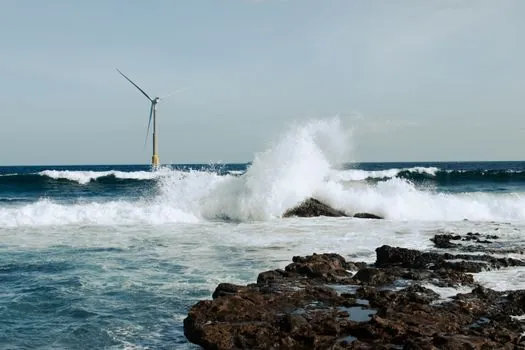
Floating offshore wind foundation patent activity spans roughly 23 years of filings, from 2002 prototypes to 2025 commercial-scale designs targeting turbines of 20 MW or greater, across spar, semi-submersible, TLP, and hybrid archetypes [S2].
IHI Corporation (formerly Ishikawajima-Harima Heavy Industries) filed the earliest systematic family: an offshore floating wind power generation plant with a triangular float and single-point mooring across WO, AU, and EP jurisdictions between 2002 and 2007, a cluster of four related filings [S2]. Changxing Wind Power Technology (China) added octagonal multi-unit floating platform filings in EP and US jurisdictions in 2012, and Siemens Gamesa closed the dataset with 2025 wind-direction-responsive platform filings [S2].
Core technical bottlenecks cut across all three archetypes: dynamic coupled aero-hydro-servo-elastic response modeling, mooring system fatigue and integrity, installation weather window optimization, and levelized cost of energy reduction [S2]. A new deep-water offshore wind analysis debuted at WindEurope 2026 and explicitly flagged that competition between foundation technologies is set to intensify, with cost, deployability, and site conditions as the differentiators [S6].
Decision Criteria: Cost, Depth, Seabed, Port Distance
For a 30 m North Sea site with sandy seabed and a nearby heavy-lift port, monopile delivers the lowest capex per MW and uses the existing jack-up fleet; jacket enters the picture when water depth pushes past 45-50 m or when seabed geology (rock, very hard clay, or boulder layers) prevents driving [S2][S3].
For a 70-150 m deep Mediterranean or U.S. Pacific site, jacket capex rises sharply with steel mass and pile count, opening the door to floating; semi-submersible is favored when port draft is shallow or tow-out distance is short, while spar is favored for high-energy, high-traffic sites with sufficient port depth [S2]. TLP sits in a narrower niche where low heave is critical and the soil can take tendon preload, and hybrid/barge designs appear in pilots targeting fabrication cost reduction [S2].
Across these options the recurring non-negotiables are: metocean design conditions measured by floating lidar (WindSentinel-class buoys have measured profiles up to 200 m blade-tip height), geotechnical site characterization, and port/vessel availability for the chosen draft and lift class [S1][S7]. The geotechnical services for offshore wind market alone is sized at USD 175.72 million in 2026, projected to USD 515.93 million by 2034 at a 14.41% CAGR, a sign that ground risk is now a first-order cost driver [S7].
Reliability and O&M: A Constraint on Every Foundation Choice
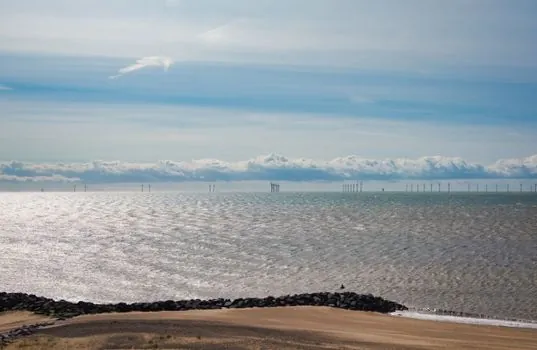
The global offshore wind fleet recorded an 8.2% failure rate in 2025, the highest in more than a decade, with the aging Siemens Gamesa G4 (3.6/4.0 MW) platform hitting 18% failure in year 12 [S3].
O&M jack-up interventions reached 571 in 2025, a 14% increase over 2024, and ZITON completed 262 of those interventions, a fleet record, deploying its six-vessel fleet on increasingly larger turbine platforms [S3]. Foundation choice interacts directly with this: floating platforms add mooring-line and dynamic cable inspection scope, while jacket foundations add node and brace fatigue scope, both pushing the pressure transmitter and flow meter instrumentation count per asset.
U.S. projects averaged around 6.20 days per on-position installation, well above the 3.85-day global average, a function of new-market ramp-up and weather constraints, and the same execution gap is showing up in O&M access windows for U.S. assets [S3].
Standards, Sourcing, and What to Track Next
No single IEC or ISO standard governs foundation selection; rather, the rule set layers site-specific metocean design conditions, geotechnical characterization, fabrication welding standards (typically tied to EN 1090 execution classes for European builds and AWS D1.1 for U.S. builds), and corrosion protection regimes such as NACE MR0175 for sour-service exposure on monopile and jacket piling [S1][S7].
Market-side, the U.S. Department of Energy's Integrated Energy Systems Office continues to fund wind resource characterization, metocean data, environmental surveys, and supply chain projects, including the U.S. Met-Ocean Data Center for Offshore Renewable Energy (USMODCORE) by UL Solutions and PNNL-led WindSentinel lidar buoy deployments off Virginia, New Jersey, and California, with profile data up to 200 m blade-tip height [S1]. Comparable demand-side tracking is covered in this offshore wind foundation demand 2026-2030 spec map.
Watch for the 2026 floating pilot commissioning results from European demonstrators (spar, semi-submersible, and TLP), the next wave of 15 MW+ turbine installations using monopile and jacket foundations, and any 20 MW-class floating patent grants that confirm whether the post-2025 Siemens Gamesa filings represent a new mooring-control paradigm or an incremental refinement [S2][S3][S6].