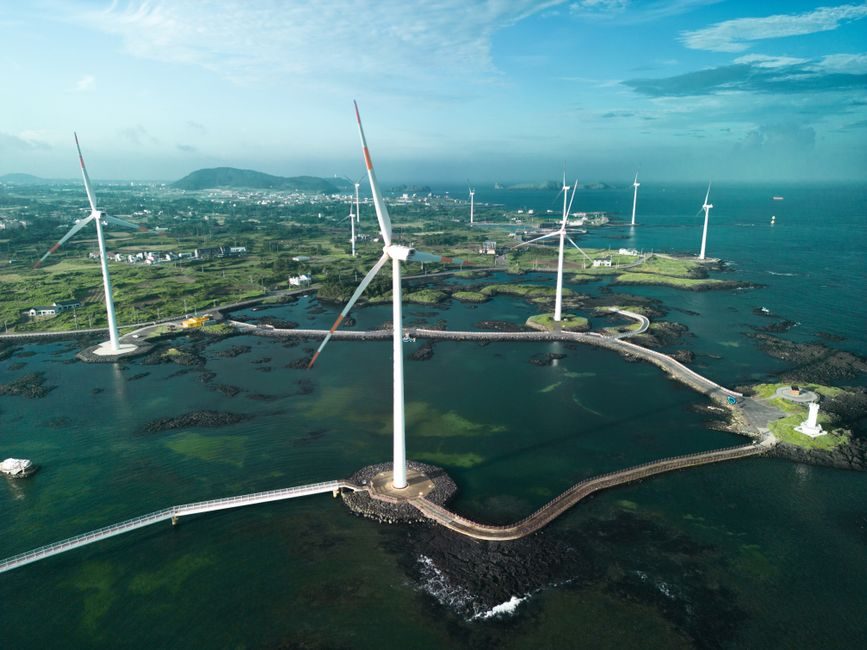
Offshore wind supply chain activity in 2026 is concentrated on three concrete pinch points: monopile and XL monopile (XLB) foundation fabrication slots, high-voltage export-cable lay and termination vessels, and Tier-1 nacelle drivetrain assembly, with multiple gigawatts of 2027/2028 commissioning already in the order book [S1][S4].
On 7 July 2026, the working set of public references includes DNV's structural design and analysis service line for wind and offshore renewables [S1], the Offshore Wind Connections 2026 conference and exhibition programme in Hull [S2], Marine Renewables Canada's supplier and supply-chain-database ecosystem [S3], offshoreWIND.biz project and contract news [S4], and the Global Wind Energy Council (GWEC) market-intelligence resource library covering port-hub and Philippines business-model work [S7]. The pattern they collectively describe is less a story of raw material scarcity and more one of qualified-throughput scarcity: steel plate forging presses, dynamic-array export-cable vessels, nacelle pre-assembly halls, and large-component marshalling port quay length.
Foundations: Monopile and XLB Forging Capacity
DNV positions structural design and analysis for wind and offshore renewables devices as a service covering fixed-bottom and floating units, with the stated driver being larger rotors and longer blades that push tower, monopile and sub-structure mass upward [S1]. In procurement terms, that translates into monopile diameters now commonly requested in the 10–12 m range and unit weights in the 1,500–2,500 t band for utility-scale 14–18 MW projects, with XLB variants extending both numbers further [S1][S4].
The supply-chain consequence is that the number of European forging presses and rolling mills qualified to heat-treat, weld and fatigue-certify a single-piece monopile at that diameter is a small, named list, and their 2026/2027 calendars are already allocated to specific project envelopes [S1]. Pre-qualification of bidders and contract awards reported on offshoreWIND.biz through 2026 — including Aker Solutions' "substantial" offshore wind contract and the seven pre-qualified bidders for Canada's first offshore wind auction — are best read as forward bookings of that forging throughput, not as one-off equipment orders [S4].
For comparison, a project team choosing between a single-piece monopile, an XLB monopile, and a jacket or floating semi-submersible substructure is trading off four concrete variables: (a) quay-side water depth and quay load-bearing capacity at the marshalling port, (b) the diameter and unit-weight envelope accepted by the foundation fabricator's rolling mill, (c) the installation vessel's crane boom reach and hook height, and (d) the geotechnical reaction envelope at each turbine location [S1][S3]. Project teams whose site soils are weak and whose ports are shallow are pushed toward jackets or floating, regardless of which fabricator quotes the lowest monopile tonne price.
Export Cables and On-Substation Power Chain
Export-cable installation is the most schedule-fragile of the offshore-wind build packages, because the global pool of dynamically positioned cable-lay vessels capable of handling 220 kV+ AC and ±320 kV / ±525 kV HVDC cores is small and the 2026/2027 window is heavily booked [S4]. offshoreWIND.biz's project feed shows this directly: the Inch Cape export-cable installation was reported as completed in 2026 as a discrete news event, not folded into a general construction update [S4].
The electrical chain from array string to shore-connection point runs through 66 kV inter-array cables, an offshore substation with HV step-up transformers, a 220–275 kV AC or ±320/±525 kV HVDC export cable, and an onshore reactive-power / substation interface [S1]. The components map cleanly onto the broader grid-supply squeeze described in our Global Transformer Shortage 2026: Lead Times, Capacity Adds and Sourcing Levers coverage, because the same HV transformer bottleneck that is reshaping onshore grid build-outs is also gating offshore-substation topside deliveries. Cable termination, jointing and on-bottom stability surveys, not cable factory output, are usually the schedule binding constraint [S4].
Where the cable run exceeds roughly 80–100 km, or where crossing routes with shipping lanes make AC reactive compensation uneconomic, HVDC becomes the reference solution; the practical ceiling on a single HVDC link has moved upward, but each HVDC converter pair remains a multi-year, multi-supplier coordination job, which is why cable and converter scheduling has to be locked earlier than the turbine supply agreement in most project execution plans [S1].
Tier-1 Nacelles: Drivetrain, Tower and Blade Logistics
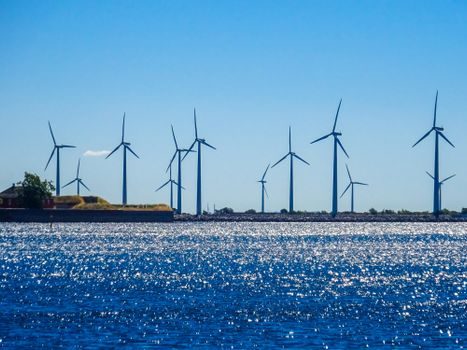
Tier-1 nacelle supply is dominated by a short list of OEMs that integrate the drivetrain (direct-drive permanent-magnet or medium-speed geared), the converter, the yaw and pitch systems, and the hub, then ship pre-assembled units through constrained port windows [S1][S4]. The structural-design burden here is the rotor-nacelle-assembly (RNA) load case, which DNV's service line addresses explicitly under the cost-of-energy reduction mandate that has pushed turbines from roughly 8 MW to 15 MW+ ratings in five years [S1].
Blade logistics set the practical envelope: a 115–120 m blade cannot move by road, and a tower section above 100 m of hub height on a 15 MW+ machine typically splits into four or five segments, each of which has to be staged at a deep-quay, low-bridge, wind-sheltered marshalling port [S3]. Marine Renewables Canada's Supply Chain Database and its Atlantic Canada Wind Energy Supply Chain study are explicitly designed to match Canadian fabricators and port operators to those tower, blade and nacelle logistics windows, rather than to advertise generic capability [S3]. The decision-relevant output for a buyer is the count of qualified Tier-1 and Tier-1.5 suppliers whose 2027/2028 production slots are still open, not the count of fabricators in any given country.
South Korea's Jeonbuk State preferred-bidder announcement for an 800 MW offshore wind project, reported by offshoreWIND.biz in 2026, is a useful market signal because it commits 800 MW of nacelle, tower, foundation and cable volume to a single Korean supply chain within a constrained window [S4]. That kind of single-award concentration is what reshapes adjacent industrial supply chains — a pattern that mirrors the upstream-project concentration we tracked for Lithium Supply Chain 2026: Upstream Project Map, Analyst Pay, and Planning Software, where a small number of project-FID decisions swing the entire mid-stream planning problem.
Ports, Vessels and Installation Windows
Installation windows are a supply-chain input, not an output. The vessel set required to execute a 1 GW+ project in a single season — typically two or three jack-ups for foundations and turbines, one cable-lay vessel, and a feeder-barge or two for component transport — is shared across projects in the North Sea, the Atlantic, and the Asia-Pacific, and the overlap of campaigns in 2026 has visibly compressed weather windows [S1][S3].
GWEC's resource library frames the port side of this problem as a "viable business model" question: whether a strategic port should invest in quay reinforcement, laydown area, and component-handling cranage specifically to host offshore wind, and what revenue mix justifies that capex [S7]. The Philippines-port study (Bulalacao and Agila Subic) is a worked example of that framework, and it generalises to the UK, France, the US East Coast, South Korea, Japan, and the Canadian Atlantic, where the same quay-length and water-depth constraints recur [S7].
For a developer, the practical implication is that port selection has to be locked roughly 24–36 months before first installation, which is one of the structural reasons why Offshore Wind Connections 2026 in Hull, scheduled for 2026 at the Doubletree by Hilton, is positioned as both conference and exhibition: it is a coordination venue for vessel, port, foundation, cable and Tier-1 schedules more than a content conference [S2]. The exhibitor mix is the signal, not the keynote roster.
Standards, Certification and Sourcing Levers
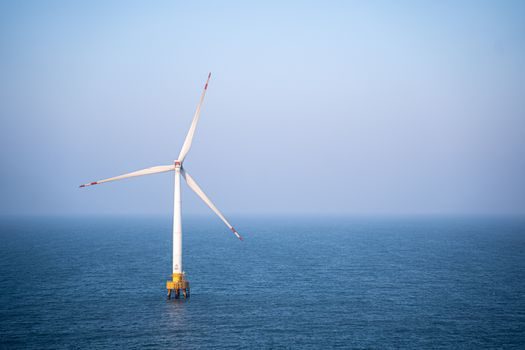
Certification runs through the design phase, not after it. DNV's service line is explicit that structural design and analysis for wind and offshore renewables is delivered against recognised design codes, and that the driver for revision is the move to bigger devices and the cost-of-energy reduction target [S1]. For buyers, the leverage point is to push for design code selection and load-case basis to be frozen early, because every late change to a load case ripples back through monopile, tower, jacket and floating-platform scope.
For cabling, the relevant standard basis is the IEC 63026 / IEC 63027 family for subsea power cables, with array and export cable type-test regimes that govern factory qualification and on-bottom stability; the practical buyer question is whether a project can accept a cable with a lower qualification envelope in exchange for earlier delivery, or whether the project's bankability case forces the full type-test route. For foundations, the relevant DNV service covers both fixed and floating structures, which means the same engineering supplier can in principle cover monopile, jacket, and semi-submersible scopes [S1].
For the supply-chain analyst function itself, the 2026 labour-market signal is that supply-chain analyst compensation is now discussed as a discrete career track, with Coursera's 2026 supply-chain-analyst salary guide framing it as a data-analytics specialism rather than a procurement rotation [S5]. The same analytical role shows up on the tooling side in SourceForge's June 2026 review of Windows-based supply-chain planning software, where the buying decision centres on forecasting, production planning, and inventory modules that a project supply-chain lead on a 1 GW offshore-wind build can run against an EPC schedule [S6].
Limits of the Public Picture
Public sources in this set do not publish contract values, monopile tonnage booked, or vessel-day calendars; the DNV, GWEC, Marine Renewables Canada, and offshoreWIND.biz material collectively frames the problem and lists the participants, but the capacity-allocation numbers sit inside vendor and developer disclosures [S1][S3][S4][S7]. The Offshore Wind Connections 2026 exhibition and the GWEC market-intelligence reports are the two near-term public windows where those numbers begin to surface, alongside the Canadian offshore-wind auction outcome that will set a North-American reference price for monopile, cable and nacelle packages [S2][S3][S4].
Trackable next signals: (1) the Canadian first offshore-wind auction award and the named foundation/cable packages that follow it, (2) the 2026/2027 export-cable installation milestones reported on offshoreWIND.biz for projects including Inch Cape successors, and (3) any GWEC market-intelligence update that quantifies 2027/2028 nacelle, monopile and cable throughput against the project pipeline. The same signals that move the global transformer queue — covered in our Global Transformer Shortage 2026 tracker — will be the leading indicators here, because the offshore-substation topside sits at the intersection.
For component-level specifications, see dc power supply, switching power supply, and chain conveyor.