Selective pallet rack pricing in mid-2026 clusters around three quotable bands: light-duty steel frames at US$0.80–1.10 per kilogram with a 100 kg minimum order, complete bay sets at US$25.50–34.50 per set with a 5-set minimum, and heavy-duty industrial frames at US$60.00–380.00 per set with a 10-set minimum [S3]. A standard 2,300×1,000×5,025 mm, 4-level unit rated 2,000 kg per beam level remains the most-quoted reference configuration on B2B portals, with 75 mm beam adjustability and ISO 9001:2008 mill certification on the offer sheet [S2].
Buyers evaluating total cost should anchor on three numbers: the per-kilogram raw frame rate (US$0.80–1.10/kg), the assembled bay price (US$25.50–34.50/set), and the heavy-duty engineered rate (US$60.00–380.00/set), then layer in upright section size, beam profile, and seismic/galvanised upgrades. The gap between the cheapest light-duty frame and a finished heavy-duty bay can exceed 30× on a per-tonne basis, which is why a per-kilogram quote is meaningless without a section-size and duty-class context [S3].
Frame Section Sizes and Steel-Weight Cost Drivers
Upright section dimensions on the standard pallet rack offer sheet span 90×70 mm, 100×80 mm, and 120×95 mm, while box-beam sections run B80×50 mm, B100×50 mm, B120×50 mm, and B140×50 mm [S5]. The 120×95 mm upright paired with a B140×50 mm beam is the typical heavy-duty combination, and the per-set price step between a 90×70 mm upright bay and a 120×95 mm upright bay tracks the steel mass ratio, roughly 1.4–1.7× at identical bay dimensions [S5].
Because suppliers price on either per-kilogram or per-bay models, a procurement engineer must convert both into a common unit. A 2,300×1,000×5,025 mm 4-level bay in 120×95 mm uprights with B120×50 mm beams lands in the US$25.50–34.50/set band on Shandong-origin offers, while the same bay on a 90×70 mm light frame falls into the US$0.80–1.10/kg band because the section mass is roughly 25–35 kg per frame and the per-tonne rate compounds [S3][S5].
Selective Rack vs Drive-In vs AS/RS Cost Trade-off
Selective pallet rack (SPR) is positioned on B2B sheets as the lowest-capital storage system with direct access to every pallet, with beam levels adjustable on 75 mm or 76 mm pitch and upright-and-beam construction only [S5]. Drive-in and double-sided modular cassettes (Böckelt-type tubular/cassette handling racks) trade selectivity for density and run higher per-pallet-position because the upright and rail geometry is heavier and the bracing layout is more complex [S1].
For a deeper look at the density-versus-throughput math, see the Pallet Rack vs AS/RS 2026 cost comparison, which lines selective rack, drive-in, and automated retrieval systems against capital cost, throughput, and SKU velocity. The rule of thumb on 2026 portals: a selective bay in the US$25.50–34.50/set range is roughly one-third the capital of an equivalent AS/RS aisle, but offers zero SKU-velocity gain from automation [S2].
MOQ, Pack-out, and Certification Line Items
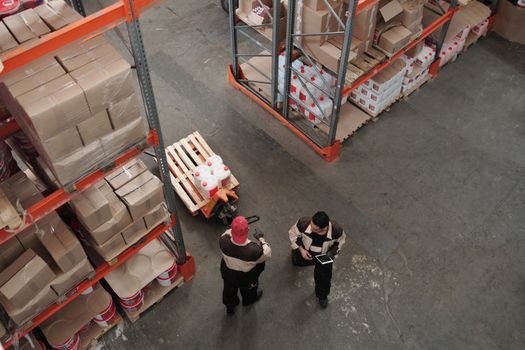
Minimum order quantities split cleanly into three tiers: 100 kg (kilogram-priced offers), 5 sets (entry-level bay offers), and 10 sets (heavy-duty bay offers) [S3]. Standard pack-out is metal strip, stretch film, paper board, and master carton, with mill certification to ISO 9001:2008 listed on the offer data sheet for the most-quoted configurations [S2]. Customised sizes and non-standard colours (orange, green, red, grey in addition to standard blue) are accepted at the same per-set price band on most China-origin offers [S2][S5].
Lead-time and FOB terms are not disclosed on the offer pages, so procurement should request an Incoterm (EXW, FOB, CIF) and a galvanised-versus-powder-coat finish specification before locking the per-set price; S1 lists galvanised steel as an available material option for comparable rack systems, though no specific galvanised-versus-coating price premium is documented in the retrieved sources.
Beam Capacity, Adjustability, and Load-Class Cost Mapping
The 2,000 kg per beam level rating on the 2,300×1,000×5,025 mm reference bay is the price-quoted baseline, and it is the single number that maps the US$25.50–34.50/set band to a structural duty class [S2]. Doubling the per-level rating to 4,000 kg typically requires stepping from a 100×80 mm upright to a 120×95 mm upright and from a B100×50 mm beam to a B140×50 mm beam, which moves the bay into the US$60.00–380.00/set heavy-duty band [S5].
Beam adjustability is held constant at 75 mm or 76 mm pitch across both the standard and heavy-duty offers, so adjustability itself is not a price discriminator — section size and steel mass are [S5]. For a primer on how selective rack fits alongside a pallet stacker workflow, the adjustability pitch dictates the maximum pallet height variation the system can accept without re-drilling.
Containerised Pallet Rack and Export Pack Considerations
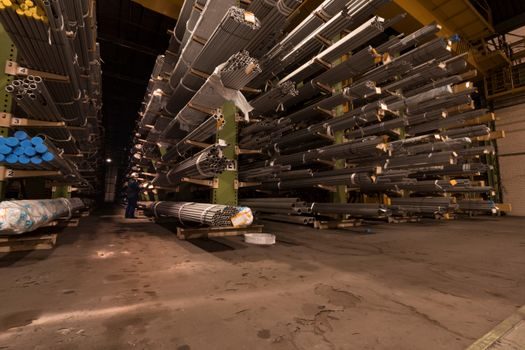
Container-deployed pallet support racks (used to ship 2–4 sedans or medium-to-large vehicles inside a 20–53 ft container) are a separate product line from warehouse selective rack and are listed on specialist container-fabricator offer sheets rather than storage-rack portals [S4]. Their price is driven by lashing-point count, vehicle-class rating, and container-length fit, not by per-bay selective-rack logic [S4].
For warehouse applications, the pallet rack cost stack ends at the upright and beam, while a storage rack project priced through Made-in-China or Okorder offer sheets should always be normalised back to a per-set, per-bay, and per-kg basis for cross-supplier comparison [S2][S3].
Procurement Watch-list for the Next Quote Cycle
Two signals are worth tracking into the next quote cycle: the spread between the US$0.80–1.10/kg light-frame floor and the US$80.00/sq ft heavy-frame ceiling [S3], and the appearance of automated-storage variants (AS/RS pallet racks) inside the storage-rack price portals at sub-US$1.15/kg entry pricing, which suggests the automation tier is being commoditised at the rack-component level. Cross-check the plastic pallet deck specification against beam pitch (75–76 mm) to avoid a mismatch that forces a re-spec mid-project.