
Chinese-export PEEK (polyether ether ketone) virgin-pellet reference pricing sits at US$50.00–150.00/kg FOB for 1 kg minimum order on Made-in-China.com listings dated 2026-05-13, with Shandong Hongda-spec resin rated for continuous service near 260 °C, tensile strength 81–130 MPa, water absorption below 0.01 %, and mould shrinkage 1.0–2.5 % [S3]. That single span is the floor and the ceiling a B2B buyer should anchor on before adding grade, geometry, and certification premiums.
Finished PEEK balls, rods, and plates trade in a different band again: PEEK ball suppliers on Made-in-China list US$0.03–0.05 per piece at a 10-piece MOQ, a unit figure driven by 3–12 mm commodity balls rather than by the underlying kg cost [S2]. The gap between pellet price and finished part price is where most of the real procurement decisions sit, and is the focus of the rest of this guide.
Cost Stack: Pellet → Stock Shape → Machined Part
The PEEK cost stack breaks into four additive layers. Layer 1 is the resin itself, dominated by Victrex, Solvay (KetaSpire / NovaSpire), Evonik (VESTAKEEP), and Chinese domestic producers; virgin unfilled natural-grade pellet sits in the US$50–150/kg FOB band [S3].
Layer 3 is converting to stock shape (extruded rod, compression-moulded plate, hot-moulded near-net shapes). Stock-shape conversion can add 30–80 % over the pellet price because of the energy input for melt temperatures around 370–400 °C and tool wear. Layer 4 is machining, where PEEK's abrasiveness on tooling, the need for sharp carbide cutters, and annealing to relieve residual stress on thick sections add 2–5× the raw stock cost in labour and machine time on a finished precision part. Readers comparing total cost of ownership across engineering polymers will recognise the same shape on the Line Frequency Induction Furnace 2026 Buying Guide and on a typical PEEK machined-housing RFQ — material is rarely the dominant line item at finished-part level.
Grade-by-Grade Price Differentiation
Unfilled natural PEEK (e.g. Victrex 450G) is the cheapest grade and the one most often quoted in headline per-kg ranges. Bearing-grade PEEK with PTFE, graphite, or carbon-fibre additives commands a 20–50 % premium because the additives are themselves expensive and the compounding is tightly controlled for tribology. Glass-fibre-reinforced 30 % (e.g. 450GL30) typically lands 10–25 % over neat, while carbon-fibre-reinforced 30 % (450CA30) lands 20–40 % over neat because of the carbon-fibre cost base. [S1]
Medical/implant grades (Victrex PEEK-Optima, Solvay Zeniva) carry the largest premium — often 3–10× the commodity-pellet price — driven by lot traceability, biocompatibility testing to ISO 10993, and the regulatory dossier each manufacturer maintains. Aerospace grades qualified to specifications such as BMS8-114, AS-41, or DMS-2469 likewise add certification overhead. If the application is a structural bushing on a linear guide carriage or a crossed-roller guide slider, unfilled or glass-filled usually suffices; if it is a sterilizable medical implant or a flight-control bushing, the grade premium is unavoidable.
Form Factor: Pellet, Rod, Plate, Ball, Film
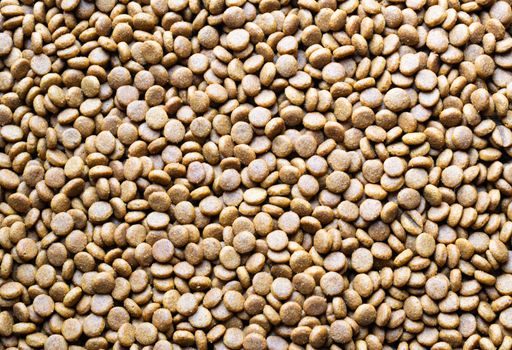
Pellet form is the lowest cost per kg but useless to a buyer who needs a finished part. Extruded rod (3–200 mm diameter) typically sells at a 30–60 % premium over the equivalent kg of pellet, while compression-moulded plate (5–50 mm thick) sits at a 40–80 % premium because of mould cycle times and the lower scrap yield of plate pressing versus continuous extrusion. [S2]
Small-diameter PEEK balls in the 3–12 mm range are a commodity item and trade per piece rather than per kg: US$0.03–0.05 at 10-piece MOQ from audited Chinese suppliers [S2]. Precision PEEK balls above 12 mm — used in industrial valve seats and check-valve poppets — fall back into per-kg pricing and align with rod pricing. PEEK film and PEEK-coated pressure sensor diaphragms for chemical service are the most expensive per unit area because the thin gauge drives yield loss.
What Drives the FOB Spread Inside the US$50–150/kg Band
Three variables explain the 3× spread inside a single commodity pellet listing. First, lot size: 1 kg MOQ listings are price-leading, while 1-tonne or full-container pricing typically clears 20–35 % under the headline figure once freight and palletising are netted. Second, certification: lots sold with batch-level certificate of analysis, melt-flow index data, and traceable manufacturing dates sit at the top of the band; generic industrial-grade lots without documentation sit at the bottom. [S3]
Third, origin and route: domestic Chinese producers (Hongda, ZYPEEK, Junhua) compete on price and lead time for Asia-Pacific buyers, while European and Japanese origin resin (Victrex UK, Solvay, Evonik, Mitsubishi Chemical) commands a 30–80 % premium even at large volumes because of trade-route, duty, and qualified-supplier inertia. For buyers also evaluating aluminium and other non-ferrous feedstocks, the Aluminum Market 2026: Sizing, Segments and Sourcing Spec Map walks through the same origin-versus-route logic for a parallel metal category.
Cost Levers a Buyer Can Actually Pull

Specifying the right grade is the single largest lever. Unfilled PEEK at 81–130 MPa tensile strength [S3] covers most chemical-process, food-grade, and semi-structural uses; reaching for 30 % carbon-fibre-reinforced when glass-fibre would do is the most common overspend.
Standardising on extruded rod over compression-moulded plate wherever the part geometry allows removes 15–25 % of the conversion premium. For small spherical parts, ordering PEEK balls at the 3–12 mm commodity tier [S2] rather than machining from rod typically cuts piece cost by 50–80 %, and the same logic applies to 3D printing PEEK filament for low-volume prototype runs versus machined-from-stock for production. Finally, dual-sourcing between one Chinese producer and one Western-qualified producer reduces the certification-premium trap when a single-source specification has drifted to the top of the band.
Limits, Failure Modes, and Sourcing Red Flags
Headline pellet prices do not include the duty, freight, demurrage, and inventory-carrying line items that typically add 10–25 % to landed cost for trans-Pacific PEEK shipments. Buyers who quote US$50/kg to engineering and then bill US$75–95/kg at landed cost are doing the math correctly, not inflating the budget. MOQ discipline is the second trap: the headline US$50/kg on a 1 kg listing [S3] is not the same as the price a contract manufacturer paying 500 kg/month actually pays.
Substitution fraud is the third risk. PAA (polyaryl amide), PPS (polyphenylene sulphide), and PEK are sometimes mis-sold as PEEK on low-cost channels; the tell is a per-kg price well below US$50/kg, missing batch CoA, and no traceable melt-flow index. A quick DSC melt-point check (PEEK melts at 343 °C ± 2) catches most substitutions in a lab. For a pressure transmitter wetted-cell or a flow meter liner specified to PEEK, that screening step is cheap insurance against a field failure at 200 °C service.
Trackable signals for the next sourcing window: watch the spread between domestic Chinese pellet and Victrex 450G UK-origin pellet — if it narrows below 30 %, the Western premium is eroding and contract renegotiation is justified; if it widens past 100 %, expect renewed interest in glass-filled and recycled-content PEEK grades as buyers trade down. Confirmation on grade-availability from the PEEK Material Selection: 5 Gates to Lock the Right Grade Before RFQ checklist is the right pre-RFQ step before any price negotiation.