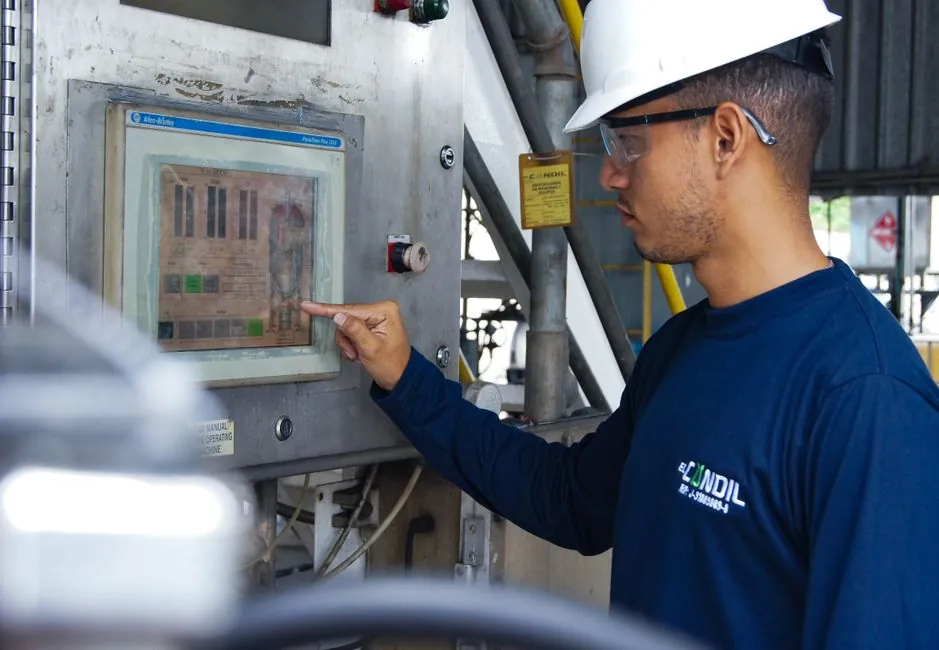
Industrial automation software in 2026 is a layered stack: upstream (PLCs, RTUs, sensors, industrial buzzers, edge I/O), midstream (SCADA and HMI), and downstream (MES, analytics, ERP, cloud) [S1][S2]. Vendor offerings have shifted toward platform unification: Inductive Automation's Ignition positions itself as a "Universal Platform" with unlimited licensing and named Solution Suites covering SCADA, IIoT, MES, Alarming, Reporting, Mobile, Power Monitoring, Unified Namespace, Edge IO and Control, and Managed Infrastructure [S1].
The upstream layer is dominated by sensing and control hardware, the midstream by supervisory software that visualises and sequences equipment, and the downstream by manufacturing execution and business systems. For engineers specifying software today, the decision is no longer which single SCADA package, but which platform bridges PLCs, edge gateways, and cloud analytics without re-architecting each layer [S1][S2].
Upstream layer: sensors, controllers, and field I/O
Upstream of SCADA sits the physical sensing and control layer: pressure transmitters, flow meters, temperature probes, limit switches, and the lighting equipment and electric lamps used in cabinet and panel indication. SitePro's 2026 product page names Real-time visibility into critical equipment status, Remote Operations Monitoring and Control, and Upgrade Aging SCADA Systems as headline needs, all of which depend on upstream telemetry quality [S2]. Ignition Edge and Edge IO and Control are Inductive Automation's explicit bridges between PLC/RTU firmware and the SCADA/HMI tier, designed to run on industrial edge gateways rather than full servers [S1].
Wireless process automation is a recognised extension of this upstream layer: WIA-PA (Wireless Networks for Industrial Automation – Process Automation) is the Chinese Industrial Wireless Alliance sub-standard targeting process measurement, monitoring, and control, built on IEEE 802.15.4 [S3]. WIA-PA defines the radio and protocol behaviour between field instruments and the gateway that feeds SCADA, which is why it appears as a standard reference for plant-level wireless rollouts in 2026 procurement documents [S3]. For brownfield sites with limited conduit runs, IEEE 802.15.4-based process wireless is one of the few options that preserves battery-powered, multi-year field-device operation while remaining compatible with mainstream SCADA tag databases [S3].
Midstream layer: SCADA, HMI, and the IIoT transition
SCADA in 2026 is less a single product and more a tag-database plus visualisation engine, and Inductive Automation's product list explicitly groups SCADA, HMI, Alarming, Reporting, and Mobile into one suite [S1]. SitePro's 2026 platform describes the same scope under "Dynamic Infrastructure Management Solutions," listing APIs and Integrations, Custom and Scheduled Reports, Digital Ticketing, and Security Cameras and Surveillance as bundled capabilities alongside core SCADA functions [S2]. Both vendors now market "configure without code" or drag-and-drop tooling as the default deployment model, replacing the script-heavy customisation that defined SCADA projects in the 2010s [S1][S2].
Ignition's named modules and the third-party module ecosystem in 2026 include a Third-Party Module Showcase, indicating that midstream SCADA platforms are increasingly assemblies of certified modules rather than monolithic installs [S1]. SitePro's Add valuable tech to your portfolio, for Integrators, and Engineering Custom automation solutions without complexity position the same trend from the systems-integrator side [S2]. For process plants, the practical difference is that a midstream SCADA tag change can now propagate to MES, historian, and cloud analytics through a single tag namespace rather than separate per-system databases.
Downstream layer: MES, ERP, analytics, and unified namespace
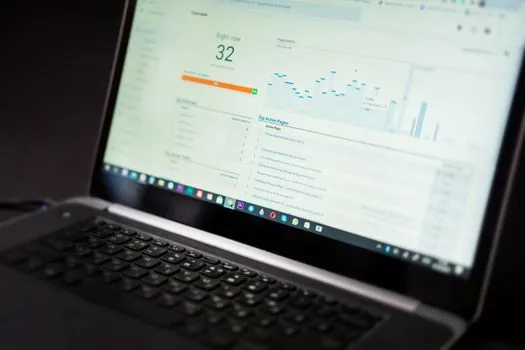
Downstream of SCADA, the 2026 stack is dominated by Manufacturing Execution Systems, Enterprise Resource Planning, and the Unified Namespace pattern. Ignition's published Solution Suites list MES, Enterprise, Digital Transformation, and Unified Namespace as first-class offerings, indicating that vendors are absorbing what used to be a separate MES market into the SCADA vendor's licence model [S1]. SitePro's downstream coverage is split by department: Accounting, Administration, Compliance, and Leadership, with Regulatory Reporting and Forecast Maintenance Needs listed as cross-department workflows [S2].
Edge IO and Control and Managed Infrastructure round out Ignition's downstream story, positioning the vendor as a managed service rather than a boxed product, an arrangement that lets a plant team outsource server patching and historian backups while keeping on-prem control [S1]. For plants comparing the two models, the criteria below summarise the 2026 decision points observed across vendor literature [S1][S2].
Selection criteria: how to compare the 2026 options
Five concrete criteria now drive platform selection for 2026 industrial automation software projects, drawn from the capabilities both Inductive Automation and SitePro publish on their product pages [S1][S2].
1. Licensing model. Ignition sells per-server with unlimited tags, clients, and designer seats, while SitePro sells per-site plans plus optional Managed Services. For a 50,000-tag plant, unlimited-tag licensing typically wins on cost-per-signal; for a 2,000-tag water utility, per-site plans with bundled support are usually cheaper.
2. Edge footprint. Ignition Edge and Edge IO and Control target constrained gateways at the cell level, while SitePro's "newest Edge device" is highlighted for remote-asset monitoring (the City of Wolfforth case study is the named example) [S2]. Pick by where the data is generated, not by where the SCADA server sits.
3. Integration surface. APIs and Integrations, Digital Ticketing, and Regulatory Reporting appear in both vendors' 2026 product menus [S1][S2]. Confirm the specific REST, MQTT, and OPC UA endpoints your downstream ERP and historian expect before committing.
4. Standards and protocol coverage. WIA-PA on IEEE 802.15.4 covers process wireless for instrumentation; OPC UA covers the SCADA-to-MES hop; Modbus/TCP and EtherNet/IP still dominate the PLC layer. The 2026 platforms expose all four, but only if the modules are licensed [S1][S3].
5. Support and services. Ignition runs Ignition Training and Certification with a Certification Tests pathway, SitePro runs a Channel Partner Program for distributors and integrators [S1][S2]. For plants without internal SCADA staff, vendor-certified integrator coverage in your region is often the deciding factor.
Who this stack is for, and where it breaks

Unified platform models work for plants with 5,000+ tags, multi-site operations, and a stable PLC base [S1][S2]. They do not work well for sub-500-tag skid-level machines that need only local HMI, for safety-instrumented functions where SIL-rated logic must stay in a certified controller, or for batch pharmaceutical lines where validated electronic records require a 21 CFR Part 11 audit trail the SCADA platform may not provide out of the box. SitePro's named verticals, Oil and Gas (E&P/Upstream, Midstream, Salt Water Disposal), Municipal and Public Utilities, and Energy and Power, are the segments where 2026 platform offerings are battle-tested [S2]. Ignition's named verticals, Automotive, Data Centers, Manufacturing, Solar and BESS, Water and Wastewater, are the same upstream/downstream map viewed through a different vertical lens [S1].
Plants considering a 2026 upgrade should treat the SCADA-to-MES hop as the highest-risk interface: the Unified Namespace pattern reduces integration cost, but only if the upstream PLC and downstream ERP teams agree on the same tag-naming convention. For related decision frameworks on adjacent industrial procurement, the petrochemical capacity planning spec gates writeup and the measuring instruments upstream/downstream industry map cover the same upstream-to-downstream logic for hardware, and the SCADA, MES, and IIoT stack sourcing 2026 piece walks the software side in parallel [S1][S2].
Verifiable signals to watch in late 2026
Three signals are trackable from public vendor channels in the next quarter. First, Inductive Automation's Ignition Community Conference is scheduled for Sept. 22–24, 2026, with a group-registration discount of $960+ for teams of three or more, which will be a public marker of platform feature releases [S1]. Second, SitePro's Edge device family has a named municipal deployment (City of Wolfforth) used as a public reference for remote-asset monitoring, and additional edge SKUs are likely to follow that template through 2026 [S2]. Third, the WIA-PA / IEEE 802.15.4 process-wireless standard is the most concrete Chinese-origin reference for instrument-level wireless in 2026 plant specs, and procurement teams should expect to see it cited more often in cross-border instrumentation tenders [S3]. For teams already in procurement cycles, the measuring instrument supply shortage 2026 risk map is a useful cross-check on whether the upstream sensing layer can keep pace with the 2026 software consolidation.