
The global photovoltaic (PV) industry is forecast to reach USD 968.32 billion in market value by 2030, a figure published on the MarketsandMarkets 2025-2026 outlook for the solar power segment [S1]. That top-line is built on PV cell, module, inverter and balance-of-system (BOS) hardware shipped into utility, commercial and residential projects.
On the events side, the SNEC 20th (2027) International Photovoltaic Power Generation and Smart Energy Conference & Exhibition (SNEC PV+ 2027) is scheduled for June 2-4, 2027 at the Shanghai venue used in prior editions, organised by APVIA, CRES, CREIA, SFEO and SSTEC [S4]. The 2026 calendar (Intersolar Europe, SNEC, The smarter E, Power2Drive, etc.) is concentrated in the second half of June, giving sourcing teams a single ~10-day window to do cross-vendor comparisons [S3].
Market size, growth logic and the 2030 USD 968.32 bn target
The MarketsandMarkets 2025 forecast values the photovoltaic industry at USD 968.32 billion by 2030 [S1]. Demand is being pulled by three structural drivers: (1) utility-scale solar LCOE falling below gas peakers in most sun belts, (2) corporate PPA offtake from hyperscale data centres, and (3) distributed rooftop incentives that bundle storage, EV charging and smart-energy inverters into a single bill of materials. Equipment buyers should read the USD 968.32 bn figure as a projected market-revenue value (rising from USD 613.57 bn in 2025 at a 9.6% CAGR), not a shipment volume, and note that the report cites declining costs for solar panels and PV installations as a market driver [S1].
The IEA Photovoltaic Power Systems (PVPS) programme's "Annual Trends in Photovoltaic Applications" report series remains the public reference for installed-GW-by-country, with cumulative deployment historically charted back to 1992 and updated annually [S2]. For specifiers, the practical takeaway is that GW additions no longer correlate one-to-one with new semiconductor-grade silicon demand, because n-type TOPCon and HJT cells are using thinner wafers (around 130-150 µm) and higher cell efficiencies (commonly published 24-26% module-level) than the PERC baseline. The BOS side of the bill — combiner boxes, DC string monitoring, and string inverters — therefore takes a larger share of total project cost than it did 10 years ago.
Hardware segments: cells, modules, inverters and BOS
A PV system breaks into four specifiable blocks. (a) Cells/modules: monocrystalline silicon, with p-PERC now being displaced by n-type TOPCon and HJT; mainstream commercial modules ship in the 540-590 W range with Voc around 49-55 V for 144-half-cell formats. (b) Inverters: string inverters dominate C&I and utility; central inverters are still preferred above ~5 MW per block, while microinverters and module-level power electronics (MLPE) remain the residential default. (c) Mounting and trackers: single-axis horizontal trackers are now specified on a majority of new utility builds in the US, Middle East and large parts of China, with backtracking algorithms sized to limit row-to-row shading at low sun angles. (d) BOS electrical: combiner boxes, DC disconnect, surge protection (Type II DC SPD, Imax 40 kA is a common minimum), and string-monitoring transmitters, often built on industrial PLCs and analogue 4-20 mA sensors for SCADA integration. [S1]
On the industrial-automation side, a typical 100 MW utility PV plant has 3,000-5,000 combiner strings feeding back to a pressure transmitter and flow meter array that monitors glycol loops in tracker hydraulic drives, inverter coolant skids and step-up transformer oil temperature. These instruments are mostly 4-20 mA + HART, with IEC 60079 series ratings required inside inverter enclosures where hydrogen off-gassing from batteries co-exists with PV DC equipment. The sourcing signal: when a BOS integrator quotes "smart" combiner boxes, the actual smarts live in the PLC and the industrial valve manifold driving the tracker hydraulic block, not in the DC contactor.
Trackers, drives and the motor question

Single-axis solar trackers rotate panels across roughly ±55° east-west to follow the sun, driven either by a central hydraulic rotary actuator or by a distributed row of slewing drives with a servo motor or brushless DC gearmotor per row. North American utility projects have largely standardised on the multi-drive-per-row topology because a single row can be parked during high-wind events (typically above 50-65 km/h, project-specific). Specifiers should expect motor-torque derating above 70°C ambient, and gearmotor lubricants rated for the same -30°C to +70°C band that the tracker structure itself is qualified to. [S2]
Mechanical hard stops, anti-backlash gearing and an absolute encoder feedback into the row PLC are the three bits that separate a tracker that survives a decade from one that fails in three winters. Buyers comparing FOB pricing for a 1 MW tracker block should normalise to: number of motors, motor rated torque (Nm), gear ratio, encoder type, and the backtracking firmware version, not just the per-piece dollar.
Standards, certification and EPC-side compliance
PV modules and inverters are governed by a dense standards stack. Modules typically ship to IEC 61215 (design qualification), IEC 61730 (safety), UL 61730 for North America, and IEC 61701 for salt-mist corrosion in coastal sites. Inverters are tested to IEC 62109-1/-2, with grid interconnection following IEEE 1547 (US) and the local grid code in EU member states. EPCs working in hazardous locations — for example co-located battery storage — must also apply the IEC 60079 family for the inverter room and the ATEX 2014/34/EU directive in EU jurisdictions. Hydrogen off-gassing from Li-ion banks is the most common trigger for ATEX zone classification around the PCS and DC combiner. A facility that mixes tracker hydraulics with battery rooms will also see NACE MR0175 called out for any wetted metal in glycol loops exposed to humid or coastal air. [S3]
The IEA PVPS Annual Trends report series is the public benchmark for cumulative installed capacity, policy progress and grid-integration issues, updated each year and archived through publisher channels [S2]. For a 2026 reader that means the most recent "Annual Trends in Photovoltaic Applications" report is still the cleanest country-by-country deployment snapshot and should be on the EPC's reference shelf alongside the local grid code.
Failure modes and reliability constraints buyers should price in
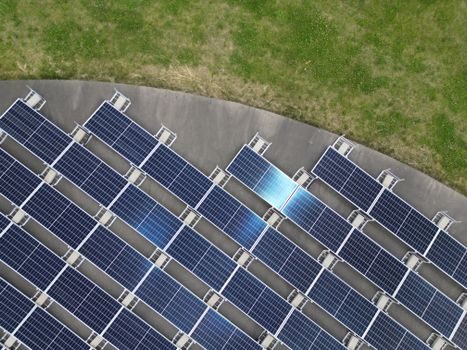
Five failure modes drive the bulk of PV O&M spend: (1) Potential-Induced Degradation (PID) in early p-PERC strings, mitigated by module grounding and string-level PID recovery boxes; (2) LeTID in PERC after the first 1-2 years of field exposure, largely absent in n-type TOPCon; (3) hotspot fires from diode failure, screened by IEC 61215 hot-spot endurance testing; (4) arc-fault DC fires, mitigated by AFCI per UL 1699B in rooftop string inverters; (5) tracker mechanical failures from wind storms, dominated by motor/gearbox burnout and encoder cable damage. Buyers negotiating O&M contracts should pin liability thresholds to the pressure sensor ranges used in tracker hydraulic return lines, typically 0-250 bar, so that warranty disputes are not fought over whose gauge is the reference. [S4]
Module degradation warranties are now commonly 25-year linear with an end-of-year-25 output at 85-87% of nameplate, while inverter warranties sit at 5-10 years with extension SKUs. A 25-year cash-flow model should assume a tracker mid-life refurbishment at year 12-15, an inverter swap in year 10-12, and a string-monitoring retrofit when the original SCADA gateway becomes obsolete.
Trade-show calendar and 2026-2027 sourcing signals
June 2026 is unusually dense: Intersolar Europe, The smarter E, Power2Drive and SNEC all fall in a roughly 15-18 June 2026 window for European and Chinese shows [S3]. That window is the highest-leverage trip a PV sourcing team can make all year, because module pricing for Q3-Q4 shipment is usually confirmed in those halls. The next anchor event is SNEC PV+ 2027, 20th edition, June 2-4, 2027 in Shanghai, co-organised by APVIA, CRES, CREIA, SFEO and SSTEC [S4].
Two trackable signals to watch: (1) any Q3 2026 n-type TOPCon cell price rebase off the current ~USD 0.04-0.05/W band, which would push module ASPs back under USD 0.10/W; (2) inverter and string-monitor stock-keeping-unit (SKU) consolidation announcements in the run-up to SNEC 2027, which historically precede 8-12% bill-of-material savings on the BOS electrical side. Buyers comparing the long-term bear case to the pneumatic valve actuator 2026 buying guide will see the same pattern — a market where price is set in trade-show weeks, not in steady-state RFQs.