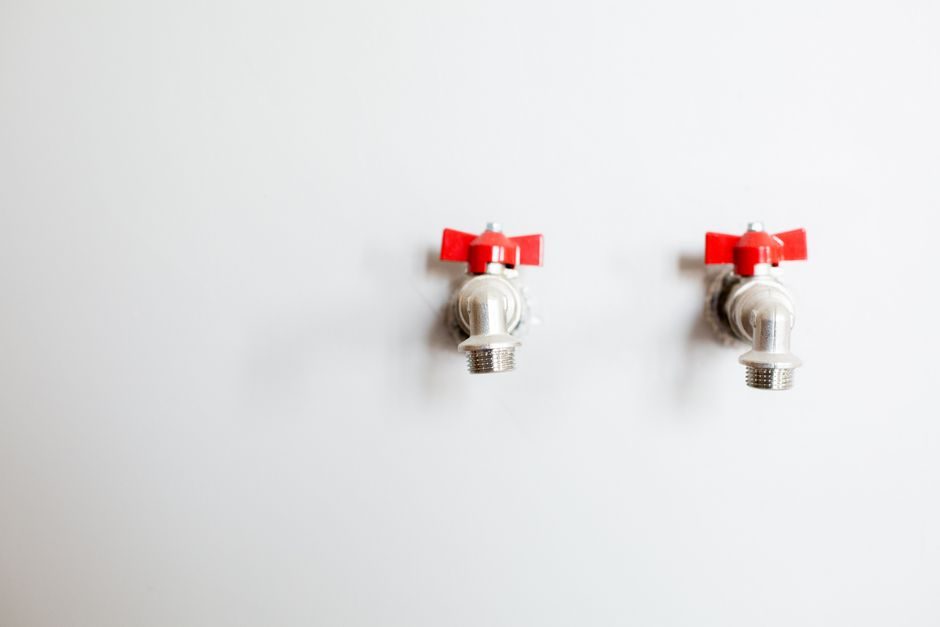
A plug valve is a quarter-turn rotary isolation device whose flow path is opened or closed by rotating a tapered or cylindrical plug with a through-bore, and on 2026-06-30 the procurement decision is dominated by five spec gates: body style, seat/seal class, pressure-temperature rating, end connection, and the certification pack required by the line service [S1][S4].
Plug valve assemblies are documented as being used in oil and gas service for controlling flow at a designated pressure, with hydrostatic seat-and-body testing specified as the minimum quality gate at the factory [S1]. Bipan, a Chinese valve supplier active in the June 2026 supplier index, lists oil, petrochemical, marine, metallurgy and papermaking as the fluid-solution segments where plug valves are commonly offered alongside ball and balance valves [S3]. NTGD markets itself as a dedicated plug-valve manufacturer with a "proven quality and trustworthy service" claim, reflecting the level of single-product-line specialisation buyers can source against in 2026 [S4].
Body style: lubricated, sleeved, lined, and double-block-and-bleed
The first spec gate is body architecture, because it sets the maintenance regime, the temperature ceiling, and whether the valve is suitable for abrasive or corrosive service. Conventional lubricated plug valves use a sealant injected between body and plug to reduce friction and to seal the seat interface; sleeved plug valves replace the sealant path with a PTFE or elastomer sleeve that performs both the sealing and the friction-reducing function. Lined plug valves, with a PFA or PTFE body liner, are aimed at corrosive chemical service where a metallic wetted path is unacceptable. Double-block-and-bleed (DBBB) plug valves, often built to API 6D or API 599, are used on hydrocarbon manifolds where a body cavity bleed is required to verify the upstream and downstream seats are both sealing before a line is opened [S1][S4].
For 2026 hydrocarbon builds, buyers should match body style to the maintenance philosophy: lubricated designs are still common in upstream gathering where field-sealant injection is part of the operating routine, while sleeved designs dominate downstream and chemical services where touch-free operation is preferred. Buyers weighing plug vs ball isolation can benchmark against the ball valve selection logic, which uses overlapping criteria for body style, fire-safe certification, and seat class.
Seat and seal class: soft, metal-to-metal, and fire-safe
Seat class is the second spec gate and it controls both the leakage class and the upper temperature bound. Soft-seated plug valves (PTFE, RPTFE, PEEK, or elastomer sleeves) are typically rated to API 598 or MSS-SP-61 soft-seal leakage rates and are the default for clean, non-abrasive service. Metal-to-metal seated plug valves raise the temperature ceiling and add abrasion tolerance, but at the cost of a higher leakage rate; they are the default for high-temperature steam, hot oil, and slurry-adjacent service. Fire-safe certified plug valves, tested to API 607 or ISO 10497, are specified whenever the line is in a fired-heater, hydrocarbon, or other flammable service [S1][S4].
As a citable reference point, the seat-and-body hydrostatic test listed on the Marsforge product card for a typical 2026 oil-and-gas plug valve assembly includes both a seat test and a body test at the design pressure, which is the minimum quality gate most EPCs will accept before a valve can be released for site delivery [S1]. A useful cross-check on seat-class behaviour is the butterfly valve family, where soft vs metal vs fire-safe seat options follow the same leakage-class vs temperature trade-off.
Pressure-temperature rating, bore size, and end connection
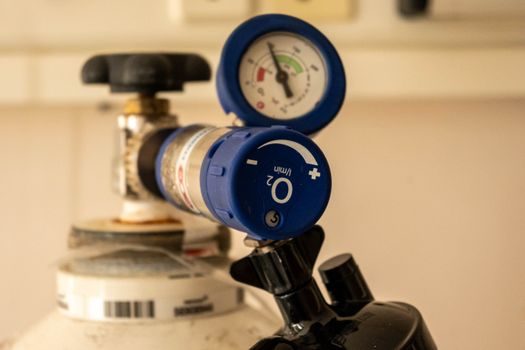
The third spec gate is the pressure-temperature (P-T) envelope matched to the line class. Plug valves are commonly built to ASME B16.34 valve classes (Class 150, 300, 600, 800, 1500) and to API 6D for pipeline service, with the P-T chart published by the manufacturer forming the binding operating envelope. Buyers should also confirm whether the design is full-bore or reduced-bore: a full-bore plug valve has a through-bore equal to the pipe ID, which is required whenever the line is pigged or where minimum pressure drop is critical; reduced-bore designs give a smaller face-to-face and a lower price but break piggability. End connections — flanged (ASME B16.5), butt-weld (ASME B16.25), socket-weld, or threaded (NPT/BSP) — must be selected together with the body material so that galvanic or thermal-expansion mismatch does not preload the seat [S1][S4].
For a structured comparison of the three dominant isolation choices, plug valve vs ball valve vs butterfly valve at the same ASME Class 150 line, the trade-off typically reads: plug gives the lowest cost and the smallest face-to-face, ball gives the lowest torque and cleanest piggability, and butterfly gives the lightest installed weight on large DN. The selection logic for the rotary family as a whole is covered in the ball valve encyclopedia entry and in the butterfly valve entry, which both share the same P-T and end-connection spec gates.
Material, NACE, and corrosion envelope
The fourth spec gate is wetted-parts material, because plug valves share the same fluid envelope as the pipe and any mismatch shows up as seat galling, plug seizure, or external corrosion within the first 18 months. Carbon steel (ASTM A216 WCB) is the default for oil, gas, and water service; low-temperature carbon steel (A352 LCC/LF2) is specified for service below -29 °C; stainless (A351 CF8/CF8M) covers chemical and food service; and alloy 20, Hastelloy, or Monel cover sulfuric, hydrochloric, and other aggressive chemical lines. For sour service (H₂S-containing hydrocarbons), the wetted parts must meet NACE MR0175 / ISO 15156, which restricts hardness and governs the metallurgical route of the plug and body [S1][S4].
Buyers should also factor in the external corrosion environment: offshore and coastal sites require a coating system (e.g. FBE, zinc-rich primer plus topcoat) documented on the vendor QC card, and buried service typically requires a cathodic-protection-compatible coating plus a factory-applied polyethylene or polypropylene sleeve. Where a control valve upstream modulates the same line, the control valve spec gate on material and trim hardness should be cross-checked so the two valves do not impose conflicting metallurgical constraints.
Actuation, certification, and who the plug valve is for
The fifth spec gate covers actuation, certification, and documentation, which is where most 2026 purchase orders are won or lost on technical review. Manual lever or gear operators are the default for DN ≤ 100 and for non-throttling duty; pneumatic, electric, or hydraulic actuators are added for remote isolation, ESD, or modulating duty, with the actuator sized to the plug-valve break-torque published by the manufacturer at the maximum differential pressure. Certification packs commonly demanded in 2026 oil and gas tenders include API 6D monogram, API 591 / API 592 fire-safe compliance, ATEX 2014/34/EU for Group II areas, IECEx for international EPCs, NACE MR0175 for sour service, and ISO 15848 fugitive-emission certification for low-emission service [S1][S4].
Plug valves are the right choice for: (a) oil and gas gathering, production manifolds, and hot-oil lines where metal-seated or fire-safe designs fit the envelope; (b) chemical and pulp-and-paper stock lines where a sleeved or lined plug valve handles corrosive or fibrous media; and (c) low-cycle isolation duties on tank farms and gas processing where the quarter-turn operation keeps operator training simple. Plug valves are NOT the right choice for: (a) clean modulating flow on a control loop, where a control valve is the correct spec; (b) high-purity or sanitary pharmaceutical duty, where a diaphragm valve is the default; and (c) clean, high-cycle on/off service on instrument air, where a ball valve gives a lower torque and a cleaner bubble-tight shut-off.
Comparison table: plug valve vs ball valve vs butterfly valve at the same line class
The three dominant quarter-turn isolation options line up against the four most common buyer-side decision criteria as follows, with all values nominal and ASME Class 150 as the reference. On cost at the same DN and PN, a plug valve is generally the lowest-cost option, a ball valve is mid-range, and a butterfly valve is the lowest-cost option for DN ≥ 200. On seat leakage at the same soft-seat class, ball valves typically give the tightest shut-off, plug valves give a soft-seal leakage rate in the same order, and butterfly valves give a soft-seal rate that is acceptable for isolation but not for tight shut-off. On temperature ceiling, metal-seated plug valves can exceed soft-seated ball and butterfly limits, and on torque requirement at the same DN, butterfly valves require the lowest break-torque, plug valves the highest, with ball valves in between [S1][S4].
For buyers comparing plug valves against the two other common isolation choices in the same line class, the ball valve and butterfly valve encyclopedia entries lay out the same P-T, seat-class, and actuation spec gates used above, and a third option worth cross-checking on slurry or fibrous stock lines is the check valve family, which addresses a different duty (backflow prevention) but shares the material and NACE spec gate.
Limitations, failure modes, and 2026 sourcing signals

The main limitations of plug valves in 2026 are seat wear on abrasive service, plug seizure after long idle periods in dusty or polymerising media, and sleeve cold-flow on soft-seated designs that are operated outside the published P-T envelope. The most common field failure modes are seat leakage after thermal cycling, stem-packing failure on valves that have not been re-torqued to the OEM procedure, and external corrosion on buried or offshore valves where the coating system was not specified to match the environment. To mitigate these, buyers should request the OEM's published P-T chart, the seat-and-body hydrostatic test certificate (the standard gate called out on 2026 product cards [S1]), the actuator break-torque curve at the maximum differential pressure, and the full material traceability file including NACE MR0175 compliance where sour service applies [S1][S4].
Two trackable signals for the rest of 2026: (1) the continued growth of single-product-line plug-valve manufacturers in the Chinese supply base, with at least one dedicated plug-valve brand marketing directly to international buyers in June 2026 [S4], and (2) the inclusion of plug valves in supplier line-ups that also cover ball, balance, and butterfly valves, indicating that 2026 tenders are still being awarded on multi-product line capability rather than on single-line specialisation [S3]. For a related selection-criteria read on the rotary family, the butterfly valve and ball valve entries are the natural cross-reference, while a process-side read on isolation valves in mining and gas service is available in the industrial gas selection criteria article.