
Use full-port plug valves for thick stock and abrasion-prone pulp service, while selecting sleeved plug valves for caustic liquor, black liquor, and scale-forming chemical recovery lines [S1][S2][S6].
Pulp mills need isolation, control, mixing, and diverting valves selected from stock consistency, freeness, pressure, temperature, chemical compatibility, scale tendency, cycling rate, and installation constraints [S1][S5].
Define the service before selecting the valve body
A plug valve is appropriate where a compact quarter-turn valve must isolate or control flow containing fibers, solids, scale, or corrosive chemicals, but the valve category must fit the actual mill service rather than a generic line designation [S1][S2][S10].
The pulp and paper process includes pulping, bleaching, stock preparation, papermaking, recycling, and chemical recovery. Within those systems, control duty requires attention to pressure, temperature, flow rate, response speed, chemical compatibility, service life, maintenance demand, and control-system integration [S1][S5].
Document each duty with at least 10 items: fluid, concentration, consistency, freeness, temperature, design and operating pressure, flow rate, solids or scale content, function, and cycling frequency. Also record acid or alkali concentration, condensate content, cleaning chemicals, available installation envelope, actuator orientation, and the required isolation class [S5].
Match plug-valve architecture to the mill duty
Full-port plug valves are designed for thick stock, white water, and similar pulp-and-paper applications [S6].
The comparison is deliberate: an eccentric full-port plug prioritizes flow passage and stock handling, a sleeved plug prioritizes chemical isolation, and a resilient-seated V-port ball prioritizes control response. None should be selected from nominal valve size alone [S1][S2][S5].
Use full-port eccentric valves for stock and abrasion

Eccentric plug valves are specifically cited as suitable for control applications in pulp and paper, alongside resilient-seated V-port ball valves. That recommendation applies when the stock consistency and operating conditions support the selected geometry; it does not override limits imposed by fibers, solids, or abrasive carryover [S1][S5].
For white water, thick stock, and other fiber-containing streams, verify the stated full-port bore, seat material, stem exposure, body lining, and wear parts. The eccentric plug valve arrangement should be evaluated as a complete package of body, plug, seat, stem, packing, and actuator rather than as a simple quarter-turn closure.
A standard valve that leaves unrestricted body cavities is a poor match for streams where solids can lodge, compact, or freeze. An optional cavity-filled seat is available in the documented AVCO 7100 Series, offered in 3/4–12 inch sizes, ANSI Class 150, with 316 stainless steel or carbon steel construction and API 608, API 598, and ASME B16.34 references [S4].
Use sleeved plugs for corrosive recovery service
A sleeved plug valve isolates its closure member from process media with an inert PTFE sleeve that surrounds the plug and provides a circumferential sealing surface from port to port [S2].
Tufline sleeved plug valves are documented for causticized green liquor and heavy black liquor in kraft processing. Their applications extend through lime mud service, evaporation, the recovery boiler, digester liquor feed, liquor recirculation, sampling, vent, and digester gas-off duties [S2].
The inert PTFE sleeve completely surrounds the plug, provides a large circumferential sealing surface from port to port, and is securely retained in the valve body by high-pressure ribs, top and bottom retention, and 360-degree port lips [S2].
Do not assume generic PTFE construction suits every pulp-mill condition. Verify the manufacturer’s pressure and temperature limits for the exact sleeve, body, seal, actuator, and service combination. The same qualification applies when a corrosion-resistant sleeve is paired with a conventional plug, because seat integrity and containment are assembly-level requirements [S2][S7].
Control duty changes the selection

Resilient-seated V-port ball valves and eccentric plug valves are the recommended quarter-turn control options for pulp and paper service, but control accuracy depends on the complete valve, actuator, and positioner package rather than the plug alone [S1][S5].
Specify operating temperature, pressure, fluid velocity, cycle frequency, required response speed, seat leakage, packing leakage, and actuator fail action. A partly stroked or rapidly cycling control valve can face different trim and torque demands from a manually operated isolation valve [S5].
When a standard plug valve cannot provide predictable throttling or fails to isolate the process, compare it with a resilient-seated V-port ball valve for clean control service. For liquor recirculation, an automatic recirculation valve may solve a specific control objective, but it does not replace review of stock consistency, scaling, or chemical compatibility.
Seat leakage and packing leakage are separate acceptance criteria. Isolation valves require an allowable seat-leakage class, while control valves require stable response under the expected pressure drop and operating cycle [S5]. The angle-seat valve is a different valve family and should not be substituted merely because it offers throttling; its suitability requires separate evidence for the pulp service.
Account for corrosion, deposits, and cleanout
Chemical compatibility must cover the operating medium and the boil-out or solvent chemistry used to remove scale and biological growth; acid and alkali cleaners can attack materials that handle the normal process safely [S5].
For aggressive chemical service, fluoropolymer-lined ball or plug valves can isolate wetted metal surfaces from corrosive media. The liner still requires checking for concentration, temperature, pressure, steam exposure, creep resistance, and the mechanical handling required by the plug [S7].
Scale-prone service demands attention to the seat and body geometry. In sleeved plug valves, 360-degree port lips break up scale that collects on the closed plug, whereas cavities in other configurations can retain solids and promote freezing [S2].
Leak-free packing remains an installation issue even when the main seat is sound. Check stem design, packing material, actuator alignment, accessibility, and the consequences of a packing leak on walkways or into process areas [S5]. A compact quarter-turn arrangement is advantageous only if the actuator remains serviceable after pipe insulation, access clearances, and mill ergonomics are considered [S5][S10].
Apply qualification and procurement controls
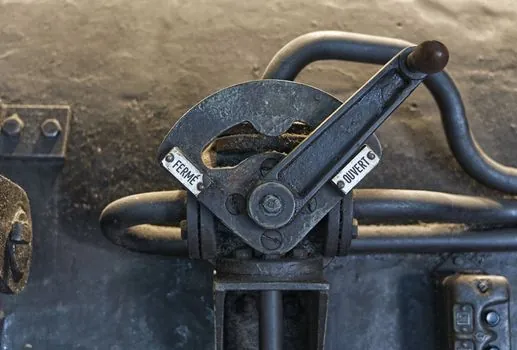
Manufacturer documentation identifies AVCO 7100 Series plug valves in 3/4–12 inch sizes, ANSI Class 150, with 316 stainless steel CF8M or carbon steel construction, optional cavity-filled seats, and certification references to API 608, API 598, and ASME B16.34 [S4]. These figures identify a documented configuration, not a universal limit for every pulp-mill application.
Purchase specifications should identify the valve type, model series, size, pressure class, body and trim materials, seat construction, end connection, port configuration, actuator, positioner, fail action, allowable leakage, coating, liner, and required coating or lining inspection [S1][S4].
Confirm the exact standard edition in the project specification and require the supplier to state the edition applied. API 608, API 598, and ASME B16.34 govern distinct portions of valve design, manufacture, inspection, and testing, so their clauses must not be treated as interchangeable [S4].
For project-wide control selection, the broader method in Balancing Valve Selection for Pulp and Paper can help define the consistency, flow, pressure, and capacity criteria that a plug valve must satisfy before detailed valve selection begins.
Build a service-specific shortlist
Shortlist a full-port eccentric plug valve for thick, abrasive, high-consistency stock; a sleeved plug valve for caustic green liquor, black liquor, lime mud, and recovery-boiler service; and a resilient-seated V-port ball valve for compatible control duties [S1][S2][S5].
Do not use the mainstream full-port plug valve for a corrosive liquor line without a compatible sleeve or lining, and do not use a sleeve as a substitute for proving mechanical durability against thick fibers and solids. The final choice must close against the actual pressure, temperature, consistency, chemistry, cycling rate, leakage requirement, and maintenance plan [S2][S4][S7].
Before approval, obtain the manufacturer’s certified dimensional drawing, pressure-temperature table, material list, seat-leakage data, actuator sizing, installation instructions, and lifecycle maintenance scope. Verify that the selected model matches the documented mill duty rather than relying on the generic “pulp and paper” application label [S1][S4].