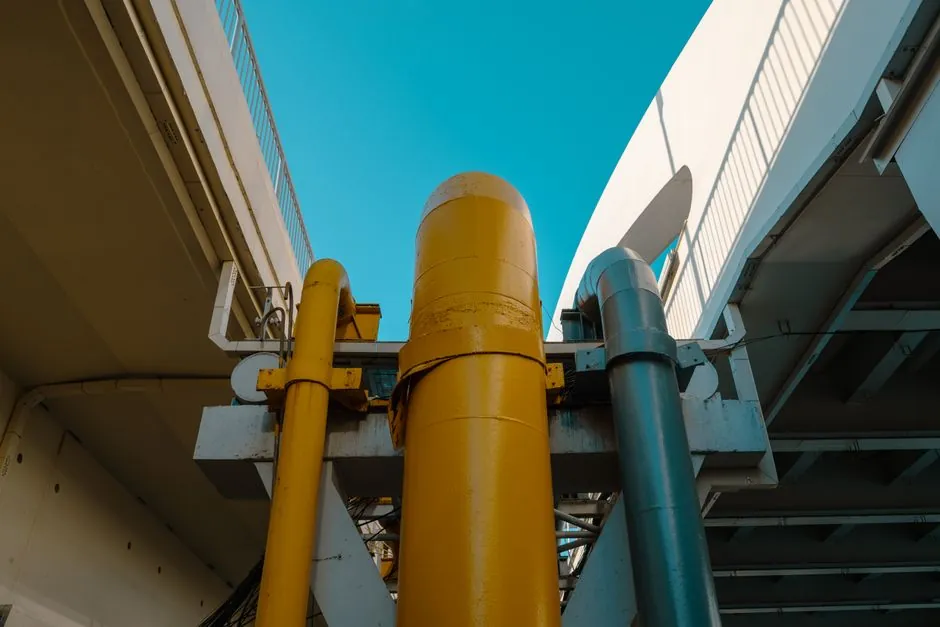
A pneumatic actuator is, mechanically, a simple device that converts compressed-air pressure into linear or rotary motion, but commercially it sits in the middle of a chain that touches aluminum smelters, solenoid coil winders, valve foundries, and end users in oil and gas, water, chemical, power, mining, and bulk-material handling [S3]. In 2026 the upstream side is dominated by commodity inputs (aluminum extrusion billet, stainless bar, engineering plastics, nitrile or fluorocarbon seals, copper magnet wire) while the downstream side is dominated by valve and damper OEMs, skid builders, and process-plant EPCs that specify the actuator as a sub-assembly, not as a standalone product [S3][S4].
The supply-chain database maintained by Wind maps over 160,000 upstream and downstream links across 5,154 industries, and explicitly extends from primary raw materials and production equipment at the top of the chain to end products and related services at the bottom, which is the same skeleton a pneumatic actuator sits inside [S1]. The practical consequence: an actuator order book is shaped less by actuator factory capacity than by upstream alloy surcharges, solenoid-coil allocation, and downstream valve-body demand from oil and gas, water, and chemical EPCs.
Upstream Inputs: Alloys, Plastics, Seals, and Coil Sub-Assemblies
Aluminum alloy extrusions and castings are the dominant housing material for rack-and-pinion and scotch-yoke actuators because they cut mass versus ductile iron and ship cleanly into offshore and chemical service; stainless variants (typically 316) are specified for corrosive and hygienic service [S3][S6]. The upstream supplier base is broad: Wuxi Xinming and Autorun, both Chinese valve and actuator manufacturers, source castings, bars, and finished sub-components through long-running vendor lists and re-export the integrated assembly under their own brands [S4][S5].
Seal and elastomer inputs are a narrower, higher-risk layer: nitrile (NBR), EPDM, Viton (FKM), and silicone (VMQ) covers the temperature and chemistry envelope from roughly -20 °C to +200 °C service, with PTFE backups used for low-friction or chemical duty [S3]. Solenoid coils, positioners, and limit switches are typically bought in (or wound in-house on imported copper magnet wire) and then married to the actuator body during final assembly, which is why coil allocation has become a 2026 bottleneck for many Chinese and European actuator plants [S4][S5]. For a deeper breakdown of how these tiers behave in practice, the Pneumatic Actuator Supply Chain 2026: Materials, Tiers, Lead-Time Risks map is the closest peer reference.
Mid-Stream: Actuator OEMs and Skid Integrators
The mid-stream is the actuator factory itself, typified by Wuxi Xinming Auto-Control Valves Industry (Wuxi, Huishan district, made-in-china presence, 2010s-era vendor) and Autorun Control Valve (Dong'ou Industry Park, Oubei Town, Wenzhou, registered 2015) [S4][S5]. These suppliers typically run an aluminum body line for general service, a stainless line for chemical and hygienic service, and a foundry-pigmented ductile-iron line for higher-torque outputs, then assemble with imported or domestic solenoid kits [S4][S5][S6]. Veson Valve, a third China-based supplier, packages the same building blocks (rack-and-pinion body, NAMUR-mount solenoid, ISO 5211 interface) into drop-in valve-actuator modules for OEM skid builders [S6].
The reference pneumatic actuator format on these supplier lines is overwhelmingly rack-and-pinion double-acting or spring-return, with output torques in the 8 Nm to 8,000 Nm band typical for ball, butterfly, and plug valve duty, and ISO 5211 mounting as the de facto interface to the valve stem [S6]. Single-acting spring-return units add a pre-load spring stack to drive the fail-safe direction, which is why spring vendors (typically coil-spring shops in the Yangtze and Pearl River deltas) sit one tier further upstream and quietly dictate fail-safe lead times [S3][S6].
Downstream End Users: Oil and Gas, Water, Chemical, Power, Mining, and Bulk Handling
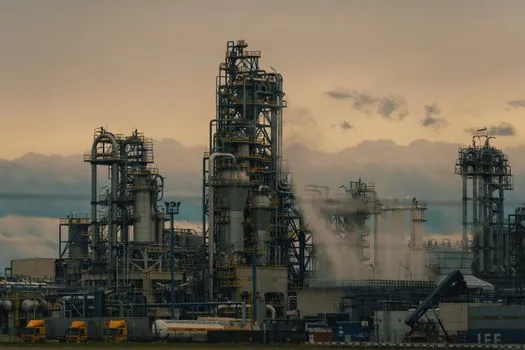
On the downstream side, oil and gas (upstream production, midstream pipelines, refinery and petrochemical) is the largest single demand pool for pneumatic valve pneumatic valve actuator packages because the segments accept explosion-proof, fire-safe, and NACE MR0175 sour-service variants [S1][S3]. Water and wastewater treatment, including desalination and sewage networks, is the second pool, driven by butterfly and plug valves on large-diameter lines where aluminum-body actuators are specified to keep mass and corrosion in check [S3][S6].
Chemical and petrochemical, power generation (including flue-gas desulfurization), mining and mineral processing, and bulk-material handling (pneumatic conveying, silo valves, rotary feeders) round out the end-user base, each imposing its own corrosion, temperature, and duty-cycle envelope on the actuator [S3][S6]. The cross-cutting piece is that virtually every downstream user buys a valve-actuator assembly, not a bare actuator, which is why the pneumatic pneumatic cylinder and pneumatic fitting families ship as part of a broader pneumatic pneumatic circuit that also includes pneumatic conveyor systems for bulk solids.
Decision Criteria: Matching Actuator Spec to Upstream-Downstream Reality
Four criteria dominate the upstream-downstream matching problem: torque output vs. valve size, body material vs. process chemistry, certification vs. hazardous area, and interface vs. valve standard. A 1.5–3.0 kW pneumatic drive loop on a typical double-acting rack-and-pinion unit will deliver roughly 8 to 8,000 Nm output torque, with single-acting spring-return cutting effective torque by 20–30% in the fail-safe direction [S3][S6]. Aluminum housings are specified for general service and offshore where mass matters; stainless 316 housings are specified for chemical, hygienic, and salt-spray service; ductile iron is specified where high torque and cost dominate [S3][S4][S6].
Certification drives the hazardous-area question: ATEX category 2 (zone 1) and IECEx-rated coils, plus NACE MR0175 for sour service, are the typical spec points called out on oil and gas and chemical orders, while water and bulk-material handling often run with non-rated or category 3 (zone 2) coils at lower unit cost [S3][S4]. The interface side is simpler: ISO 5211 mounting and NAMUR solenoid geometry are now the de facto standard for ball, butterfly, and plug valve service, with VDI/VDE 3845 used for positioner mounting [S3][S6]. Against those four criteria the main options line up as: aluminum rack-and-pinion for general service, stainless rack-and-pinion for corrosive and hygienic service, ductile-iron scotch-yoke for high-torque quarter-turn service, and linear pneumatic pneumatic cylinder units for globe and damper duty [S3][S4][S6].
Failure Modes and Constraints in the Chain

Three failure modes hit the upstream-downstream chain hardest. First, seal and elastomer degradation: nitrile limits upper temperature to roughly 100 °C, EPDM to roughly 150 °C, and Viton to roughly 200 °C, so a misapplied seal in chemical or steam service is the most common cause of actuator field failure, and the 2026 seal-allocation environment is tighter than at any point in the past five years [S3]. Second, solenoid coil burn-out from voltage drift, moisture ingress, or duty-cycle overspec, which is why most actuator OEMs now stock dual-voltage (24 VDC and 110/230 VAC) coils as standard [S3][S4].
Third, mounting and interface mismatch: a non-ISO 5211 actuator mounted to a non-ISO 5211 valve stem creates a stress concentration that cracks the drive insert within months, and the standard remedy (a stainless drive insert plus a coupling) costs a small share of the assembly but is routinely skipped at the skid-builder level [S3][S6]. Across the chain, lead times for stainless and certified units run 12–20 weeks in mid-2026, with aluminum general-service units at 4–8 weeks, which is itself a downstream constraint on EPC schedules [S4][S5][S6].
Standards, Sourcing, and 2026 Trackable Signals
Several standards govern the chain: ISO 5211 for actuator-to-valve mounting interfaces, VDI/VDE 3845 for positioner and accessory mounting, ATEX 2014/34/EU and IECEx for hazardous-area certification, NACE MR0175 for sour-service materials, and EN 15714 for industrial valve actuators, with the latter covering testing, declaration, and marking requirements across the pneumatic, hydraulic, and electric families [S3][S4][S6]. Sourcing, meanwhile, is bifurcated: Chinese actuator plants in Wuxi, Wenzhou, and the Yangtze delta supply the bulk of general-service and chemical-service units globally, while European and North American suppliers hold the high-spec, certified, and high-torque end of the market [S4][S5][S6].
Two trackable signals to watch through the second half of 2026: stainless bar and aluminum billet surcharges, which feed directly into actuator housing cost, and valve-body demand from oil and gas EPCs, which is the single largest swing factor on actuator order intake. The 2026 supply-chain snapshot for adjacent products, for example the Ferrosilicon Supply Chain 2026: Power, Policy, and Logistics Risks Reshape Sourcing brief, and the lead-time view in Hydraulic Cylinder Supply Shortage 2026: Lead Times, Risk Map, and Sourcing Playbook, both point to the same 2026 pattern: upstream commodity and allocation risk, not mid-stream factory capacity, is the variable to plan around.