
Choose pneumatic when torque density, intrinsic safe-failure (spring-return), and sub-second stroke time dominate the spec; choose electric when modulation accuracy, networkable position feedback, and clean-room or remote-site power availability outweigh those [S1][S2][S4].
On the 2026 sourcing side, the two families sit at very different price bands: a 2PC threaded stainless pneumatic ball-valve assembly lists at US$4-100 per piece FOB China (100-piece MOQ) [S8], and a China-made quarter-turn motorized electric actuator for gas service lists at US$50 per piece (1-piece MOQ) with ISO/CE/ATEX/IP67 marking [S3].
Defining the Two Drive Families
A pneumatic valve actuator converts compressed-air pressure into rotary or linear motion; common kinematics are rack-and-pinion (rotary, quarter-turn) and scotch-yoke (rotary, high-torque), with spring-return cartridges that fail the valve to a safe position on air loss [S4]. The MT series from Max-Air Technology illustrates the compact pneumatic envelope: ISO 5211 mounting, NAMUR accessory interface, double-acting configuration, 3-5 Nm torque range, 40-150 psi air supply, and -4°F to 176°F (-20°C to 80°C) ambient [S1].
An electric actuator uses a motor (typically an AC or DC gearmotor) driving a gear train that produces linear thrust or multi-turn / quarter-turn rotation; when paired with a solenoid (pilot) valve it can mimic some pneumatic functions, but its primary energy source is electrical, not pneumatic [S5]. Most modern electric units ship with position feedback, a hand override, and a networkable protocol converter for HART, PROFIBUS-PA, Foundation Fieldbus, or Modbus.
Torque, Pressure, Speed: The Quantitative Envelope
Pneumatic units span roughly four orders of magnitude in torque. The Mosfe rotary pneumatic actuator from MAROS Engineering covers 4 Nm up to 13,367 Nm (2.95 - 9,859 ft·lb) with 1-8 bar (14.5-116 psi) air supply and ATEX protection class, in both aluminum and stainless-steel bodies for ball and butterfly valves [S2]. That is the working window most process plants design to: instrument air is already on-site, the supply pressure is regulated, and the spring-return cartridge is a proven safety primitive.
Electric actuators trade raw torque density for stroke control. Quarter-turn motorized units on the 2026 Made-in-China catalog show IP67 ingress, ATEX certification, and alloy gear-housing construction at US$16.6-17 per piece for 1-piece MOQ orders [S3]. Multi-turn electric units add significant mechanical advantage through the gear train, but at the cost of slower stroke — typical full-stroke times for an electric quarter-turn run 10-30 s versus 0.5-3 s for a comparable double-acting pneumatic.
Stroke-speed math matters for ESD (emergency shut-down) loops: a quarter-turn ball or butterfly specified for ESD must close within the loop's safety-time budget, and pneumatic spring-return units almost always win on that single criterion [S4].
Selection Criteria: Match the Drive to the Service

Use pneumatic when the application demands (a) spring-return fail-safe on air loss, (b) sub-second closure for ESD/hipps, (c) operation in Zone 1/21 hazardous areas where certification is simpler on air-powered equipment, or (d) very high torque at moderate cost — for example large butterfly or ball valves on bulk pipelines [S2][S4].
Use electric when the application demands (a) tight throttling / modulation accuracy, typically ±1% of stroke, (b) networked position feedback into the DCS, (c) installation where no instrument-air ring is available — remote pipelines, skid-mounted packages, or clean-room utility isolation, (d) low noise, no compressor-side exhaust, and zero fugitive emissions from an air vent [S3][S4].
Do not specify electric where the spec requires sub-second fail-safe closure, and do not specify pneumatic where the spec requires continuous modulation with continuous position feedback — the solenoid valving and air consumption of a modulating pneumatic start to undercut its cost advantage fast [S5].
Criteria-Based Comparison: Pneumatic vs Electric
Stacked on the four specs that drive 80% of valve-actuator RFQs in 2026: torque density favors pneumatic (4 - 13,367 Nm from 1-8 bar) [S2]; stroke speed favors pneumatic (sub-second typical); modulation accuracy and digital feedback favor electric (HART/PROFIBUS-PA/FF/Modbus-native); and installed cost at small sizes (under 2" line, on-off service) favors pneumatic (US$4-100 per piece for a complete SS ball-valve + pneumatic assembly) [S8], while at 4" and above, especially modulating, electric becomes cost-competitive once instrument-air infrastructure is priced in [S3].
For a deeper sourcing-side read on how that mapping plays out across quarter-turn duty, see the Pneumatic Valve Actuator 2026 Buying Guide, and for the engineering filters that decide the drive on a single datasheet, the Pneumatic Valve Actuator Selection: 6 Spec Gates walkthrough is the most direct match to the criteria above.
Real Use Cases and the 2026 Sourcing Picture
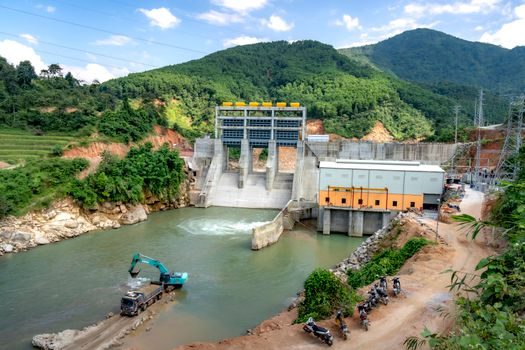
Bulk chemical and petrochemical plants remain the pneumatic core market: ATEX-certified rack-and-pinion units on butterfly and ball valves, 1-8 bar instrument air, double-acting or spring-return, with stainless or aluminum bodies selected by media [S2]. POV Valve and similar Chinese manufacturers bundle the actuator with a matched ball or butterfly valve, sold as a single SKU — a pattern that compresses sourcing for skid-builders and EPCs [S4].
Electric is gaining share in three pockets: water and wastewater (modulating service, no instrument air at remote pump stations), HVAC and building-services (quiet operation, BMS integration), and food/pharmaceutical skid packages where the absence of exhaust air simplifies clean-room validation. RS Components' 2026 catalog groups both families under a single "Valve Actuators" heading and explicitly names pneumatic and electric as the two main categories [S6].
For the broader system view — how the actuator spec rolls up into conveying, cylinder sizing, and 2026-2030 procurement planning — the Pneumatic System Market 2026: Conveying, Actuator and Cylinder Sizing Through 2030 article carries the sizing math one level up, and the Pneumatic Systems 2026: Conveying Growth, Valve Architecture Shift piece captures the architecture shift driving the actuator decision at the plant level.
Limitations, Constraints, and Failure Modes
Pneumatic limitations are well understood: dependence on instrument-air quality (ISO 8573-1 cleanliness), exhaust noise, icing in cold ambient, and a finite pneumatic spring-return cycle life (typically 100k-500k cycles for commercial units, lower for compact models). Air supply must hold within the 1-8 bar window — below 1 bar, torque collapses below the spec minimum; above 8 bar, seal life shortens [S1][S2].
Electric limitations are subtler: the gear-motor draws holding current to maintain position (or requires a brake), heat build-up limits duty cycle in modulating service, and the electronics package drives cost up sharply for ATEX/IECEx Zone 1 certified units. Positioner/protocol stack adds a real layer of vulnerability — a single failed feedback potentiometer or encoder can take the unit out of service in a way a pneumatic spring-return would have tolerated [S3][S5].
Standards, Sourcing, and Verifiable Signals
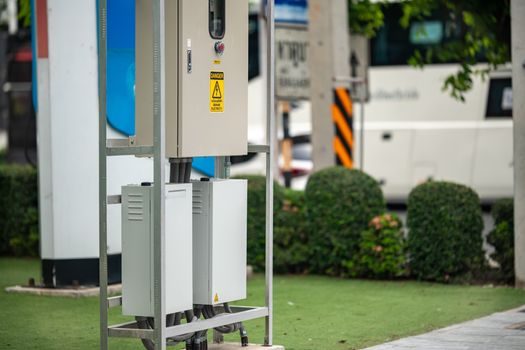
HazArea classification on the pneumatic side is typically demonstrated to ATEX via the actuator body, and the solenoid coil is certified separately — an important spec note when an EPC bundles the two. On the electric side, ATEX/IECEx covers the enclosure and the terminal box, and IP67 is the typical baseline for outdoor / wash-down service, as seen on the 2026 catalog entries [S3].
The verifiable next nodes for specifiers are the ISO 5211 mounting interface (universal on the pneumatic units sampled [S1]), the NAMUR accessory mounting for solenoid and positioner (also standard on MT-series [S1]), and the network protocol of the electric positioner — write that last one into the RFQ before the brand, not after.
For component-level specifications, see pneumatic valve actuator, electric actuator, and electric ball valve.