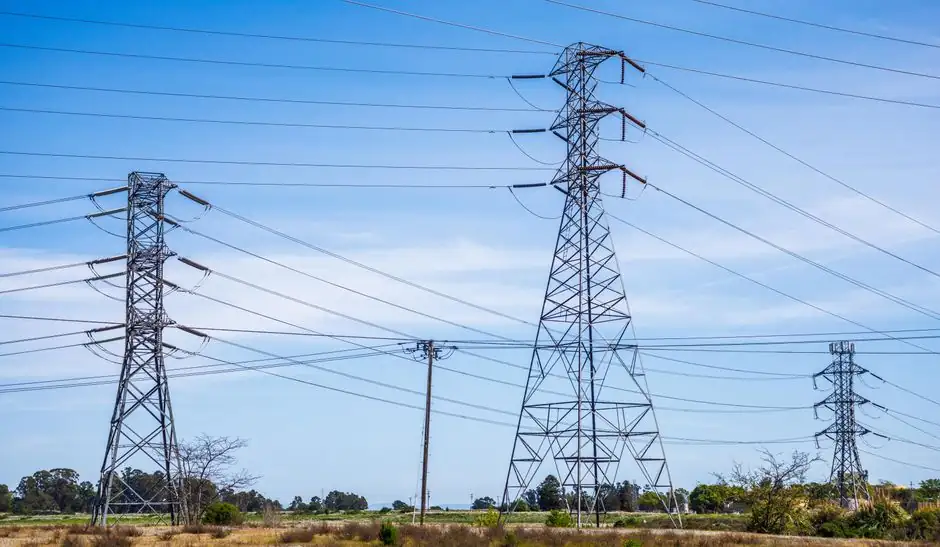
Grid manufacturing equipment breaks into four equipment families: HVDC converter stations, large power transformers (LPT), HV/MV switchgear, and grid-protective devices, each with its own supply base, standards stack, and qualification cycle [S1][S2].
The U.S. high-voltage direct current (HVDC) converter-station supply base is effectively absent domestically: per the DOE Electric Grid Supply Chain Deep Dive, the United States does not have a competitive edge versus other countries because manufacturing of key converter-station components is non-existent on U.S. soil, and HVDC project cost is driven by installation timeline rather than equipment BOM due to the small, competitive HVDC market [S1].
Scope: what counts as grid manufacturing equipment
Grid manufacturing equipment is the hardware used to build, expand, or refurbish the bulk power system. It includes large power transformers (typically rated 100 MVA and above, with BIL levels in the 900–1500 kV range), HVDC converter valves and stations (line-commutated or VSC-HVDC, with stations often in the 500–8000 MW class per bipole), HV circuit breakers (72.5–800 kV per IEC 62271), and distribution switchgear built to IEC 62271-200 / IEEE C37.20.x families [S1][S2].
Protective devices, relays, and revenue-grade metering sit one level down. A solid-state or power meter class 0.2/0.5 instrument transformer pair, for example, feeds SCADA and billing on a transmission substation, and the same hardware concept scales down to feeder metering on the distribution side.
Selection criteria: voltage class, BIL, and qualification pedigree
Specifying grid equipment starts with system voltage, BIL, short-circuit current (in kA peak and kA RMS at the bus), and through-fault impedance (typically 8–12% for a large GSU). HVDC converter stations add DC voltage (±320 kV, ±525 kV, ±800 kV are common tiers), DC current, and the choice between LCC and VSC valve technology [S1].
For the cabling and bus work between bays, the relevant decision is conductor cross-section, insulation class, and short-circuit withstand, covered under the power cable family of XLPE, EPR, and paper-lead constructions rated per IEC 60840 / 62067. Long feeder pull-through on new greenfield interconnect projects often drives the cable spec harder than the breaker spec.
Qualification pedigree matters more than nameplate. For U.S. projects, IEEE C57 (transformers), IEEE C37 (switchgear), IEC 62271 (international switchgear), and IEC 61850 (substation communications) are the references to call out on the data sheet, and the manufacturer should hold type-test reports for the exact voltage class, not just a family certificate.
Comparison: HVDC, LPT, and switchgear supply bases
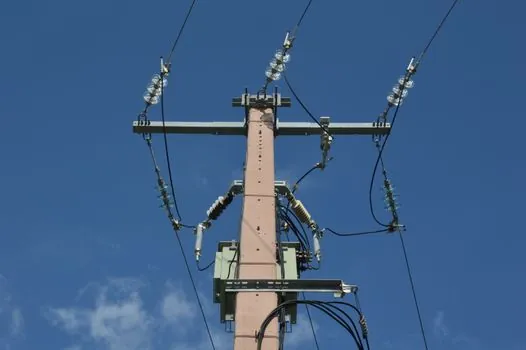
Three main equipment categories compete for the capex dollar on a new grid build, and they sit in different supply-base tiers [S1]:
HVDC converter stations. Highly concentrated global supply base, dominated by a handful of European and Asian vendors; U.S. domestic manufacturing of converter-station key components is effectively non-existent. HVDC cost is dominated by the installation project timeline, not the hardware BOM, because the market is small and competitive.
Large power transformers. Domestic U.S. LPT capacity exists but is constrained; lead times on units above 345 kV class regularly run 18–30 months, which is one of the structural drivers of grid interconnection queue delays.
HV/MV switchgear and protective devices. The most diverse supply base: gas-insulated (GIS) at 145–800 kV from European and Asian majors, air-insulated (AIS) from regional assemblers, and a healthy North American relay/IED ecosystem. Standardization on IEC 61850 for station bus has materially reduced integration cost across vendors.
Standards and sourcing reality for U.S. specifiers
U.S. specifiers writing purchase specs need to layer IEEE, IEC, and DOE/NERC requirements carefully. IEEE C57.12.00 governs general transformer requirements; IEEE C37.06 and C37.09 cover switchgear short-circuit and TRV; IEC 62271 series is the international counterpart, often used on cross-border interconnects and offshore wind tie-ins [S1][S2].
On the regulatory side, the North American Electric Reliability Corporation (NERC) is the Electric Reliability Organization authorized by FERC in 2006, covering the contiguous U.S., Canada, and northern Baja California, Mexico, and NERC TPL-001 and FAC-008 family standards drive many equipment ratings on the system side [S2].
For renewable tie-ins, the EPRI generic renewable energy system models (document 3002006525) are widely used for positive-sequence planning studies, but they cannot adequately represent the detailed behaviour of power-electronic converters during nearby unbalanced faults because they are positive-sequence models by construction, and HVDC tie-ins are converter-interfaced assets, so EMT studies are required to validate ride-through [S3].
Renewable integration and the converter bottleneck
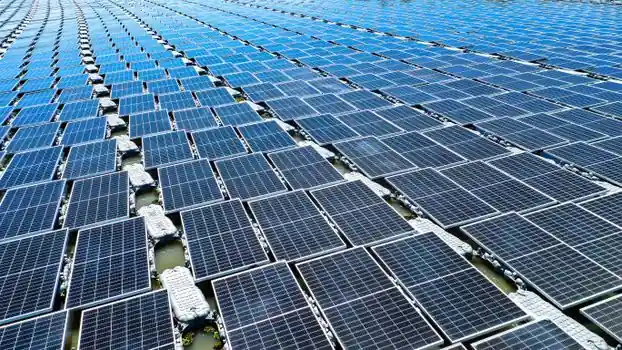
Renewable interconnection is now the dominant driver of new grid manufacturing demand. The U.S. operates three primary transmission interconnections (Eastern, Western, and ERCOT) with ISOs/RTOs functioning as transmission system operators (TSOs in European terminology), and FERC Order 2222-style distributed energy resource (DER) market access pushes more converter-based resources onto the bulk system [S2].
The structural issue is that every GW of new wind, solar, or BESS requires roughly 1 GW of HV step-up transformer capacity and, on offshore tie-ins, an HVDC or STATCOM converter station that the U.S. cannot build domestically at scale. That gap shows up as a 2–4 year interconnect-queue tail rather than a 12–18 month build [S1].
What this means for a process engineer buying equipment
Engineers specifying grid hardware should treat lead time and type-test pedigree as first-class variables, not footnotes. Push for IEEE C57 / IEC 62271 type-test reports on the exact voltage and short-circuit ratings; require IEC 61850 conformance on station bus; and, for any converter-interfaced asset, demand an EMT study in addition to the positive-sequence load-flow [S3].
Adjacent disciplines use similar spec-first discipline on the manufacturing side, see Electric Motor Manufacturing Equipment: Spec Map and Sourcing Guide for how motor plants sequence stator and rotor tooling, and Electric motor production line design: spec-first cell layout for stator, rotor, and for the cell-layout logic that translates a one-line diagram into a production floor.
Trackable next signals: domestic U.S. LPT capacity announcements above 345 kV class, any new HVDC converter-station manufacturing announcement on U.S. soil, and NERC TPL standard revisions tied to inverter-based resource ride-through.
For the relevant spec sheets and selection criteria, see additive manufacturing material.