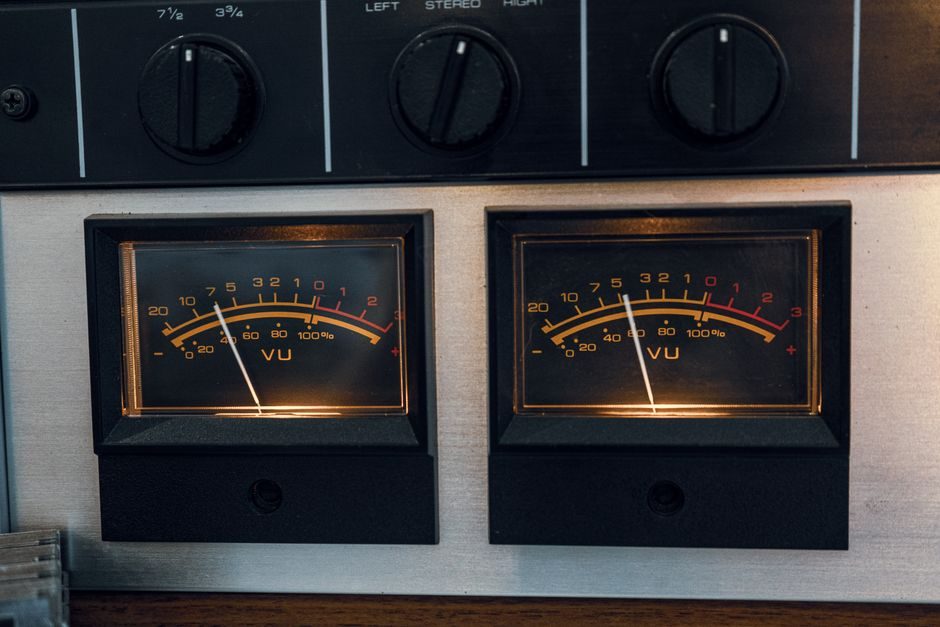
A power meter reports instantaneous electrical quantities — voltage, current, active/reactive/apparent power (W, var, VA), frequency, power factor, and harmonics — sampled typically every cycle to a second on three-phase systems up to 690 V [S2].
An energy meter integrates active and reactive energy over time, logging kWh and kvarh in a register for billing, tariff switching, and load-profile export, with metering accuracy classes spanning 0.2S / 0.5S / 1 / 2 per IEC 62053-22 and IEC 62053-23 depending on the application tier [S5][S6].
Definition and Measurement Scope
Power meters are built around fast ADCs and DSP engines that calculate P = √3 × V × I × cosφ on each cycle, so they can deliver sub-second updates on a panel display, to a PLC via Modbus RTU/TCP, or up a BACnet/IP link to a BAS — the AcuRev 1320 DIN-rail series, for example, is sized for panel-enclosure builds that need clean wiring management on three-phase circuits [S2]. Energy meters, by contrast, run an integrator that converts instantaneous watts into a running kWh total using a constant (pulses per kWh), and they keep a non-volatile register that survives power loss so utility billing or tenant cost allocation stays accurate. Three functional blocks dominate the BOM: the voltage divider or PT front-end, the current shunt/CT (Rogowski, split-core, or solid-core), and the metrology MCU with its calibration EEPROM. The Accuenergy line exposes all three blocks as separate SKUs — solid-core S77/S113/S125, split-core A/R/5A/mV, and Rogowski Flex — so the same metering head can be paired with the right sensor for a retrofit versus a new switchboard [S2].
Selection Criteria: Accuracy Class, Topology, Protocol
Metering accuracy is gated by IEC 62053-22 class 0.2S / 0.5S for active energy and IEC 62053-23 class 2 / 3 for reactive, with 0.2S reserved for transmission-tier revenue metering and 0.5S/1 common in commercial submetering and industrial feeder metering. The second cut is topology: single-phase 2-wire, three-phase 3-wire (delta, no neutral), or three-phase 4-wire (wye with neutral) — pick a meter whose declared wiring matches the bus; mis-wiring a 3-wire meter onto a 4-wire wye distorts the calculated neutral current. The third cut is protocol: Modbus RTU over RS-485 is the workhorse for plant SCADA, Modbus TCP and BACnet/IP for BAS integration, MQTT/HTTPS gateways for cloud EMS, and DLMS/COSEM for utility AMI in many markets. The Acuvim 3 and AcuRev 4100 families expose several of these simultaneously through plug-in AXM-WEB2 modules (WiFi, dual Ethernet, fibre) so a single head can serve SCADA, BAS, and cloud tenants from the same wiring [S2].
Who a Power Meter Is For — and Who It Is Not
Specify a power meter when the operator needs real-time visibility: data-center PDU monitoring, EV-charger load management, plant feeder demand trending, or any application where the next ten minutes matter more than the last month. A multifunction power meter also pays back when you need to track power-quality events — voltage sags/swells, THD, individual harmonic magnitudes up to the 31st or 63rd — because those samples are not preserved by a pure kWh register. Skip a full power meter for simple tenant-billing submetering on a lighting or receptacle circuit: a Class 1 DIN-rail kWh meter such as the AcuRev 1310/1320 gives you the billing register and Modbus output at a fraction of the panel space and cost. The same rule applies to residential single-phase services — a multi-rate watt-hour meter with optical port (IEC 62056-21) is the right tool, and over-spec'ing it with a power-quality analyser is wasted budget. [S2]
Comparison: Power Meter vs Energy Meter vs Multifunction
Lining the three against the criteria that drive a purchase order: cost is lowest on a pure energy meter (panel-mount single-phase kWh registers list well below a full PM), while a multifunction power meter sits 3–8× higher depending on harmonic depth and I/O count. Real-time update rate is the inverse — pure energy meters typically expose only the register, so they update on each pulse constant (often 1000–10000 imp/kWh), while a power meter pushes V/I/P/Q/PF/THD at 1-second to 50 ms resolution. Accuracy class is comparable in active energy (0.2S–1) across both, but only a power meter quotes a power-quality accuracy band for harmonics. Integration effort is highest on a power meter because it must be commissioned (CT polarity, phase rotation, PT ratio), then mapped into a SCADA tag database; an energy meter is often a fit-and-forget install with a single kWh register read. The decision rule: if the deliverable is a monthly bill or a load-profile export, energy meter; if the deliverable is alarming, demand control, or PQ compliance reporting, power meter. [S2]
Installation Form Factors and CT Pairing
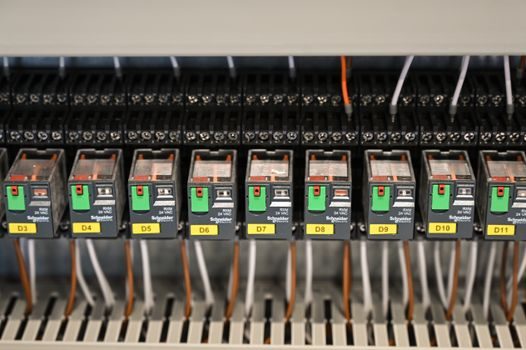
Two mechanical form factors dominate 2026 panel builds: DIN-rail (35 mm) for branch and subpanel retrofits, and panel-mount (96 × 96 mm or 72 × 72 mm cut-out) for switchgear doors and MCC compartments. CT selection is the silent budget driver — a revenue-grade split-core A or R series CT is required for billing-grade submetering, while a 333 mV split-core mV series CT feeds the same meter head for non-revenue monitoring at lower installed cost [S2]. Rogowski Flex coils trade a small accuracy penalty (±1% typical) for very large primary currents (hundreds to thousands of amps) and easy clip-on installation around busbars where a solid-core cannot be broken in. For DC systems — solar PV strings, battery racks, DC EV chargers — AC CTs do not work; Hall-effect or fluxgate DC sensors (HAB 16555-class) and DC-specific meter heads such as the AcuDC 240/262/300 series are required, with polarity observed at termination [S2]. The Acrel DC power analyser product line targets the same data-center and PV monitoring slot with comparable functionality [S5].
Use Cases Mapped to Meter Class
Data-center PDU metering: Class 0.5S three-phase multifunction power meter on the input, Class 1 multi-channel sub-meter (AcuRev 4100) on each outlet strip, all Modbus TCP back to a DCIM. EV charging: an MID-certified DC meter (AcuDC-261, dual-port) on the DC side for billing compliance, plus an AC power meter upstream for load balancing. Tenant submetering in commercial offices: Class 1 DIN-rail kWh meter per tenant, Modbus RTU daisy-chained to a gateway, optional cloud EMS for monthly bill generation. Plant feeder monitoring: Class 0.5S panel-mount meter with split-core CTs, wired to SCADA for demand trending and PQ event capture. The single product that does not exist is a power meter that is also a revenue-certificate metering instrument; in most jurisdictions, utility billing requires a meter type-approved under the local weights-and-measures regime, separate from a monitoring-grade PM. [S2]
Limitations, Failure Modes, and Sourcing Notes
The most common field failure on installed meters is CT polarity reversal on one phase, which shows up as a negative power reading on that phase while the total still sums positive — verify with a known load before energising. Second is PT ratio misconfiguration on medium-voltage retrofits (e.g. 11000/110 V PT set as 11000/100 V), which under-reads voltage by 10% and distorts the calculated kW by the same factor. Third is harmonic aliasing on meters with too-low a sampling rate when the load is a modern rectifier or VFD — specify a meter whose bandwidth covers up to at least the 50th harmonic if PQ is in scope. For sourcing in 2026, the Made-in-China.com supplier directory lists hundreds of Energy Meter / Power Meter vendors with FOB unit prices commonly in the US$ 5–6 range for entry-level single-phase kWh meters such as the Lxsc-S3 and Lxsm-W1 lines, while three-phase power meters and multifunction heads sit significantly higher and are dominated by the Accuenergy, Acrel, and Schneider/ABB/Siemens product tiers [S1][S4][S5]. Verifiable next signals to watch: MID and IEC 62053-22 certificate numbers on the meter nameplate (not the datasheet marketing copy), and the actual CT burden rating matched to the meter loop — a 333 mV CT terminated into a 1 V input simply reads low.
This topic is covered further in Aluminum Alloy Selection for Automotive Manufacturing: 2026 Spec Map.