
An industrial power mixer running at 1,750 RPM with degraded shaft seals and loose blade fasteners is, statistically, a contamination event waiting to happen: 47% of mixer-related foreign-material events trace back to seal condition, and 82% of those trace back to inspection items that were skipped, rushed, or poorly documented during shift handovers [S1].
The defensible inspection program is not a single long form; it is a four-tier cadence with explicit pass/fail criteria, test values, and escalation rules. Tier 1 (pre-shift, 12 points, 8-12 min per mixer) catches contamination and safety interlocks; Tier 2 (weekly) covers pipework, drives, lubrication, and E-stops; Tier 3 (monthly/quarterly) targets impellers, seals, bearings, and shaft alignment; Tier 4 is a planned shutdown teardown with vibration analysis and motor insulation testing [S1][S3][S5].
Tier 1 Pre-Shift: 12 Points, 12 Minutes, Three Critical-Fail Lines
Tier 1 is a 12-item pre-shift walk that includes visual contamination scan, safety interlock verification, seal and gasket inspection, blade/agitator check, startup sound analysis, and vibration assessment, with an estimated 8-12 minutes per mixer and immediate CMMS logging [S1]. The three items that must pass before the mixer can start are: lid interlock refuses start with guards open, E-stop kills power within 2 seconds, and all LOTO points are accessible and labeled [S1].
Blade-to-bowl clearance on a Tier 1 walk is a measurable pass/fail: 3-6 mm is the in-spec band, with any nicks, chips, loose fasteners, or coating deterioration flagged as a quality warning [S1]. For concrete units, Tier 1 expands to drum, blades, electrical components, and fastener inspection, and the unit must be started empty so abnormal noise or overheating is audible without aggregate load [S2].
Tier 2 Weekly: Drives, Pipework, Lubrication, E-Stops
Weekly inspections layer on top of daily checks and explicitly cover structural integrity, fasteners, pipework for corrosion, leaks and blockages, pump performance, drive belts and chains, lubrication, air filter and regulator leakage, plus guards, interlocks, and emergency stops [S3]. On a concrete mixer truck the weekly pass/fail line is anchored to DOT items under 49 CFR 396.11 and CSA scoring: brake-light failure on either side is immediate out-of-service, and turn-signal flash rate must read 60-120 per minute [S4].
For a sand mixer or abrasive-slurry unit, weekly pipework and seal inspection is the dominant failure surface, because abrasive media accelerates gland and mechanical-seal wear faster than the impeller itself. Weekly grease-point lubrication, air-filter ΔP check, and chain tension measurement are the three tasks most often skipped in the field; each is logged with site, date, and location for compliance traceability [S3].
Tier 3 Monthly/Quarterly: Impeller, Seal, Shaft, Motor, VFD
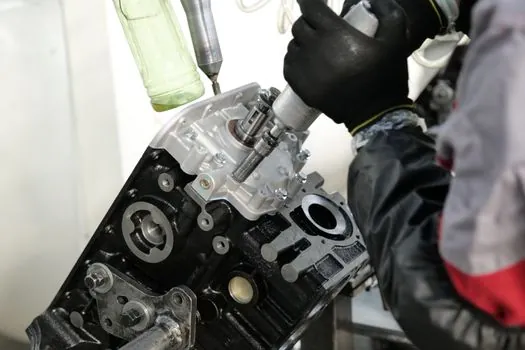
Monthly and quarterly tasks are where mean time between failures (MTBF) is actually moved. The five-item Tier 3 audit covers impeller inspection (buildup, cracks, chips, balance, sizing versus current viscosity), seals and bearings (leaks, product buildup, grease per OEM interval), shaft alignment and balance, motor and drive condition (gearbox oil level and leaks, motor amperage draw, VFD speed control, explosion-proof motor compliance in hazardous areas), and CIP/sanitation verification in food, beverage, and pharmaceutical service [S5].
Imbalance is a hard-stop trigger: any excess vibration from a damaged or built-up impeller must shut the unit down immediately, because the same imbalance accelerates shaft and bearing damage in a feedback loop [S5]. For hazardous-area units, explosion-proof motor certification must be re-verified against the current zone classification, and any VFD parameter drift (carrier frequency, ramp time, current limit) should be compared against the OEM commissioning sheet, not field folklore.
Selection by Application: Which Checklist Variant Fits
Food, pharma, and chemical mixers prioritize CIP, seal traceability, and GMP documentation; construction and ready-mix units prioritize drum, chute, hydraulics, and DOT compliance; abrasive-slurry and mining units prioritize impeller wear, gland packing, and gearbox oil sampling. The decision criteria below map the four main variants against four selection axes [S1][S2][S4][S5].
Food/pharma: seal-related contamination drives 47% of recall events; spec surfaces are FDA/GMP documentation, Ra finish, electropolished product-contact surfaces, and CIP compatibility [S1][S5]. Construction/ready-mix: 89% of breakdowns are preventable with daily discipline; spec surfaces are 49 CFR 396.11 DOT items, hydraulic pressure, drum bearing, PTO engagement, chute lock, and a 42-point pre-trip [S4]. Abrasive-slurry/chemical: high-torque service and variable viscosity; spec surfaces are shaft alignment tolerance, mechanical-seal flush plan, and gearbox oil analysis [S5]. Portable electric power mixer: cord, plug, and ground continuity plus double-insulation verification before each shift [S6][S7].
Failure Modes, Limits, and When Not to Repair

Seal failure shows up as a 21-day early-warning window between first symptoms (slow weeps, product buildup at the gland) and catastrophic leakage; a Tier 1 inspection must escalate to seal replacement within 48 hours of any crack, hardening, swelling, discoloration, or wear-groove finding [S1]. Gearbox problems announce themselves as new noise, higher operating temperature, and oil-condition degradation; above OEM temperature or with metallic content in oil samples, the right call is gearbox teardown, not field top-up [S5].
For a concrete mixer truck, an unchecked drum bearing escalates to roughly $45,000 drum replacement with about 3 weeks of downtime, and a missed hydraulic leak can cascade into transmission failure, so any hydraulic-line weep or drum-bearing growl is a no-dispatch condition [S4]. On portable tools, any frayed cord, missing ground, or defeated guard is an immediate lockout; do not repair the cord, replace the tool or the cordset as a unit [S6].
Documentation, Standards, and Trackable Signals
Documentation discipline is the difference between an inspection program and a piece of paper. Tier 1 findings must be logged immediately into the CMMS with timestamp and photo evidence; weekly checks are recorded by site, date, and location with a digital signature; Tier 3 audits should reference the OEM service manual and any hazardous-area certificate numbers; and truck inspections must remain DOT-defensible under 49 CFR 396.11 [S1][S3][S4]. For related reference, a comparable field-data brief on demolition-hammer failure modes and prevention is at Demolition Hammer Failure Modes and Prevention, and truck-mounted crane pre-trip logic for heavy-haul work parallels mixer-truck daily discipline at Truck-Mounted Crane Specs for Pipeline Construction (note: the linked page covers crane capacity, reach, and chassis rules, not pre-trip items).
Track these signals in the next 90 days: (1) percentage of Tier 1 inspections completed inside the 12-minute target, (2) repeat-find rate on seal and bearing items across two consecutive weekly walks, and (3) drum-bearing temperature trend on ready-mix trucks versus the OEM alarm setpoint. Each is a leading indicator of whether the four-tier cadence is actually preventing failure, or just generating paperwork. For deeper power distribution context on VFD-fed mixer motors, harmonics, and isolation, the related spec map at How to Choose a Static VAR Generator is the upstream reference for any plant planning a mixer VFD retrofit.
