
Handheld and industrial power mixers concentrate hazard in three places: the rotating paddle or impeller, the motor's locked-rotor inrush, and the explosive atmosphere around solvent or dust service. A safety programme that ignores any one of the three produces a near-miss or fatality within a year on a typical site [S1][S5].
For construction paddles, the binding electrical standard is the IEC 62841 series (formerly IEC/EN 60745) for hand-held motor-operated tools, with vibration declared to EN 62841 and EU placing-on-market governed by the Machinery, Low Voltage, and EMC directives. For industrial tank-side mixers, the same safety intent is enforced through ATEX 2014/34/EU category 2 or 3 zoning, IEC 60079-0 and IEC 60079-1 flameproof enclosures, and IP55 to IP67 ingress classes [S2][S5].
Lockout/Tagout and Pre-Start Verification
Lockout/tagout (LOTO) is the single highest-leverage control on any mixer, handheld or industrial: locate the disconnect, isolate the energy, apply a personal padlock, and verify zero voltage at the motor terminals before guards, paddles, or sample ports are touched [S1]. The "DO" list is explicit: locate and lock power out to prevent accidental starting; never repair or replace parts without locking power out; and re-check the on/off switch after re-energising, because a mechanically stuck contactor will start the machine the moment power returns [S1].
For handheld units, two-handed no-volt release is the equivalent control. The MP 350 to MP 600 mixer line uses a two-button start on 120 V / 60 Hz supplies (365 W to 670 W), so the operator must press both buttons simultaneously to run, which prevents the trigger-only start that has caused most one-handed entanglement injuries on site [S6]. A complementary interlock, the dead-man trigger, is fitted to most paddle mixers and drops the paddle to idle the moment grip is released; verify it works under load before every shift [S7].
PPE, Attire, and Entanglement Prevention
Entanglement with the rotating shaft is the dominant fatality mode on industrial and construction mixers, and the PPE list reflects that, not a generic "wear a hard hat" reflex. The trade consensus is: snug sleeveless clothing only, hair net or close cap, approved safety glasses, and bare hands (gloves are explicitly prohibited near a rotating shaft because rubber and latex grip the metal and pull the hand in) [S1]. Breathing apparatus is required for any entry into a tank where toxic fumes may be present, and the atmosphere must be tested before entry, not after.
Two further physical controls are non-negotiable: keep the impeller below one-third of the tank diameter so a falling operator cannot reach it, and never run a mixer in a tank so small that the body can contact the rotating shaft [S1]. Tools, bolts, and loose fittings must be cleared from the header and shaft before guards are replaced, because a single forgotten spanner becomes a 1 kg projectile at 800 rpm and has killed operators standing three metres away [S1].
Hand-Arm Vibration, Noise, and Trigger Time

Most paddle mixers exceed 2.5 m/s² triaxial hand-arm vibration under load, which under the EU physical-agents (vibration) Directive 2002/44/EC triggers the action value and a documented exposure action plan (EAP) with per-worker daily trigger time limits [S2]. Practical control: rotate operators on heavy screed and epoxy batches, grip both handles to spread the load, and prefer mixers with an anti-vibration (AV) side handle that decouples the motor housing from the grip surface; a 1 m/s² reduction in declared vibration value roughly doubles the allowable daily exposure time before the limit value is reached [S2].
Noise follows vibration: a 1,800 W paddle mixing tile adhesive at full load typically emits 85 to 95 dB(A) at the operator position, which mandates hearing protection above 85 dB(A) under most EU and US OSHA hearing-conservation programmes. The power mixer guide entry carries the full EN 62841 vibration declaration pattern that procurement should require on every nameplate, not just the headline wattage.
Electrical Gates: ATEX, IP, and Inrush Headroom
Where solvent vapours, grain dust, or resin powders are present, ATEX 2014/34/EU category 2 (zone 1/21) or category 3 (zone 2/22) certification is mandatory on the motor terminal box, and IEC 60079-0 / IEC 60079-1 govern the flameproof Ex d enclosures [S5]. The zone decision cascades: every cable gland, VFD enclosure, and local isolator in the run must carry the matching Ex marking, not just the motor, and the installer still needs the equipment certificate number on the nameplate for the inspector to verify.
Ingress protection pairs with the zone rating: IP55 is the floor for indoor washdown, IP65 for outdoor chemical service, and IP66/IP67 for submerged or hose-down zones [S5]. A mixer specified to IP55 will not survive a CIP cycle with hot caustic, and the seal failure on the output shaft will look like a gearbox problem at teardown. On the supply side, a 75 kW mixer drawing 130 A at 400 V has a locked-rotor current of 6 to 7× full load, so the upstream transformer and cable must be sized for that inrush, not the running current; soft-starters or VFDs smooth the spike but introduce harmonics that read as poor power factor unless a line reactor is fitted [S5].
Grounding, Conductive Vessels, and Static Control
For solvent-blending and flammable-powder service, the mixing vessel itself must be metallic and bonded to ground; a cardboard or plastic drum cannot be grounded, and the impeller can cut through both, which produces a static-discharge ignition source inside what looks like an "empty" container [S1]. The same rule applies to handheld paddle mixers: bond the metal bucket to the site's verified ground before the paddle enters the material, and verify continuity with a clamp meter, not by visual inspection.
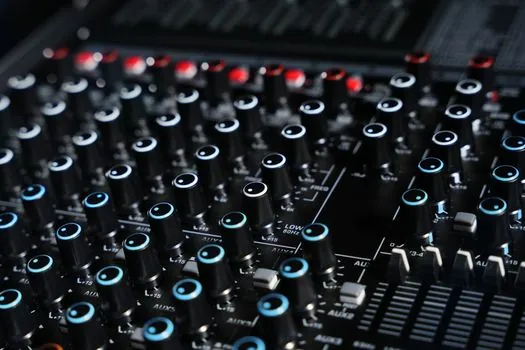
For audio-style power mixer consoles (e.g. the Behringer Europower PMP1000 / PMP980S / PMP1680S line), the equivalent electrical safety is a polarized or grounding-type mains plug, a MAINS socket with protective earthing, and avoidance of any defeat of the ground prong [S3][S4]. The apparatus must not be exposed to dripping or splashing, ventilation openings must remain unblocked, and the power cord must be protected from being walked on or pinched at the plug and exit points [S3][S4].
Selection Comparison: Handheld Paddle vs Industrial Tank-Side vs Audio Console
Three power-mixer categories share a name but carry different safety stacks. The comparison below lines the main options against the four decision criteria a safety officer actually enforces on site. [S2]
Handheld paddle mixers (1,000 to 1,800 W, single-phase, 150 to 800 rpm) are governed by IEC 62841, EN 62841 vibration declaration, and the EU Machinery/LVD/EMC directives; they are NOT Ex-rated, and must not be installed inside a classified area regardless of how convenient the single-phase outlet looks [S2][S5]. Industrial tank-side mixers (0.55 to 75 kW, 400 V / 50 Hz three-phase) add ATEX 2014/34/EU category 2 or 3, IEC 60079-0/1 flameproof enclosures, IP55 to IP67, and a 6 to 7× locked-rotor inrush feeder spec; cost runs 5 to 10× a handheld paddle and lead time is weeks, not days [S5]. Audio power-mixer consoles (160 W to 1,600 W class-D) sit in a third bucket: their hazards are electric shock, fire, and rain/moisture exposure, addressed via polarized/grounded plugs, dry-cloth cleaning only, and ventilation clearance from heat sources; they have no rotating shaft and no ATEX gate [S3][S4][S8].
Maintenance, Transport, and Operator Verification
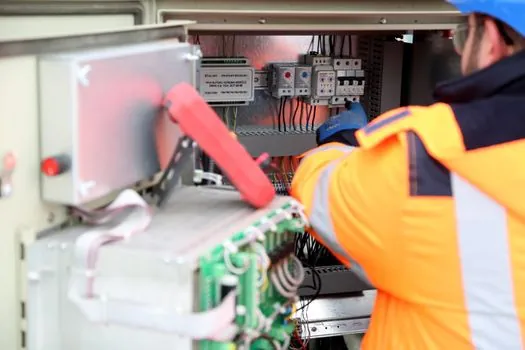
A documented pre-shift check is the cheapest control on the list. Inspect cord and plug for damage, verify the no-volt release / two-button start works, check paddle threads for wear, confirm the AV handle isolation is intact, and tag out any unit that fails any single check [S1][S7]. Cutting tools and mixing paddles must be kept sharp and clean; a worn paddle binds in the material, stalls the motor, and the operator's reflex release-then-regrip is a known entanglement entry point [S7].
For mobile audio power consoles, the equivalent pre-show ritual is a flight case or padded cover to shield faders, connectors, and the display from impact and dust during transport; larger units such as the Dynacord PowerMate 2200-3 practically demand a dedicated flight case because of their dimensions and weight [S9]. Either way, the rule is the same: the case, the guard, the LOTO, and the AV handle are not optional accessories, they are the safety case for putting the machine into service [S1][S7][S9].
Two trackable signals close the loop. First, monitor EN 62841 vibration declared values on the next paddle-mixer quote, not the marketing wattage: a 1,500 W unit at 3.5 m/s² is a worse buy than a 1,300 W unit at 2.2 m/s² once the operator EAP cost is loaded. Second, on the next industrial spec, require the ATEX equipment certificate number on the motor nameplate and the matching Ex marking on the cable gland and VFD enclosure, then cross-check it against the zoning drawing; a single mismatch voids the area classification. For a wider view of how mixer installations sit inside cement and aggregate plant safety audits, the cement equipment briefing from 2026-09-17 carries the matching compliance-risk and blade-to-kiln context, while the demolition-hammer inspection checklist lays out a parallel pre-shift walkthrough template that adapts cleanly to paddle-mixer pre-shift checks.
For the relevant spec sheets and selection criteria, see sand mixer, and concrete mixer truck.