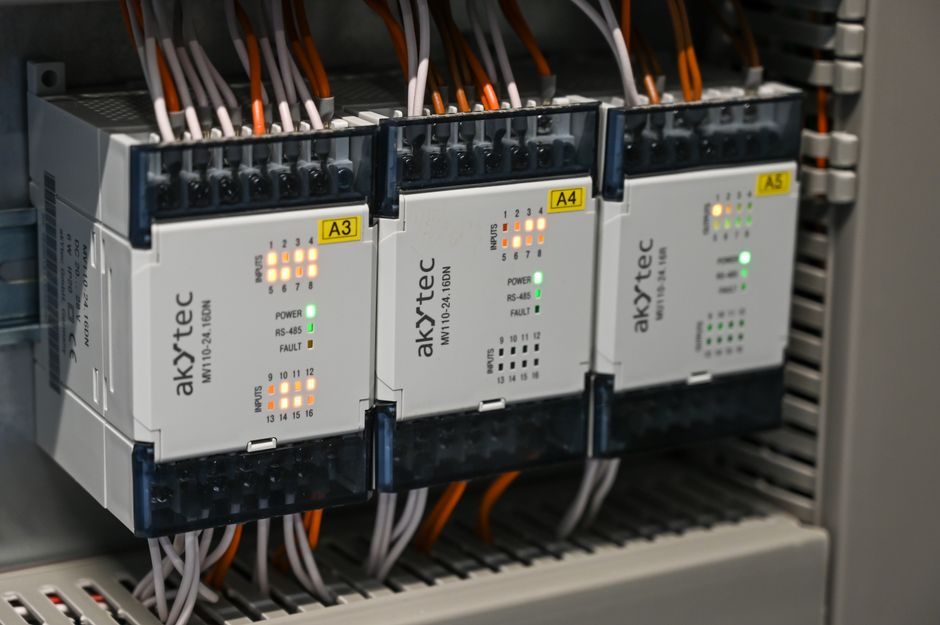
A power monitoring system in 2026 is a layered stack: current transformers (CTs) or Rogowski coils at the conductor, a transducer or meter head that computes kWh, kVAR, kVARh, and power quality, and a communications layer (4-20 mA, Modbus RTU/TCP, BACnet, Ethernet/IP) that feeds a SCADA or power meter gateway [S1].
Spec selection collapses to three decisions: revenue-grade accuracy class (0.2 / 0.5 / 1.0 per IEC 62053-22 family), communications protocol, and CT burden matching. A real 2026 panelboard monitor example is the Veris E30A142 — 3-phase main, advanced model, listed at CAD 5,318.10 sale / CAD 12,059.00 list on a Canadian distributor, lead-time 2-3 weeks [S2].
Three Equipment Classes and Where Each Fits
Class A — revenue-grade meters (IEC 62053-22, Class 0.2 or 0.5) — are used for utility billing points, ISO 50001 energy baselines, and substation feeder metering; cost runs roughly 3-8x a Class B unit and lead-time is typically 4-8 weeks [S1].
Class B — panelboard and switchboard monitors (e.g. Veris E30 series) — target 208/480 V distribution, 100-1200 A busways, and machine-level kWh tracking; they typically expose Modbus RTU (RS-485) plus optional Ethernet and BACnet MS/TP, and live in the 100-500 V L-N, 200-600 V L-L window [S2].
Class C — branch-circuit CT strips (Veris E3x, Accuenergy AcuCT, Schneider EM4x) — mount inside a panel to monitor 42-84 individual circuits, 50-1200 A branch range, used for tenant sub-metering and data-centre PDU feed monitoring. The three classes are not interchangeable: specifying a branch strip for billing fails utility audit; specifying a Class 0.2 meter for a 20 A receptacle wastes roughly 70% of unit cost.
Accuracy Class, CT Ratio, and Burden — the Three Spec Gates
Accuracy class is the single most-misread number. IEC 62053-22 Class 0.5 means ±0.5% of reading at unity power factor over the rated current range — a Veris E30A142-class panelboard monitor is the mainstream Class 0.5/1.0 device for a 3-phase main [S2].
CT ratio and burden are coupled. A 1000:5 CT feeding a meter with 0.1 VA internal burden at full secondary current (5 A) drops 0.5 V across the CT; if the loop wiring adds 0.3 VA, the CT saturates and accuracy collapses above ~80% of rated primary current. The fix is either shortening the CT loop, stepping to a solid-core CT (lower leakage), or picking a split-core with 0.2 VA burden spec. Rogowski coils eliminate saturation but require an integrator (typically 1 mV/A or 333 mV at full scale) and a meter with integrator input.
Voltage input is the silent failure point. A panelboard monitor rated 100-480 V L-L will misread on a 600 V Canadian feeder unless explicitly listed for 600 V — confirm UL/ULc 61010-1 and the L-L rating against the busway nameplate, not the marketing sheet [S1].
Protocol Stack: 4-20 mA, Modbus, BACnet, Ethernet/IP
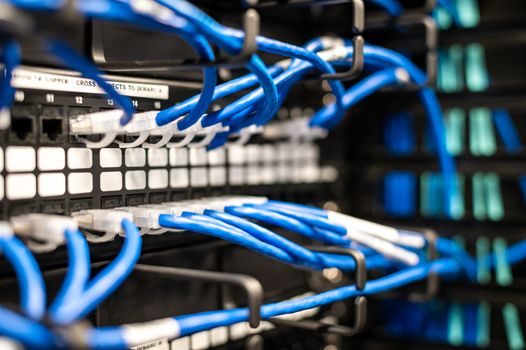
Modbus RTU on RS-485 is the universal default for Class B panelboard monitors; up to 32 devices per bus, 1200 m max at 9600 baud, half-duplex [S2]. For SCADA, Modbus TCP over Ethernet is the 2026 baseline, with BACnet MS/TP still required by many building automation specs and Ethernet/IP still common on Rockwell PLC lines.
Watch for that on retrofit spec sheets.
For high-density branch monitoring, BACnet/IP or Modbus TCP over a managed Ethernet switch is the realistic option; a single 42-circuit strip will burn ~250-400 registers at 1-second refresh, which 9600-baud Modbus RTU cannot sustain — that is the technical reason Ethernet gateways are standard on Class C branch strips.
Comparison: Three Realistic Spec Tiers for 2026 Buyers
Tier 1 — billing / utility (Class 0.2): IEC 62053-22 Class 0.2, 4-quadrant, 4-20 mA + Modbus TCP + Ethernet, optical port for meter reading, 100-600 V L-L, CT primaries 100-3200 A. Use for ISO 50001 baseline, utility tie-point, substation feeder. Cost roughly 3-8x Tier 2.
Tier 2 — facility / panelboard (Class 0.5/1.0): the Veris E30A142 sits here — 3-phase main, advanced model, Modbus RTU + optional Ethernet, 100-600 V L-L, CT primaries up to 1200 A, sale CAD 5,318.10 / list CAD 12,059.00 on ITM.com as of 2026-07-18, 2-3 week availability [S2]. Use for plant-level kWh, demand, and power-quality logging.
Tier 3 — branch / PDU (Class 1.0-2.0): 42-84 channel CT strips, split-core CTs at 50-1200 A, Modbus TCP / BACnet IP, designed for data-centre PDUs and tenant sub-metering. Use ONLY for allocation and load balancing, never for billing.
Who Should NOT Buy a Tier 2 Panelboard Monitor
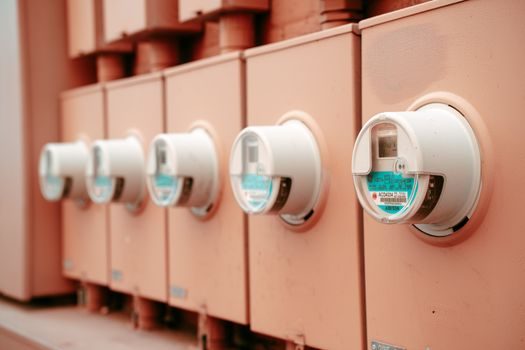
If the application is revenue billing, ISO 50001 verification audit, or substation tie-point metering, a Tier 2 Class 0.5 panelboard monitor will be rejected at audit. The buyer needs a Tier 1 IEC 62053-22 Class 0.2 revenue meter with a metrology seal. [S2]
If the load is highly distorted (VFDs, large LED drivers, arc furnaces), the spec must include THD measurement to IEEE 519 limits and individual harmonic order tracking up to at least the 31st or 63rd — many Tier 2 panelboard monitors only log THD, not individual orders. A condition monitoring system layer is then needed for rotating-asset correlation. Without that, the power monitoring system data is half-blind on the harmonics root cause.
If the site is remote / unstaffed, a meter with on-board logging (8 MB+ flash, 1-second time-stamped events) and MQTT or HTTPS push is the realistic spec; pulling data on a Modbus poll over a flaky cellular link is a known failure pattern.
Sourcing, Lead-Time, and Failure Modes
North-American distributor stock of Tier 2 panelboard monitors in 2026 sits at 2-3 weeks for common catalog SKUs (e.g. E30A142 [S2]); Tier 1 revenue meters commonly run 4-8 weeks and Tier 3 branch strips with non-standard CT counts run 6-10 weeks. Plan the procurement clock against the commissioning date, not the PO date.
Common spec failures on receipt: CT polarity reversed (inverts sign, halves the kW reading), CT ratio mismatch between CT and meter (off by 10x silently), voltage reference set to L-N when the service is L-L (reads 1.732x low). A bench test with a known load and a reference hand-held meter catches all three in under an hour — and it should be written into the FAT.
Wiring and cable spec is part of the bill: twisted, shielded pair for RS-485, characteristic impedance 100-120 ohm, terminated at both ends with 120 ohm. Pull this cable separately from VFD power circuits; crosstalk is the most common Tier 2 comms failure. The same separation rule applies when a power cable and the metering CT loop share a conduit — induced voltage on the secondary is a real, measurable, and avoidable error source.
Standards Anchor and Selection Logic
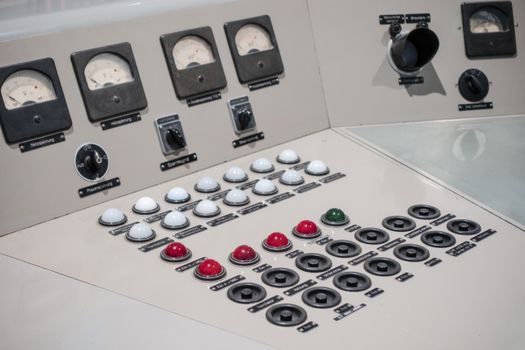
The non-negotiable standards chain for a 2026 North-American installation: IEC 62053-22 (AC active energy accuracy class) for revenue metering, IEEE 519-2022 (harmonic distortion limits at the PCC), UL/ULc 61010-1 (meter safety), and IEEE C37.90.x for surge/ESD immunity on substation-grade units [S1]. For Canadian sites, cUL or cETLus marks on the meter body, and Measurement Canada approval for billing applications, are the audit gate.
Shortlist logic: revenue / ISO 50001 → Tier 1 IEC 62053-22 Class 0.2 with optical port; facility / plant kWh → Tier 2 panelboard monitor (e.g. Veris E30A142 at CAD 5,318.10 sale [S2]); data-centre PDU / tenant sub-metering → Tier 3 branch strip. Layer a linear guide for meter-rack chassis planning on retrofit switchboards, and coordinate cross-system wiring against any crossed-roller guide service plans on the same panel schedule. The time relay selection logic on the control side must run in lockstep with the meter's demand-window reset.
Trackable signals over the next procurement cycle: Tier 1 lead-times from the major North-American distributors, cUL/Measurement Canada approval status of any new revenue-meter family, and IEEE 519 enforcement posture at the local utility. Each is verifiable on the distributor's stock page within a quarter.