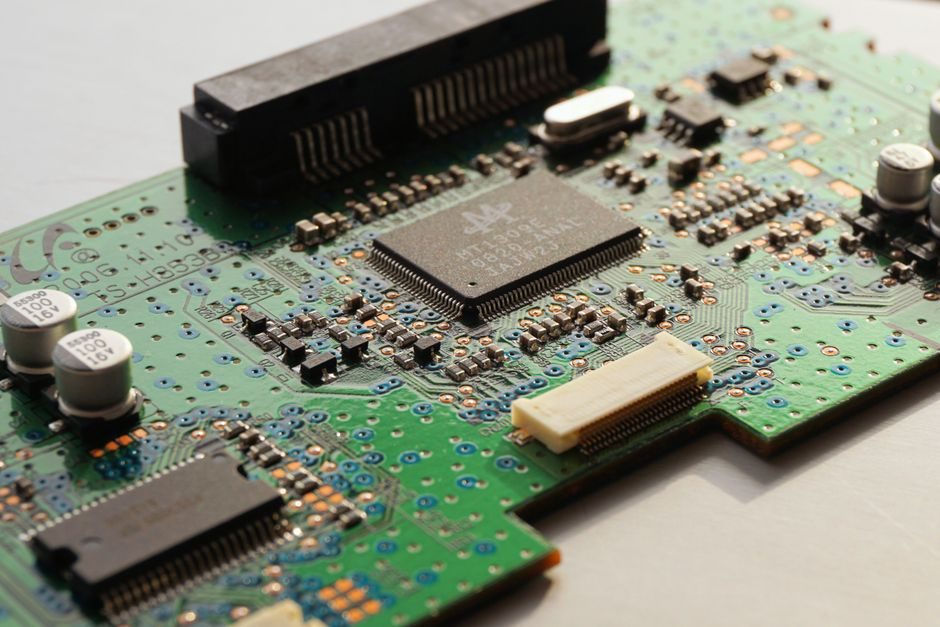
Spot listings on 2026-06-09 put an 8-inch (200 mm) 4H-SiC P-type Schottky Barrier Diode module and an 8-inch SiC PMOS P-channel MOSFET at US$520.00-600.00 per piece, with MOQ windows of 1-5 pieces on Made-in-China [S3] — a price band that signals SiC wafer scarcity has not eased through Q2 2026, because 8-inch SiC substrates remain a capacity bottleneck rather than a commodity.
The same listings point to where the value sits: SiC die on 200 mm conductive substrate, not legacy 6-inch silicon IGBTs. Fuji Electric continues to publish its Power Semiconductors catalog (IGBT power modules, automotive modules, Critical Conduction Mode PFC control ICs, LLC current-resonant ICs) as the dominant Japanese reference for switching power supply front ends and UPS power stages [S1][S2], and Powerex (the US/Japan joint venture) still ships discrete thyristor assemblies such as the TA200616 with publicly indexed datasheets [S4].
Where the shortage actually bites: IGBT modules, SiC MOSFETs and thyristor stacks
Three device families are driving the 2026 squeeze. IGBT modules — the workhorse for power converter stages in industrial drives, traction and UPS — are dominated by Fuji Electric, Infineon, Mitsubishi, Toshiba and the Powerex JV portfolio; Fuji's own product page lists IGBT power modules, automotive-grade modules, CRM PFC ICs and LLC resonant ICs as the four headline families engineers are still being routed to [S1]. For UPS, Fuji explicitly markets its discrete lineup as the silicon building block that prevents shutdowns in bank, hospital and computer-room loads during grid outages and instantaneous voltage dips [S2].
SiC MOSFETs and SiC Schottky diodes are the second pinch point. The 2026-06-09 Made-in-China catalog positions 8-inch SiC PMOS and PSBD (P-type SiC Schottky Barrier Diode) parts in a US$520-600/piece band with MOQ 1-5 [S3], which is roughly the price tier where a single 200 mm wafer's worth of known-good die retails — confirming that 8-inch SiC is still supply-limited rather than commoditised. Thyristor modules, the third family, are openly listed alongside the SiC parts at the same price band, suggesting the same Chinese trading-channel pricing dynamic applies to legacy phase-control silicon as well [S3].
What's actually constrained in 2026: substrate, packaging and qualified alternates
The constraint is not at the fab front door but three layers deeper. 8-inch (200 mm) 4H-SiC conductive substrate remains the gating material — Wolfspeed, Coherent, Resonac and ROHM are still the names most often cited as qualified sources, and the Made-in-China listings explicitly call out "8-inch (200mm) 4H-SiC conductive substrate" as the wafer spec for the PSBD [S3]. Discrete packaging for high-current thyristors and IGBTs is the second constraint: Powerex's TA200616 datasheet (4 pages, 200.35 Kbytes) is still being indexed as a live reference part on ALLDATASHEET, indicating the part is in active distribution rather than end-of-life [S4].
The third constraint is qualified alternates. For new SiC designs, the 8-inch PMOS listing on Made-in-China reads as a P-channel MOSFET, which is unusual — most industrial SiC power designs still use N-channel MOSFETs from Wolfspeed, STMicro, Infineon and onsemi — so the listing doubles as a marker that Chinese merchant-SiC supply is trying to seed alternates into the global catalog [S3]. For IGBT modules, the practical alternates to Fuji Electric in UPS and power transformer front ends remain Infineon (EconoDUAL, PrimePACK), Mitsubishi (CM-series), Toshiba and Hitachi, with no second-source that is fully pin-compatible at the mechanical level for every Fuji part number [S1][S2].
Risk map: single-vendor, allocation, lead-time and counterfeit exposure
Single-vendor risk is highest in SiC substrates and in Fuji's high-current IGBT modules for UPS and traction. The Made-in-China 8-inch SiC listings are explicitly channel-priced, not OEM-priced, which is exactly the signature of an allocation market: merchants surface stock that tier-1 OEMs cannot promise on contract [S3]. The downstream effect is visible in the UPS application note — Fuji continues to position its silicon as the "prevent shutdown" building block, which means system integrators buying DC power supply and UPS sub-assemblies are exposed if Fuji's IGBT allocation tightens [S2].
Lead-time and counterfeit risk run together. Powerex parts like the TA200616 — a phase-control thyristor assembly in a stud or disc package — are typical candidates for clone parts sold through trading channels; the fact that the datasheet is still being scraped to a Chinese datasheet index in 2026 [S4] means buyers are still searching for the original spec, which usually means a counterfeit-versus-original comparison is happening on every PO. Allocation risk is amplified at the patent and packaging level: a 2024 US patent application (US20240283356A1, "Substrate for power semiconductor packaging and a package containing such substrate") shows the industry is still filing on improved packaging substrates, which means the supply chain for advanced power-module substrates is itself a moving target [S5]. For a parallel signal on adjacent component scarcity, see MEMS Sensor Supply 2026: STMicro Updates Signal Live Lines, No Public Allocation Notice — ST's MEMS lines are running live without a public allocation notice, which is a useful contrast to the channel-priced SiC market.
Decision criteria: how to spec a 2026 power-semi BOM without getting stuck
Four criteria separate a defensible 2026 BOM from a fragile one: substrate generation, qualified second source, package pin-compatibility, and lifecycle status. On substrate generation, prefer 6-inch SiC parts with an 8-inch migration plan; the 8-inch PSBD and PMOS listings at US$520-600/piece are usable as a price ceiling, but they are not yet a contractually stable volume supply [S3]. On second source, the practical play is to qualify at least two vendors per function — for example, Fuji Electric plus Infineon or Mitsubishi for UPS IGBT modules [S1][S2], and Wolfspeed or STMicro plus a Chinese merchant channel for SiC MOSFETs [S3].
On package pin-compatibility, treat any cross-vendor IGBT substitution as a mechanical redesign — EconoDUAL, PrimePACK and CM-series are not drop-in, even when the silicon rating matches. On lifecycle status, track active datasheet indexing as a live-signal proxy: Powerex's TA200616 still being indexed on ALLDATASHEET in 2026 is a positive signal [S4], while a part disappearing from vendor catalogs is a leading indicator of allocation tightening.
Selection matrix: IGBT module vs SiC MOSFET vs thyristor stack

Lining the three device families up against the 2026 criteria gives a workable decision frame. IGBT modules (Fuji, Infineon, Mitsubishi, Powerex) score high on ruggedness and on proven UPS and power meter front-end use, medium on switching frequency, and low on operating temperature headroom — they are the default for any stage above roughly 5 kW where the bus is 600-1200 V and the switching frequency sits in the 4-20 kHz band [S1][S2]. SiC MOSFETs (Wolfspeed, STMicro, Infineon, onsemi, plus Chinese 8-inch channel stock) score high on switching frequency (50-100 kHz+), high on junction-temperature headroom (175-200 °C typical), but medium on second-source maturity and low on contract-volume stability for 8-inch parts [S3].
Thyristor stacks (Powerex TA-series and equivalents) score high on surge-current and short-circuit-withstand for line-frequency rectifiers and soft-start stages, medium on cost per amp, and low on switching frequency — they remain the right answer for any line-frequency phase-control stage in industrial power cable switchgear and large UPS rectifiers, but they are not interchangeable with IGBTs or SiC MOSFETs in a PWM design [S4]. The matrix collapses to a simple rule: use IGBTs for 600-1200 V PWM stages where the design is proven, use SiC MOSFETs for high-frequency or high-temperature stages where the BOM can absorb a second-source risk premium, and use thyristor stacks for line-frequency rectification and soft-start where ruggedness dominates.
What to track over the next two quarters
Two verifiable signals will tell buyers whether the 2026 SiC squeeze is easing or hardening. First, watch the Made-in-China 8-inch SiC PMOS and PSBD listings: if the US$520-600/piece band holds through Q3 2026, the substrate bottleneck is still binding; if it drops below roughly US$400/piece, 8-inch supply has crossed into a surplus [S3]. Second, watch whether Fuji Electric's IGBT module catalog gains explicit alternates or drops parts in its 2026 product-page revisions — a part-number prune on Fuji's power-semiconductor landing page is a more reliable allocation signal than any press release [S1][S2]. A third, slower signal is the patent pipeline around power-semiconductor packaging substrates, where US20240283356A1 and similar filings show whether advanced-substrate supply is diversifying or concentrating [S5].