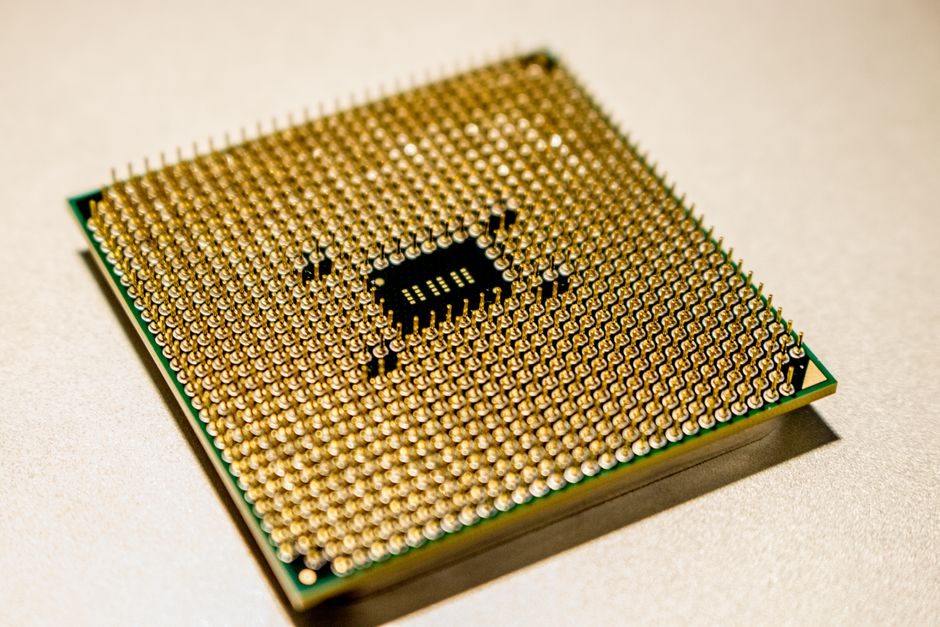
STMicroelectronics republished its MEMS and sensors portfolio page on 2026-06-10 and refreshed the MEMS eval-boards landing page on 2026-05-18, both pages listing active accelerometer, IMU, gyroscope, e-compass, pressure, temperature, infrared and biosensor families for industrial 5.0, smart mobility and consumer programs [S1][S3].
The 2026-05-18 eval-board page enumerates analog- and digital-interface kits that acquire data from each die family, which is the clearest public signal that engineering samples and reference designs are flowing, not gated [S3]. The Chinese-language mirror of the ST portfolio went out the same week, indicating routine catalog maintenance rather than a controlled-allocation announcement [S2]. For buyers of pressure transmitters and adjacent process instruments that embed MEMS pressure dies, the operative question is whether the 2026 supply picture has actually tightened or stayed routine. A MEMS pressure die reference map clarifies which end products absorb the constrained wafer output.
What ST's 2026-06-10 page actually confirms
ST positions MEMS as the perception layer for intelligent systems and lists an integrated ecosystem of software, tools and STM32-compatible firmware around each sensor family [S1]. The page ties the portfolio explicitly to Industrial 5.0 and smart-mobility programs, both of which are high-volume consumers of 6-axis IMUs, 3-axis accelerometers and environmental sensors [S1].
The portfolio framing emphasises "unique architectures and innovative designs" over commodity pin-compatible parts, which means second-source planning is harder for buyers — most ST MEMS parts do not have a drop-in alternate from Bosch, Murata or TDK-InvenSense at the firmware/driver level [S1]. For design engineers sourcing displacement sensors and IMU modules that share wafer fabs, this is the structural risk layer, not a 2026 spot shortage.
What the 2026-05-18 eval-board refresh shows about supply posture
The eval-board page lists dedicated kits for accelerometers, IMUs, gyroscopes, e-compasses, pressure, temperature, infrared and biosensors, and states that each kit acquires data "through an analog or digital interface" with "dedicated software in many cases" [S3]. Eval boards are the first thing vendors throttle when allocation bites — keeping them in stock and on the public catalog is a soft signal that sample-tier supply is open.
The page also calls out MEMS ecosystem software that supports "many cases" of the listed sensor types, reinforcing the STM32 pinmap and driver story carried on the main portfolio page [S1][S3]. For process plants standardising on flow sensors and inductive proximity sensors that increasingly ship with MEMS front-ends, this is the public-facing evidence that design-in supply has not been formally rationed. Compare that to the PCB suppliers 2026 sourcing map, where substrate allocation is a much louder industry topic in 2026.
Risk dimensions that the ST pages do not address

Neither the 2026-06-10 portfolio page nor the 2026-05-18 eval-board page publishes wafer-fab utilisation, lead-time bands, distributor stock, or allocation status — these are commercial terms that ST keeps off the public site [S1][S3]. Buyers therefore have to read between the lines: the public catalog being kept current is necessary but not sufficient evidence that 200 mm and 300 mm MEMS lines are running unconstrained.
The structural risks a process-engineer buyer should track in 2026 — none of which the ST pages quantify — are: (1) single-source MEMS pressure dies inside switching-mode sensor signal chains; (2) shared 200 mm fab capacity between automotive AEC-Q100 IMUs and industrial pressure lines, where an automotive pull can crowd out industrial slots; (3) Chinese-language ST content mirrors such as the 2026-06-09 simplified-Chinese page, which indicate regional catalog parity, not regional allocation relief [S2].
MEMS sensor categories versus typical 2026 industrial use cases
Across the ST portfolio, the categories a process or factory-automation buyer will encounter are: 3-axis accelerometers (vibration monitoring on pumps, motors, compressors), 6-axis IMUs (machine tilt, AGV/AMR heading), gyroscopes (platform stabilisation), e-compasses (field-service tooling), pressure sensors (hydraulic/pneumatic and low-pressure process loops), temperature sensors (cold-chain and bearing housings), infrared sensors (presence, gas-detection front-ends) and biosensors (medical and environmental) [S1][S3].
On decision criteria relevant to 2026 sourcing, the categories line up as follows. (a) Mature, multi-source categories — basic 3-axis accelerometers and discrete temperature dies — are widely second-sourced and quoted with routine lead times. (b) Constrained, single-source-leaning categories — high-g automotive-grade IMUs and MEMS pressure dies qualified to tight drift specs — are where allocation risk concentrates. (c) Mixed categories — gyroscopes and e-compasses — depend heavily on firmware/driver lock-in to a vendor's STM32 pinmap, which is the soft lock the MEMS supplier tier map flags as the real 2026 moat. The eval-board ecosystem story reinforces that lock by tying reference designs to the STM32 toolchain [S1][S3].
What a buyer should verify before placing a 2026 PO
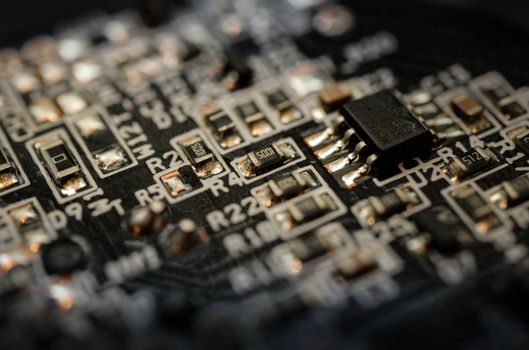
Three checks matter more than the catalog being live. First, request a fab-and-package trace for any MEMS pressure die specified inside a safety loop — confirm which 200 mm or 300 mm line produced the wafer, and whether the part is dual-sourced internally. Second, confirm firmware/driver compatibility with the industrial PC or controller family on the BOM, because MEMS vendor lock-in is increasingly at the driver layer, not the pin layer [S1]. Third, validate that the eval kit for the exact die revision is still orderable in single-unit quantity, since eval-kit stock-out is the earliest leading indicator of allocation [S3].
For PCB and substrate buyers tracking the broader 2026 component tightness picture, the PCB supply chain 2026 sourcing analysis is the cross-reference — copper-clad and substrate tightness typically moves ahead of MEMS fab tightness by one quarter. For industrial PC integrators pairing MEMS modules with edge controllers, the industrial PC 2026 buying guide gives the matching CPU, IP and certification frame.
Limits of the public evidence and what to watch next
The ST pages are product-marketing artifacts; they confirm product families and ecosystem positioning, not supply state [S1][S2][S3]. A real 2026 shortage signal will appear first in distributor stock codes, quote-letter footnotes, and eval-kit back-order messages — not on st.com. Watch the 2026-06-10 portfolio page for a date stamp change, watch the eval-board SKU list for removal of any pressure or IMU kit, and watch for an automotive-Tier-1 pull notice that would crowd out industrial MEMS lines.