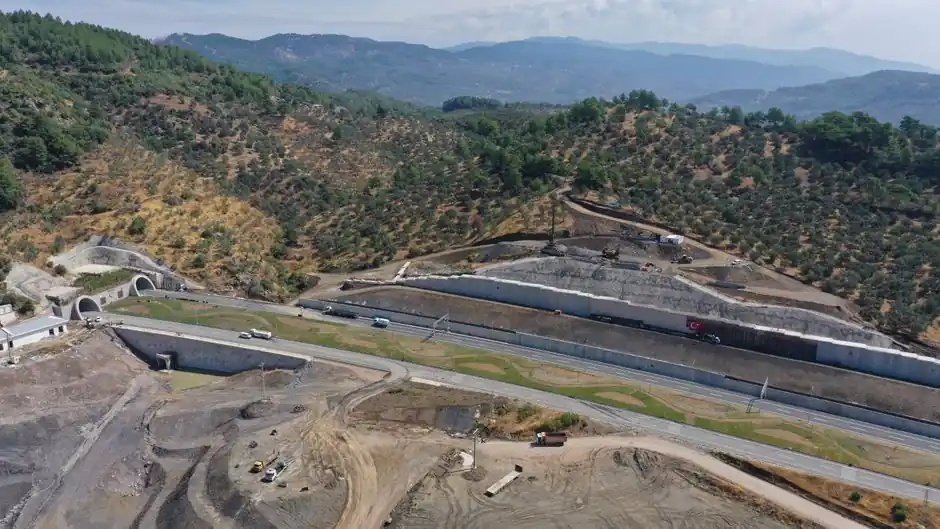
Walk-behind power trowels in the 36-46 in. (920-1,180 mm) diameter class are the working default for tunnel invert slabs, sidewall walkways, and cross-passage floors where ride-on machines cannot physically fit, with engine power clustered between 5 HP and 14 HP and rotor speeds of 60-150 RPM [S2][S3][S5][S7].
Tunnel selection is driven less by blade pitch and more by three hard constraints: cross-section width, engine emissions against the tunnel's ventilation class, and the ability to move a 77-110 kg machine in and out through a confined cross-section or manhole [S7][S8].
Walk-Behind Diameter Class and Why It Fits Tunnels
The 36 in. (920 mm) class is the minimum useful size for tunnel invert pours and is the most commonly stocked walk-behind size, exemplified by MARSHALLTOWN M365 / M365RP (36 in., 160-260 CC / ~5 HP Vanguard engine) and the Sealine SE-S90H (920 mm diameter, 5 HP rated output) [S2][S1].
The 46 in. (1,170 mm) class, e.g. MARSHALLTOWN M4611 / M4611RP (46 in., 390-450 CC / ~14 HP) and the Sealine SE-S120H (1,180 mm diameter, 6 HP rated output), covers wider invert pours and tunnel approach ramps where the operator can stand clear of formwork [S2][S1][S5].
A ride-on trowel such as the Husqvarna CRT 48 (1,220 mm troweling diameter, Petrol/LPG) is only practical on the tunnel portal, the cut-and-cover section, or a large cavern floor, not in the bored tunnel running section itself, because its transport envelope exceeds typical cross-passage clearances [S4]. For deeper context on machine class and operating envelope, see the power trowel reference page.
Engine, Fuel, and Tunnel Air-Quality Constraints
Petrol and LPG engines dominate the walk-behind catalog because they are cheaper and lighter per kW: the Sealine SE-S80H-SE-S120H series lists Honda GX160, Robin EY20, and Diesel RO170F/RO178F options across 5-6 HP, and Hoppt TOL90GB accepts HATZ diesel or Honda petrol [S1][S7].
Diesel walk-behind options such as the Hatz-powered TOL90GB and the Sealine RO170F/RO178F models become mandatory when a tunnel's permit forbids spark-ignition engines inside the heading, which is the default rule for any tunnel classified as "confined space" or with active shotcrete/gas monitoring, and for works on metro and rail tunnels under most European operator safety cases [S1][S7].
The Atlas Copco BG 375 is positioned around a dead-man's-grip quick stop and a vibration-reduced, height-adjustable handle, which directly addresses the operator-fatigue and hand-arm-vibration issues that show up on long invert pours [S8]. For a broader view of how engine-driven hand tools integrate with site ventilation planning, see construction tools.
Blade Pitch, RPM, and Concrete State

Blade pitch is the variable that actually changes the finish: the Sealine SE-S80H-SE-S120H walk-behind series, the Hoppt TOL90GB, and the MSW-CCTR-8PA1 (6.5 HP, 60-100 RPM) all cap at 15° max blade pitch, while rotor speed windows differ markedly by machine (60-100 RPM on the Sealine S-class and MSW unit, 50-150 RPM on the Hoppt) [S1][S3][S7].
Two pitch-control mechanisms are in production: a knob-style adjuster for fine, infinite tuning, and a Rapid Pitch lever for quick field changes, both offered on the MARSHALLTOWN 36 in. and 46 in. ranges at the same engine option [S2][S5].
For tunnel invert, the practical rule of thumb is to start floating with a low pitch (~5-8°) and finish with a higher pitch (~10-15°) as the concrete tightens; a Rapid-Pitch machine saves the operator the walk to a knob but gives up some fine adjustment, so most finishers on long pours still keep one of each on the trolley [S2][S5].
Size, Weight, and Logistics Through a Tunnel
Walk-behind weight is the silent constraint: the Hoppt TOL90GB is 77 kg operating weight with a 992 mm guard ring and a 1,920 x 992 x 1,075 mm LxWxH envelope, while the MARSHALLTOWN M4611 (46 in., 14 HP class) ships LTL because it is too heavy for parcel carriers, and is moved on site with the integrated lifting hook [S2][S5][S7].
Tunnel selection should size the machine so it can pass through the smallest cross-passage door or manhole, ride the segment-carrier rail, and be lifted by the tunnel's service hoist without rigging changes; the 36 in. / ~80-110 kg walk-behind class is the upper bound for many metro cross-passage doors, which is why it is the de-facto tunnel standard [S2][S7].
For the wider equipment-movement problem on tunnel sites, the construction machinery and equipment reference is a useful adjacent read, and a complementary tooling choice for cutting rebar and embedded plates in the same heading is covered in the oxy-fuel cutting torch picks for tunnel construction spec map.
Selection Criteria Compared: 36 in. vs 46 in. vs Ride-On

On the four criteria that actually drive a tunnel spec, the comparison reads as follows: usable width is 36 in. (920 mm) for the M365 / M365RP / SE-S90H class, 46 in. (1,170-1,180 mm) for the M4611 / M4611RP / SE-S120H class, and 48 in. (1,220 mm) for the Husqvarna CRT 48 ride-on; engine power runs 5-5.5 HP, 6-14 HP, and a higher tier on the CRT 48 petrol/LPG unit respectively [S1][S2][S4][S5].
Operator envelope is 1-2 workers on a walk-behind and 1 seated operator on the CRT 48; tunnel fit is universal for the 36 in. class, common for the 46 in. class on wider inverts and ramps, and portal/cut-and-cover only for the ride-on [S2][S4][S5][S7].
Air-quality compatibility strongly favors diesel (Hatz RO170F/RO178F or HATZ on the TOL90GB) for any tunnel that bans petrol engines, LPG on the CRT 48 only where LPG staging is acceptable, and petrol walk-behinds for the portal and open-air approach slabs [S1][S4][S7].
Limitations and Failure Modes in Tunnel Service
Walk-behind trowels fail in tunnels for reasons that have nothing to do with the machine itself: overspray and bleed water on a low-slump invert causes the blades to ball up and lose pitch, while a high slump and over-vibration at the concrete stage leaves the surface too soft for any meaningful 15° pass, so the rotor just smears aggregate [S3][S7].
Petrol-engine trowels are routinely rejected by tunnel safety officers because their exhaust cannot be captured by the standard ventilation duct sized for diesel particulate, and LPG bottles add a hot-work permit load that most metro operators will not accept inside the running tunnel [S1][S4][S7].
The 77 kg Hoppt TOL90GB and the 100+ kg 46 in. walk-behinds both exceed the manual-handling threshold under most regional manual-handling regulations, so two-operator lift plans or a segment-carrier sling must be written into the method statement before the machine goes down the shaft [S7].
Standards, Sourcing, and Verifiable Next Signals
There is no ISO or EN standard that fixes a power-trowel specification for tunnel concrete; instead, finish quality is governed project-side by the concrete specification (typically referencing EN 13670 execution of concrete structures and the project's surface tolerance class, e.g. 1-3 mm under a 3 m straightedge), and engine emissions by the tunnel operator's ventilation class [S1][S2][S7].
Trackable signals worth watching: tier-4-final / stage-V diesel options migrating into the Hatz-powered walk-behind class as European metro projects tighten on particulate, and ride-on trowel platforms (Husqvarna CRT 48, 1,220 mm) being specced for cavern and cut-and-cover floors on the same project so the same fleet covers both envelope sizes [S4].
One cross-discipline follow-on to read is the rebar coupler selection for tunnel construction spec map, which sits on the same heading-side decision tree for rebar splices in the invert mat that the trowel will later finish over.