
Edge AI server revenue is projected to climb from USD 2.7 B in 2024 to USD 26.6 B by 2034, a 25.7% CAGR, with North America holding 32.4% of 2024 spend and the hardware segment capturing 47.5% of that base [S3]. The buyers driving that curve in 2026 are no longer cloud architects; they are plant electrical engineers and retail IT leads who have to put inference silicon in a switchroom, on a production line, or behind a point-of-sale counter.
Large enterprises already absorbed 74.7% of 2024 Edge AI server spend, and IT and telecommunications consumed 34.8% of total volume [S3]. The 2026 wave is the second wave: industrial and retail sites that were pilots in 2023-2024 are now ordering racks of ruggedized inference nodes, often 20,000 devices per program, where cost per unit and watts per inference become the decisive metric rather than peak TOPS [S4].
Why plants and stores are buying inference hardware now
Forrester-cited research flagged in late-2025 retail work shows 61% of large-organization infrastructure leaders rank security, cybersecurity and privacy as their top edge deployment concern, evidence that edge has moved past pilot into multi-site rollout [S1]. In a factory the same driver shows up differently: a vision system on a welding cell cannot wait 80 ms for a round trip to a hyperscale region, and a PLC-controlled line cannot tolerate a WAN outage shutting down quality inspection.
Edge computing now covers smart checkout, real-time inventory tracking and personalised in-store marketing at retail sites, plus machine-vision inspection, predictive maintenance and collaborative-robot orchestration on plant floors [S2]. These are workloads with hard real-time bounds, so the box that runs them has to live on-prem, on the same 480 V three-phase or 230 V single-phase feed as the rest of the equipment, and it has to survive the ambient envelope of a paint shop or a refrigerated back-of-house. See the wider taxonomy of lamps and light fittings for context on how distributed facility equipment is increasingly treated as a monitored edge node.
Hardware form factors: rack server vs industrial box vs appliance
Three physical classes of Edge AI server are competing for the 2026 plant and retail budget, and they line up against different decision criteria. Short-depth rack servers (typically 500-600 mm deep) fit standard 19 in cabinets in control rooms and are the default when existing serial server and SCADA infrastructure already supplies -48 VDC or 230 VAC distribution. Fanless industrial boxes in the 1-3 kW envelope fit inside NEMA 4/IP54 enclosures on the line, accept 9-36 VDC or 100-240 VAC, and tolerate 0-50 C ambient with passive cooling. Pre-integrated AI appliances combine an inference accelerator (typically 75-150 W) with a managed switch and PoE+ for cameras, a popular pattern in retail where the IT team does not want to learn a separate MLOps stack. [S4]
On the four criteria that actually decide the order, rack servers win on raw accelerator density (multiple 350-700 W GPUs per 1U) but lose on ambient tolerance. Fanless industrial boxes win on ingress protection and power resilience, with typical 9-36 VDC input and surge protection to IEC 61000-4-5 levels, but cap inference throughput at roughly 100-200 TOPS in INT8. AI appliances win on deployment speed, often pre-loaded with computer-vision pipelines, but lock the buyer into one vendor's firmware roadmap. The same cost-per-watt and cost-per-TOPS lens applies whether the box sits in a plant or a store [S4].
Power, thermal and the 20,000-device scaling problem
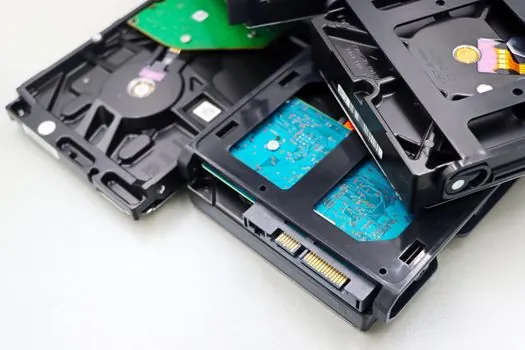
The constraint that has reshaped 2026 silicon choices is fleet scale, not peak performance. ZEDEDA's 2026 outlook calls out that organisations rolling out 20,000 devices per program must optimise for cost per unit and power consumption, opening the door to NVIDIA, Qualcomm, AMD and specialist inference accelerator vendors competing on efficiency rather than raw TOPS [S4]. A 75 W accelerator that delivers 100 INT8 TOPS beats a 300 W part at 400 TOPS once you multiply the difference across 20,000 sites with limited rack PDU capacity and limited cooling in back-of-house electrical rooms.
Plant deployments in particular have to respect the same electrical and EMC envelope that applies to any checking and testing apparatus on the floor: harmonic current limits, ride-through, and surge immunity. Typical Edge AI server specs in this class now include 80 PLUS Platinum or Titanium power supplies, wide-range DC input, conformal coating for condensing environments, and operating temperature ratings of -25 to +70 C with derating curves published. Retail sites have an easier thermal envelope but face tighter acoustic limits in customer areas, which pushes vendors to fanless designs below roughly 40 dBA at 1 m.
Use cases that pay back the 2026 CapEx
In retail, edge AI is already running predictive restocking, customer flow optimisation, smart checkout and autonomous decisioning on the store's own hardware, with hybrid edge-cloud models that keep personal data local for regional privacy compliance [S1]. 61% of infrastructure leaders cite security and privacy as top challenges in retail edge computing implementations, the same constraint that makes local inference attractive in a plant with proprietary process data.
On the plant side, edge AI is loading computer-vision inspection, small language models trained on equipment manuals, and collaborative-robot orchestration into local servers so that frontline workers get AI assistance without round-tripping to a cloud region [S4]. The reliability case is direct: if the WAN drops, point-of-sale, inventory tracking, vision inspection and cobot coordination keep running on local inference [S1]. This local-only fail-operational behaviour is what justifies a hardware premium over a cloud-only stack, and it is the argument a plant engineer or store IT lead takes to finance.
Software, security and the orchestration gap
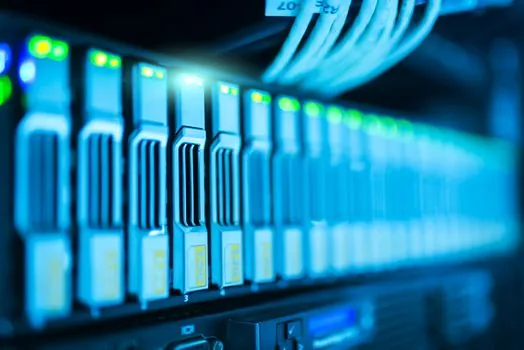
The hard part of 2026 is no longer the silicon. The hard part is running zero-trust, containerised, OTA-updatable software across thousands of sites that are not staffed by IT experts. ZEDEDA's 2026 framing is that platform-level abstraction and orchestration become essential once fleets cross the 20,000-device mark, because each site is heterogeneous in accelerator vendor, OS image and workload [S4]. SUSE's late-2025 retail brief echoes this, describing a modular, open-source architecture with containerised, zero-trust security frameworks scaled across distributed locations [S1].
Practically, that means procurement specs in 2026 increasingly call out remote attestation, secure boot, signed OTA pipelines, and a single management plane that can roll out a model update to a subset of devices and roll it back without a truck roll. For plant engineering teams that already manage construction machinery and equipment on similar maintenance contracts, this is familiar territory; for retail IT it is a step change.
Standards, sourcing and what to verify before signing a PO
Edge AI servers sold into European plants carry the usual CE marking plus, in hazardous areas, ATEX category 2 or 3 certification under 2014/34/EU and the IEC 60079 series for explosive atmospheres; for North American sites, UL listings and Class I Division 2 ratings appear in the datasheet alongside ordinary-location UL 60950-1 or UL 62368-1. Buyers should ask for the exact IEC 60079 part number, the ambient range it covers, and whether conformal coating is on the bill of materials. EMC compliance to EN 55032 / EN 55035 and surge immunity to IEC 61000-4-5 are the minimum electrical items to confirm in writing. [S2]
For the procurement engineer, the data points worth tracking through the rest of 2026 are the published per-TOPS dollar curve as new inference silicon hits general availability, the 80 PLUS efficiency tier of the platform's power supply, and the published mean time between failures at the rated ambient. Two adjacent reference points help frame the buy: data center generator emissions on the power-supply side and selective vs drive-in pallet rack on how the trade-off between density and per-unit flexibility is being resolved across facility engineering in 2026. Both inform how dense a single-site edge rack can afford to be.