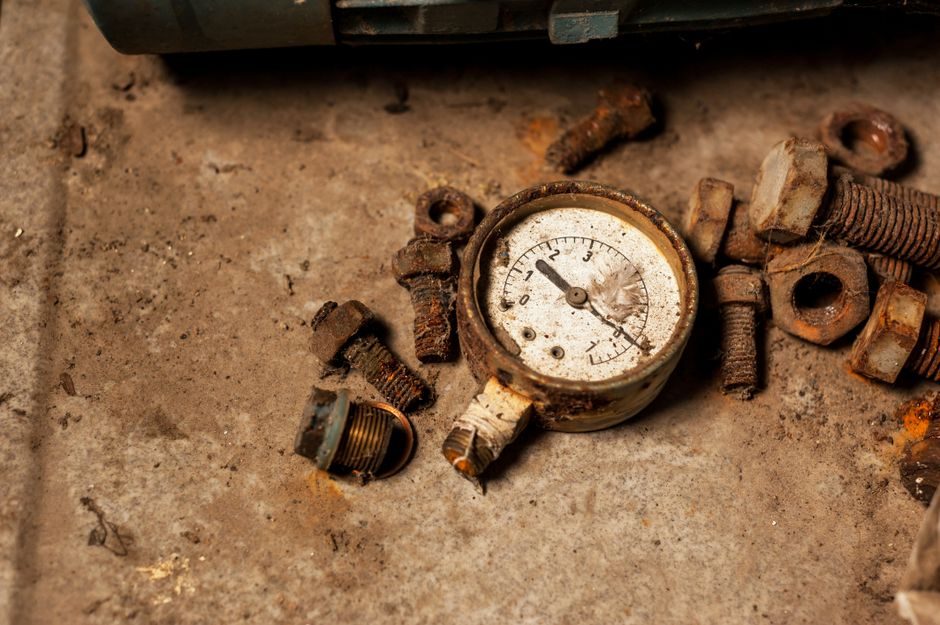
A pressure calibrator and a loop calibrator both touch the 4-20 mA loop, but they are built around different core measurements: one is a pressure standard, the other is a current/voltage standard. The Druck DPI 800 hand-held, listed at RS as a "pressure indicator and loop calibrator instrument," shows the practical split: dual isolated pressure sensors with 10 inH2O to 10,000 psi (25 mbar to 700 bar) coverage and 0.01% FS accuracy, plus mA measure, 24 V loop power, switch test, and a built-in 250 Ω HART loop resistor [S2].
That hybrid is exactly where the buying confusion starts. For plants that do mostly pressure transmitter calibration, deadweight tester cross-checks, or differential-pressure flow verification, a pressure calibrator is the correct primary tool. For plants that bench-trim valve positioners, DCS I/O cards, and HART smart transmitters without touching the process taps, a loop calibrator is the correct primary tool, and a loop tester sits between them for one-person loop commissioning.
What a Pressure Calibrator Actually Does
A pressure calibrator sources and reads pressure with traceable accuracy, then reads the secondary 4-20 mA output of the device under test to close the loop. Yokogawa's CA700, for example, is positioned as a portable calibrator for field instrumentation that "can deteriorate over time due to harsh environmental or process conditions" [S1]. Typical pressure-only platforms cover gauge, absolute, and differential modes; high-end units add two isolated sensor channels so a static line and a differential-P transmitter can be read in one trip.
The DPI 800's dual-sensor configuration explicitly supports "simultaneous two-channel reading" for transmitter calibration and switch verification [S2]. Operating range is 14°F to 122°F (-10°C to 50°C) with storage from -4°F to 158°F (-20°C to 70°C), and the elastomer-protected housing is rated for rough field handling. The relevant comparison point for spec sheets is accuracy as a fraction of full scale, not of reading: 0.01% FS on a 10,000 psi sensor is ±1 psi, which is fine for line-pressure taps but inadequate for low-DP orifice runs in the 10-30 inH2O band, where a 0.01% FS unit only resolves ±0.001 inH2O and a class-0.05 reference standard is normally required.
What a Loop Calibrator Actually Does
A loop calibrator sources and measures mA, mV, V, and frequency, reads/simulates HART, and powers a 4-20 mA loop with an internal 24 V supply. A pure loop calibrator has no internal pressure sensor, so it can never certify a pressure transmitter alone. It is the right tool when the work is bench-trimming a smart positioner, sourcing a 4-20 mA signal into a DCS card, or verifying a 24 V loop-power segment without breaking into piping. [S2]
Devices like the DPI 800 blur the line because they integrate mA measure, 24 V loop power, switch test, and a HART loop resistor on top of the pressure sensor [S2]. The vendor's own datasheet flags a real limitation: "The DPI 800 has no electrical Loop calibration functionality" [S2] — meaning it can read and power the loop, but it cannot source a precise 4-20 mA signal for analog trim the way a dedicated signal calibrator or loop calibrator can. If a technician is buying a single box to trim positioners, that distinction is the deciding factor.
Spec-by-Spec Comparison Matrix
On raw pressure range, a pressure calibrator wins by an order of magnitude: 10 inH2O to 10,000 psi (25 mbar to 700 bar) including vacuum, in stainless steel wetted parts compatible with a wide range of fluids and gases [S2]. A loop calibrator has no pressure range at all unless it is a hybrid unit. On electrical sourcing, the loop calibrator wins: it sources and reads 4-20 mA with µA resolution, simulates a transmitter, and powers the loop at 24 V.
On accuracy, the pressure calibrator leads at 0.01% FS, while loop calibrators are typically rated 0.015% of reading + 2 µA for current and 0.01% of reading for voltage. On hazardous-area work, both classes can be specified with ATEX/IECEx Zone 1 certification, but the certification list and sensor media compatibility differ — a pressure calibrator must additionally be rated for the process gas or liquid it touches. On weight, a Druck-class hand-held pressure indicator is built for one-handed field carry with elastomer overmold [S2], while a full bench loop calibrator with HART and a multi-segment display is usually 1.5-2× heavier. On software, both integrate with calibration management databases and document each as-found/as-left point against a procedure.
Who Each Tool Is For — and Who Should Skip It
Spec a pressure calibrator when the daily workload includes gauge calibration, dp transmitter verification, pressure switch set-point testing, or sanitary/diaphragm-seal leak test. The programmable leak test, which reports pressure drop and leak rate over a defined hold period, is a pressure-calibrator-only feature, and it is the one that pays for the unit in a pharma or food-and-beverage skid FAT [S2]. The Pressure Calibrator Selection: Range, Accuracy, Media, and Safety guide covers the media-compatibility and safety-margin side of that decision.
Spec a loop calibrator when the workload is DCS loop check, valve positioner trim, RTD/thermocouple simulation, or frequency/pulse train verification on flowmeters. Skip the pressure calibrator in a pure control-valve shop — it adds cost, weight, and a media-compatibility review for no functional gain. Skip the loop calibrator in a flow lab with orifice runs under 1 inH2O dp — it cannot source the low pressure that a multifunction process calibrator with both pressure and electrical modules can. The Pressure Calibrator Buying Guide: Range, Accuracy, and Class walks through the class-of-standard choice that a loop-only tool cannot resolve.
Hybrid, Modular, and Multi-Function Alternatives
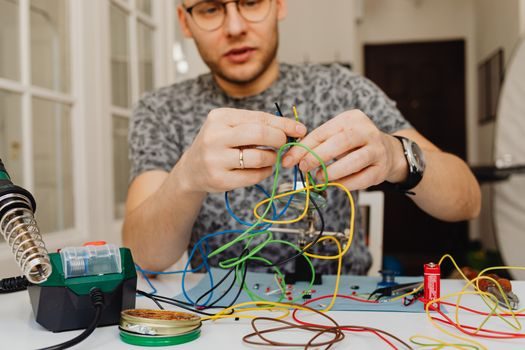
The middle ground in 2026 is a modular hand-held with a plug-and-play pressure module plus HART, like the DPI 800's "Plug/Play connector for IDOS Universal Measurement Modules" [S2]. That gives a single box the ability to read pressure with one module and to read/simulate HART and mA with the base unit, which is the deployment pattern most contractors have standardised on for new refineries and LNG trains.
For a permanent bench, a multifunction process calibrator covers pressure, temperature, and electrical in one chassis and supports automated procedures through calibration software. The 2026 field buying guide at Multifunction Process Calibrator Selection: 2026 Field Buying Guide maps how this consolidates three legacy boxes — pressure calibrator, dry-block, and loop calibrator — into one asset on the technician's bench.
Failure Modes and Limits Engineers Hit in the Field
On the pressure side, the most common error is choosing a sensor with the wrong media compatibility. Stainless steel wetted parts handle most process gases and hydraulic oil, but not all; check the published material list against the chemical service [S2]. Differential-pressure work also needs both sensor channels isolated and zeroed together, or the indicated dp will drift with static line pressure even on a 0.01% FS unit.
On the loop side, the most common error is forgetting the HART loop resistor. A HART communicator needs 250 Ω in series with the loop, and not every loop calibrator sources that internally; the DPI 800 ships with a built-in HART loop resistor specifically to avoid that 250 Ω inline resistor hack [S2]. On the supply side, internal 24 V loop power is enough to drive a single 4-20 mA transmitter, but multi-drop HART bursts or two-wire positioners in parallel can pull the unit out of its rated compliance voltage, in which case an external loop power distributor is the correct fix rather than a higher-current calibrator.
Standards, Sourcing, and What to Verify Before Purchase
Traceability is the deciding procurement line. A pressure calibrator should ship with an NVLAP- or A2LA-accredited calibration certificate, and its 0.01% FS figure must be backed by a measurement uncertainty budget covering reference standard, repeatability, temperature coefficient, and one-year drift [S2]. A loop calibrator should ship with the same accreditation on its mA, V, and frequency ranges, plus a HART conformance certificate if HART read/communicate is listed in the datasheet.
For hazardous-area work, the unit must carry an ATEX/IECEx certificate that matches the zone of use, and the certificate must cover both the pressure sensor and the electrical terminals — a mixed certification that misses the sensor is a common audit finding. For OEM-scale buyers, Yokogawa's CA700 line is positioned for the "validate and adjust the accuracy of field instrumentation" workflow and integrates with the manufacturer's broader field-instrument portfolio [S1]. For cost-driven sourcing, China-based manufacturers such as Aripy Instrument (Beijing) Co., Ltd., registered on Made-in-China.com since 2013, list digital pressure gauges, pressure calibrators, and pressure recorders as their main product lines [S3].
Watch two trackable signals over the next quarter: HART-IP and Ethernet-APL adoption in calibration hand-helds, which changes the field-PC interface from serial to Ethernet; and the IEC 61511/ISA 84 proof-test interval rules, which are pushing more plants toward documented automated calibration runs rather than spot manual checks. The right tool today is the one that matches the workload, not the one with the longest datasheet.