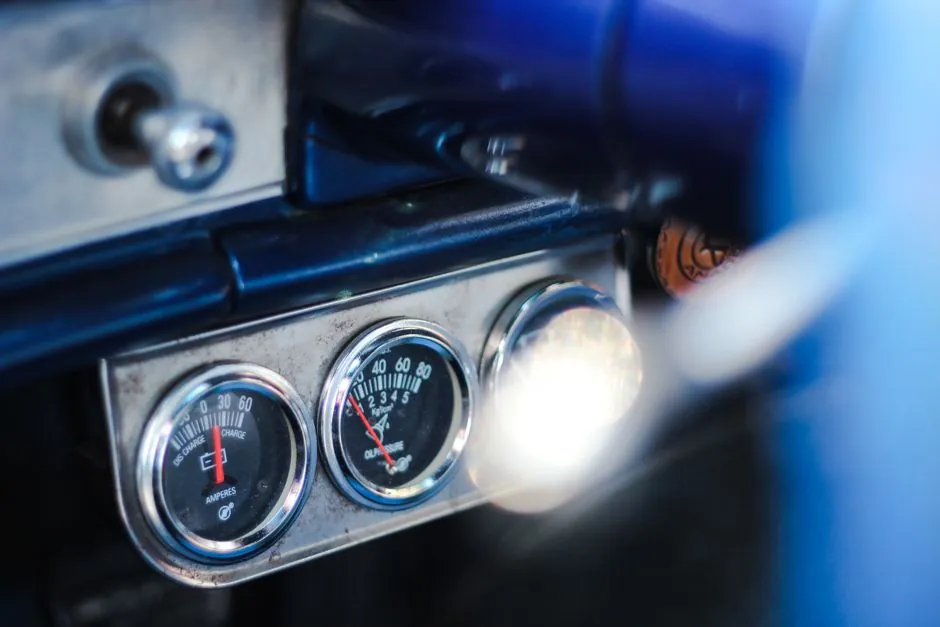
Pressure gauge selection starts with one question: which kind of pressure are you actually measuring. Gauge, absolute, or differential changes the instrument architecture, the process connection count, and the price band you should be working in [S3].
Get that wrong and nothing downstream saves you. A gauge-pressure gauge on a vacuum line reads nonsense; a 400 bar Bourdon tube on a 10 mbar water column bursts its element; a stainless-steel chemical seal on clean compressed air is pure overspend. The four product sheets from AFRISO-EURO-INDEX catalogued on DirectIndustry in May-June 2026 cover the four most-encountered duty profiles in one go, which is why they make a clean reference set [S1][S2][S4][S5].
Type of pressure: gauge, absolute, differential
Type of pressure takes top priority in any pressure gauge selection, per WIKA's selection guidance (originally published 2016-08-25, refreshed 2026) [S3]. Gauge pressure reads the difference to ambient atmosphere, which at sea level averages 1013.25 mbar; for most plant-loop service (water, steam, air, hydraulic oil at moderate pressures) this is what you want, because all points in a plant see roughly the same atmosphere and the absolute reference cancels out [S3].
Absolute pressure references a full vacuum (0 bar absolute) and is the correct pick when ambient swings would distort the process: vapour pressure determination, condenser monitoring, vacuum pump surveillance, and food/pharma distillation are the textbook cases [S3]. Differential pressure needs two process connections and reads p1 minus p2; it is the standard instrument for filter Δp monitoring, pump head verification, and inferential level measurement in a closed (pressurised) tank where you subtract the gas-phase pressure from the total hydrostatic head [S3]. AFRISO's RF100Dif D201 is a representative mechanical differential gauge: two independent Bourdon systems, 0 to 60 bar range, 100 mm dial, 1.6 % accuracy, EN 837-1/5 ranges, ±0.4 %/10 K temperature drift, and an explicit "for differential pressure measurement of gaseous and liquid media which are not highly viscous, do not crystallize and do not attack copper alloys" application note [S1]. If your duty is filter Δp on a heating system, this is the correct instrument family; if your duty is a static line pressure reading, you are buying ports and complexity you do not need.
Range, accuracy class, and load rules
Once the type is fixed, working range and accuracy class decide the rest. AFRISO's EN 837-1 Bourdon-tube gauges (D1, RF40 D101) span -1 to 400 bar with 1.6 % accuracy class, offered in 40/50/63/80/100 mm dial sizes, in static-load service rated to 3/4 x full scale, dynamic load to 2/3 x full scale, and short-term to full scale [S2][S4]. These three numbers (static / dynamic / short-term) are not optional: exceed them and you walk the spring set, shift the zero, and lose the 1.6 % class on the next calibration.
For low-pressure gas service, AFRISO's EN 837-3 capsule element (D3) covers -100 mbar to 1,000 mbar, with static load to full scale, dynamic to 0.9 x full scale, and 1.3 x full scale overload safety, plus a CuBe capsule element and NBR seal rated -20 to +60 °C [S5]. The capsule element is the right sensing principle below about 1 bar, because a C-type Bourdon tube loses resolution and adds non-linearity in that band. EN 837-1/3 also defines the standard ranges, so if you specify an EN 837-1 gauge you can quote any off-the-shelf range from the supplier's ordering table without re-engineering the scale [S2][S4][S5].
Wetted material, process temperature, and what you are measuring
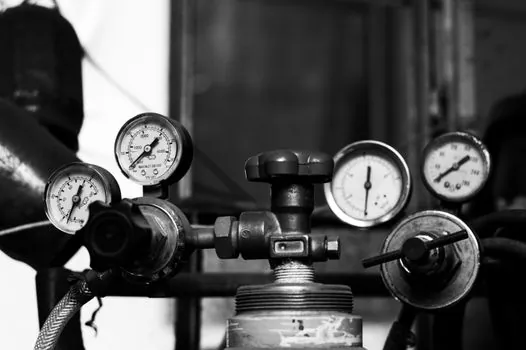
Wetted material is the corrosion gate. EN 837-1/2/3 copper-alloy gauges (brass connection, CuBe or copper-alloy Bourdon) are explicitly restricted to media that "do not attack copper alloys" [S1][S2][S4]; aggressive chemistry, demineralised water above ~60 °C, ammonia-bearing refrigerants, and oxygen-enriched lines want stainless wetted paths. AFRISO offers stainless measuring systems and stainless housings as an option on the D1/RF40 platform, and the differential D201 platform offers stainless wetted parts and stainless housings as an option as well, but the base spec is brass/copper-alloy [S1][S2][S4].
Process temperature on the gauges above is bounded at -20 °C to +60 °C medium temperature for direct-mount service [S1][S2][S4][S5]. If the process runs hotter, you need a siphon (pigtail) or a diaphragm seal with a fill fluid, and the temperature error budget changes accordingly. The published temperature performance is roughly ±0.4 %/10 K of full scale for the Bourdon platforms and ±0.6 %/10 K for the capsule-element D3, measured against the 20 °C reference [S1][S2][S4][S5]. For steam-line service specifically, EN 837-2 mandates a siphon and a cooled-rung selection table, which is why every AFRISO datasheet in the set carries the line: "For measuring gas or vapour, observe the table 'Selection Criteria as per EN 837-2'" [S1][S2][S4][S5]. Dry-block calibrator work on steriliser lines intersects this rule directly, and the related dry-block calibrator selection for steam sterilisation lines spec map walks the matching siphon-and-fill-fluid logic from the calibration side.
Comparison: which AFRISO platform matches which duty
A decision matrix built from the four datasheets maps cleanly to the four most common duties. The AFRISO D1 / RF40 D101 is the EN 837-1 class 1.6 Bourdon platform for general process, gas, and liquid service in 40 to 100 mm dial sizes, with brass wetted parts, ABS housing, IP 32, and -1 to 400 bar range [S2][S4]. The AFRISO D3 is the EN 837-3 capsule platform for low-pressure gas in 63/80/100 mm, with CuBe capsule, -100 mbar to 1,000 mbar range, zero correction from the front, and GOSSTANDART certification [S5]. The AFRISO RF100Dif D201 is the EN 837-1/5 differential gauge with two independent Bourdon systems, 0 to 60 bar, 100 mm dial, and explicit heating-system / filter-Δp application [S1].
Cross-platform, accuracy is identical at 1.6 % for all four; the differentiators are sensing principle (Bourdon vs capsule), range envelope (-1 to 400 bar vs -100 mbar to 1,000 mbar), wetted material default (brass/copper-alloy, with stainless options on D1 and D201), and process connection count (one for gauge/absolute, two for differential) [S1][S2][S4][S5]. For a vacuum-range duty on a water-treatment skid, the capsule element above is the wrong tool and the right tool is a vacuum gauge covered in the related vacuum gauge selection criteria for water treatment skids write-up, which extends the same matrix into the sub-atmospheric band. For the electronic companion instrument, pressure transmitter selection criteria for compressed air lines covers the 4-20 mA / HART upgrade path when you need a signal rather than a dial. Encyclopaedia background on sensing principles lives at pressure measurement, and the differential variant in particular ties back to the broader pressure gauge reference.
Who should NOT pick the default EN 837-1 Bourdon gauge
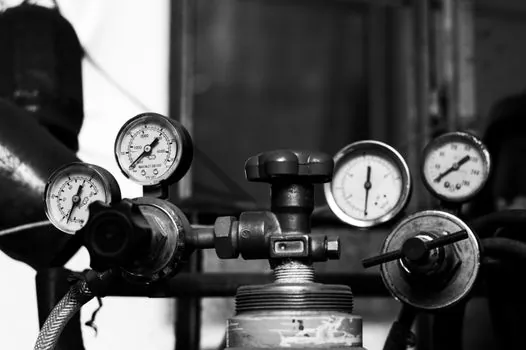
Three duty profiles defeat the default EN 837-1 Bourdon-tube brass/ABS gauge. (1) Sub-atmospheric service below about -1 bar, or any service in the millibar band, where the capsule-element EN 837-3 (D3) or a true vacuum gauge is required, because a C-type Bourdon loses both range envelope and linearity in that band [S5]. (2) Aggressive media (acids, ammonia, oxygen service, demin water above 60 °C), where the standard copper-alloy wetted path is disqualified by the "do not attack copper alloys" line in the datasheet, and a stainless or diaphragm-seal build is mandatory [S1][S2][S4]. (3) Pulsating or rapidly cycling service near full scale, where the 2/3 x full-scale dynamic-load rule is the real limit, not the static 3/4 x figure, and where a snubber or a liquid-filled case becomes part of the spec [S2][S4].
The process temperature ceiling of 60 °C on direct-mount EN 837-1/3 gauges is the fourth hard limit; for steam, hot oil, or any line above 60 °C, specify a siphon (steam) or a diaphragm seal with an appropriate fill fluid, and re-budget the temperature error [S1][S2][S4][S5]. If your service is a switch point rather than an indication, the right instrument is not a gauge at all, and the pressure switch selection set-point deadband proof pressure and load reference covers set-point, deadband, proof pressure, and electrical load logic.
Selection checklist and sourcing notes
Lock the spec in this order: pressure type (gauge / absolute / differential), range with a 25 to 75 %-of-span normal operating band, accuracy class (1.6 for general industrial, 1.0 or 0.6 for test and calibration), wetted material against the process fluid compatibility table, process temperature and any siphon or seal needed, and the governing EN 837 part for the sensing principle (EN 837-1 Bourdon, EN 837-2 rules for gas/vapour including steam, EN 837-3 capsule) [S1][S2][S3][S4][S5]. Add static, dynamic, and short-term load multipliers (3/4, 2/3, and full scale respectively for EN 837-1) and an IP rating (IP 32 on the AFRISO D1 platform is typical for indoor general-purpose; higher IP is required for washdown or outdoor) [S2][S4].
On sourcing, the AFRISO-EURO-INDEX platform in the DirectIndustry catalogue exposes 40/50/63/80/100 mm dial options, brass or stainless wetted options, optional reference pointer, optional damping screw, and back or centre-back connections for the EN 837-1 family, with the D3 capsule-element family available in 63/80/100 mm with front zero correction and panel-mounting bezel options [S1][S2][S4][S5]. Cross-reference the sensing principle and the pressure sensor and pressure switch encyclopedia entries when the duty edges into electronic switching or signalling. Trackable next signals: the EN 837 standard set remains the governing document for the mechanical gauge classes covered here, and capsule-element platforms (D3-class) continue to ship with GOSSTANDART certification in the 2026 AFRISO catalogue window [S5].