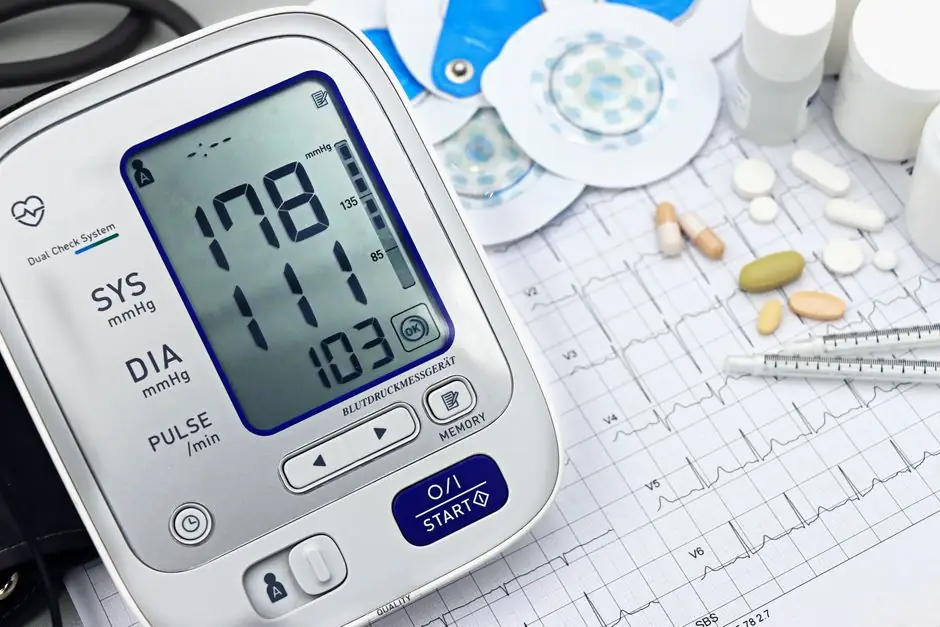
A pressure gauge is a passive indicator, typically a Bourdon tube, diaphragm, or bourdon-capsule element coupled to a mechanical pointer or digital readout, used so an operator can read process pressure on the spot [S2].
A pressure switch is an active device that contains a pressure-sensing element plus a snap-action or solid-state switch, opening or closing an electrical contact when the process pressure crosses a pre-adjusted setpoint, with typical deadband values published per datasheet [S1][S6].
Functional split: read vs react
The core decision is whether the loop needs a human-readable value or an electrical decision. A digital pressure gauge such as the Testo portfolio covers relative, differential, and absolute pressure with on-screen readouts and data logging for HVAC, refrigeration, and service work [S2][S3]. A pressure switch, by contrast, does not normally give a precise value, it changes contact state at the setpoint and holds that state through the deadband, which is why switch datasheets specify both setpoint range and adjustable deadband rather than accuracy class [S1][S6].
Where the application needs both, plant practice is to mount a gauge and a switch on the same tapping, or to use a combined unit: BWD S4521 and Lucas SOU412 are automotive examples that integrate an oil-pressure-sending element with a switch contact in one housing [S7][S8]. For hydraulic cabinets, Hawe Hydraulik documents a dedicated pressure gauge selection switch that lets one gauge scan multiple test points, so the gauge is read at one location while the switch enforces the safe limit at another [S6].
Selection criteria laid out side by side
Pressure switch selection is driven by setpoint range, deadband, switch type (SPDT mechanical, reed, or solid-state), electrical rating (typically 5 A at 250 VAC for industrial units), proof pressure, cycle life (mechanical switches often rated 1×10⁶ cycles), and the type of sensing element inside (diaphragm, piston, or bourdon) [S1][S6]. The KOGANEI GS1-50-DL, for example, is catalogued as a dedicated pressure switch SKU with its own MPN and model code, not a gauge variant [S1].
Use cases: who each one is for
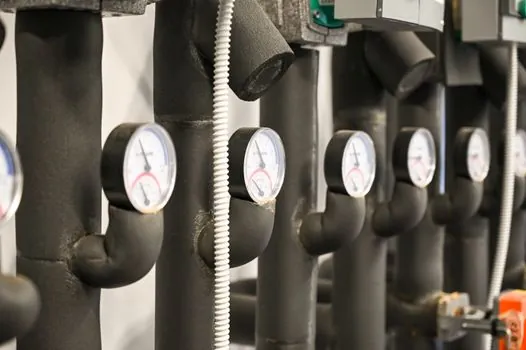
Spec a pressure gauge when the operator needs to see the value, log it manually, or verify that the loop is healthy; Testo's high-pressure gauge range is targeted at refrigeration and air-conditioning service where the technician reads suction and discharge pressures on a manifold [S3]. Spec a pressure switch when the loop needs an alarm, a pump cut-out, a compressor trip, or a safety interlock that does not depend on a controller being online; the KOGANEI GS1-50-DL and the Hawe hydraulic-switch family sit in that category [S1][S6].
Spec a combined gauge-with-switch, such as the automotive BWD S4521 or the GM OEM 12562267-type oil-pressure gauge switch, when the panel has one port and needs both an indicator and a warning-light trigger in a single mechanical envelope [S4][S8]. For chemical dosing skids, in contrast, neither a gauge nor a switch alone is enough: a pressure sensor feeding a transmitter is the correct architecture, as laid out in the dosing-skid selection guide.
Limitations and failure modes engineers forget
Gauges fail by drift, pointer sticking from process fluid entering the Bourdon tube, and case rupture on over-range, which is why solid-front cases and blow-out backs exist for steam and high-energy gas service. Switches fail by contact welding on inductive loads (so derate or fit a snubber), setpoint drift after high cycle counts, and by diaphragm fatigue if the proof pressure is exceeded even briefly [S1][S6].
A common spec error is using a gauge as a control element (operator reads and acts manually) when the process actually needs an automatic trip: the right answer there is a switch or a pressure transmitter, not a higher-accuracy gauge. The reverse error is fitting a switch where a true reading is needed, since the switch tells you only that pressure is above or below the setpoint, not what the actual value is. The transmitter-vs-switch trade-off is mapped in detail in the pressure transmitter selection criteria for compressed air lines write-up, and the signal-type differences (4-20 mA HART vs dry contact) are spelled out in Pressure Transmitter vs Pressure Switch: Signal Type, Wiring, and Spec Fit.
Standards, ratings, and sourcing reality
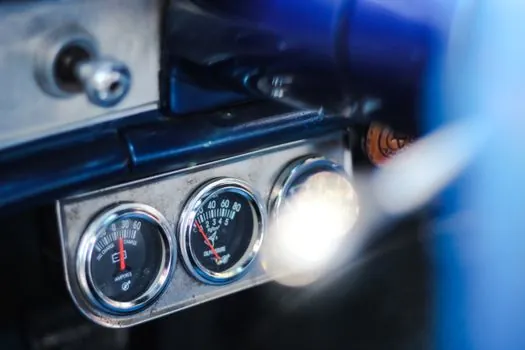
Industrial gauges are commonly rated to ASME B40.100 accuracy grades, and process-grade switches to IEC 60079 series where installed in hazardous areas; the underlying sensing element is what determines the pressure rating, not the contact block [S2][S6]. For calibration traceability on the gauge side, a pressure calibrator is the reference instrument, and the measurement basics are covered in the pressure measurement entry.
On sourcing, retail channels carry both parts as new-old-stock: as of mid-2025 the KOGANEI GS1-50-DL switch listed at US $107.98 [S1], the BWD S4521 at US $40.99 [S8], and the Buick/Cadillac/Chevy/Olds/Pontiac combined oil-pressure switch and gauge at a discounted US $28.19 from a US $63.95 list (56% off, 80 units sold) [S5]. For 2026 budget planning on the transmitter side, the Pressure Sensor Price 2026: Cost Drivers, Sourcing Ranges, and TCO breakdown gives the per-unit and lifetime-cost numbers a purchasing engineer needs to weigh against a simple gauge-and-switch pair.
Track the next two signals: whether new IEC 60079-0 / IEC 60079-11 alignment drives switch suppliers to publish updated intrinsic-safety parameters for 2026 builds, and whether gauge makers move solid-front safety cases from optional to standard on stainless-steel Bourdon lines for steam duty.