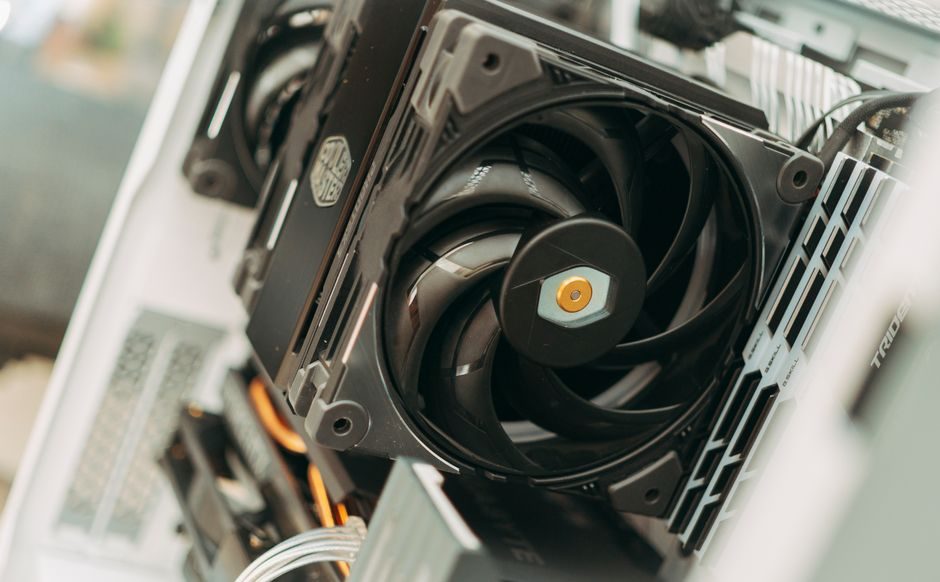
An industrial PSU purchase is dominated by four cost levers: output wattage, conversion topology, safety/EMC certification, and order volume—each of which can swing the unit price by an order of magnitude [S1][S3]. A practical reference spread on 2026-08-03: commodity LED-driver PCBA at US $1.23–4.99, 120 W AC-DC enclosed units at US $123.48–126.66, 30 V/10 A adjustable bench supplies at US $132.94–390.03, and refurbished specialty PSU assemblies at US $1,199.99 [S3][S5].
Defining a "power supply unit" matters before any price talk: the term covers anything from a 1.5 W wall-wart adapter to a 2800 W server-class PSU running 200–240 VAC at 50–60 Hz in a dual-redundant hot-swap configuration [S2]. Buyers comparing like-for-like must fix wattage, topology, and certification before looking at the quote sheet. For background on the switching power supply topology that dominates the mid-wattage band, and the linear power supply design still used in low-noise lab rails, see the dedicated encyclopedia entries.
Wattage Tier Map: Where Each Dollar Buys
Output wattage is the single largest price driver on a PSU quote, and the relationship is non-linear: a 10× jump in wattage rarely produces a 10× jump in unit price because magnetics, bus capacitors, and heatsinking scale sub-linearly above 200 W [S3]. The 2026-08-03 retail snapshot places sub-50 W LED drivers at US $1.23–4.99 per unit, 120 W enclosed AC-DC supplies (MS-120 series) at US $123.48–126.66, and 30 V/10 A (≈300 W) adjustable lab units at US $132.94–390.03 depending on display and programmability [S3].
At the high end, refurbished industrial PSU assemblies for embroidery/CNC equipment list at US $1,199.99, reflecting low production volume, connector customization, and brand-specific form factors rather than raw watt-hours [S5]. Server-class 2800 W PSUs ship in dual-redundant pairs and are specified as hot-swappable within a 2-minute replacement window from removal of the defective module [S2]. Buyers specifying sub-50 W rails should also review the DC power supply entry for bus-voltage selection.
Topology Choice: Linear, Switching, and the Price Penalty
Linear supplies still command a 3–8× price premium over equivalent-wattage switching units in the under-300 W band because of the 50/60 Hz transformer, bulk filter capacitance, and discrete pass-element heatsink [S3]. The DHgate 30 V/10 A adjustable bench supply at US $132.94–390.03 is a switching design with a 4-digit display, while a comparable linear lab rail from a tier-1 brand typically lists above US $800 for the same voltage/current envelope.
For an in-depth spec-to-cost comparison of input range, output ripple, and topology matching, the PSU selection guide walks through the decision matrix. Plants already standardizing on a switching power supply platform typically see 18–24 month ROI on the efficiency delta alone at 0.5–1.0 kW continuous load.
Certification, MOQ, and the Hidden 20–40% Uplift
go4worldbusiness.com lists wholesale PSU entries with MOQ marked "Not Specified" for many India- and China-based suppliers, signalling that small-batch pricing tiers exist but must be requested against a certification matrix [S1].
Volume tiering is the second hidden lever: a US $1.23 LED driver at MOQ 1 may move to US $0.85 at MOQ 1,000, while a US $126 enclosed supply often drops to the US $95–105 band at 500-unit orders [S3]. For mission-critical loads, an industrial UPS sized to the PSU's worst-case inrush (typically 1.5–2× steady-state for switching supplies) should be budgeted separately—see the encyclopedia entry on ride-through and hold-up time. Buyers who skip the certification question at RFQ stage almost always re-quote at the prototype gate, burning 4–6 weeks of lead time.
Total Cost of Ownership: The Number Behind the Sticker
Sticker price covers 40–65% of the lifetime cost of a PSU; the balance is energy, cooling, and field replacement [S2][S3].
Mean time between failures (MTBF) for a quality switching PSU sits in the 100,000–500,000 hour range at 25 °C, halving for every 10 °C rise in case temperature—a rule of thumb that drives derating curves on nearly every datasheet [S3]. The 2-minute hot-swap window on dual-redundant 2800 W PSUs is the operational ceiling for data-center deployments; plants that ignore it and schedule outages pay the differential in downtime cost [S2]. For a deeper look at the supply-side cost stack, the power semiconductor manufacturing cost breakdown traces die, packaging, and test contributions.
Specification Comparison Across PSU Categories
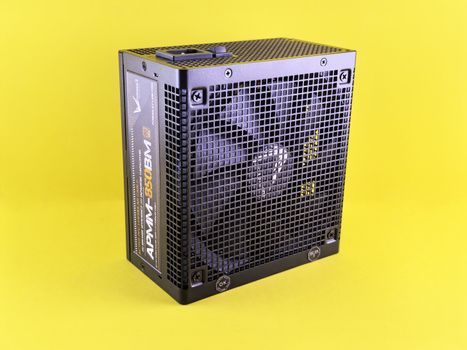
Side-by-side at 2026-08-03 retail, four PSU archetypes cover the bulk of B2B RFQs [S3][S5][S2]:
Commodity LED driver (1–50 W): US $1.23–4.99, switching topology, no display, 185–265 VAC input, 3-year rated life at 8 h/day below 70 °C, no agency mark beyond CE on premium SKUs [S3].
Enclosed industrial AC-DC (120 W, MS-120 series): US $123.48–126.66, switching, multiple output variants (12/15/24/36/48 V), short-circuit/overload/thermal protection, compact footprint for cabinet mounting [S3].
Adjustable bench/lab supply (30 V/10 A, ≈300 W): US $132.94–390.03, switching, 4-digit display, CC/CV modes, regulated ripple under 1%, intended for test benches rather than fixed install [S3].
Server-class redundant PSU (2800 W, dual): priced per system rather than per unit, 200–240 VAC at 50–60 Hz input, hot-swap within 2 minutes, MTBF specified in the 100,000-hour class [S2].
Specialty refurbished PSU (industrial embroidery/CNC, ≈500–1500 W equivalent): US $1,199.99, application-specific connectors, low-volume aftermarket, lead time 2–4 weeks [S5].
Who This Pricing Map Is For — and Who It Is Not
For OEM buyers, panel builders, and procurement engineers standardizing a PSU part number across a 50–5,000 unit annual run, the wattage-tier and certification-uplift data drive the right RFQ [S1][S3]. For test-bench and lab procurement, the adjustable 30 V/10 A class at US $132.94–390.03 covers the dominant use case without overpaying for industrial hardening [S3].
It is not a fit for buyers seeking MIL-STD-461, DO-160, or ATEX/IECEx Zone 1 pricing—those certifications add further tiers above the 20–40% baseline and require direct OEM engagement rather than distributor pricing [S1]. It is also not the right reference for <1 W IoT battery-cell applications, where the relevant cost basis is a different component class entirely [S3]. The power semiconductor capacity shifts article is the better read for anyone modeling SiC and IGBT supply tightness into a 2026–2027 PSU BOM.
Failure Modes and Sourcing Risk to Track
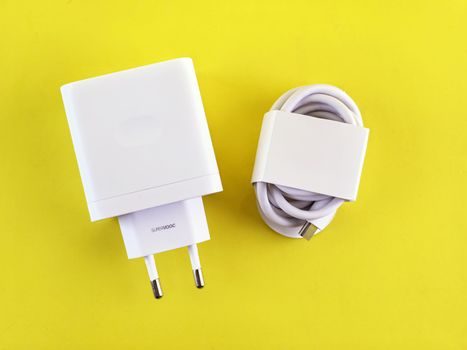
Three failure modes dominate industrial PSU warranty returns: electrolytic capacitor dry-out (typically 5–8 year service life at 105 °C rated parts), fan-bearing wear on >500 W forced-air units, and solder-joint fatigue on through-hole magnetics under thermal cycling [S3]. Each can be derated against by spec'ing 105 °C-rated caps, selecting a long-life fan (50,000+ hour L10), and verifying the manufacturer's thermal-cycling test data [S2][S3].
Sourcing risk to monitor on 2026-08-03: the power semiconductor capacity story flags ongoing SiC substrate tightness, which translates into 8–14 week lead times on >1 kW PSU quotes that use SiC MOSFET front ends.