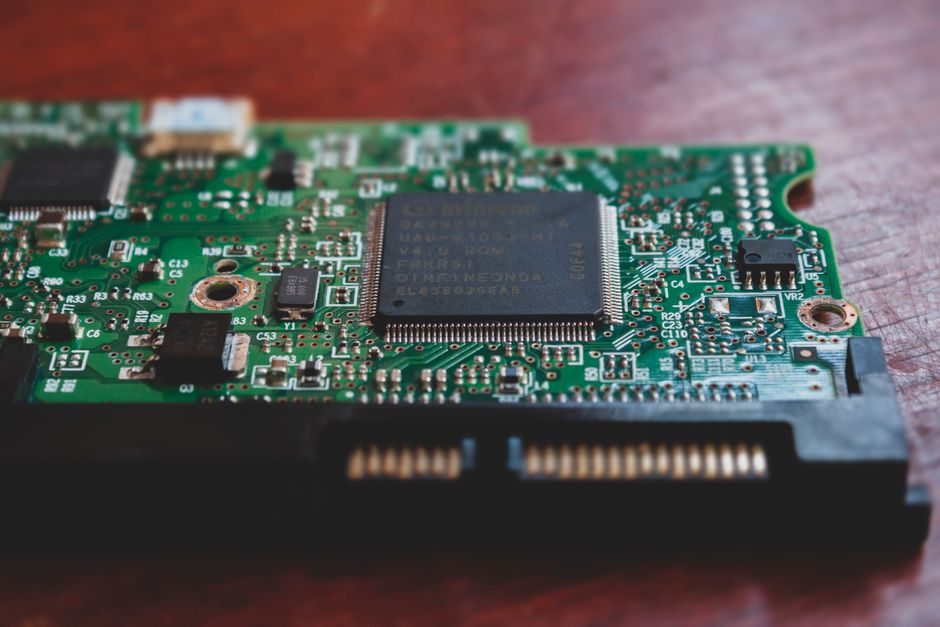
NGK Insulators will lift monthly output of AMB (Active Metal Brazed) substrates for power semiconductor modules by roughly 2.5× by fiscal year 2026, a 2024-03-07 corporate decision that directly expands the supply ceiling for SiC and IGBT module packaging [S1].
The move sits inside a wider market that Allied Market Research sized at $48.9B in 2022 and projects to reach $79.9B by 2032, a 4.9% CAGR over 2023–2032, with automotive electrification, photovoltaic tie-ins, and grid-scale storage cited as the primary demand vectors [S6].
Why AMB substrates sit on the critical path
AMB substrates are the dielectric backbone for high-temperature SiC and IGBT power modules, and NGK's 2.5× capacity step targets the fiscal-year 2026 horizon, raising total monthly output of the bonded ceramic plates used as module insulating layers [S1]. For module integrators this changes the bottleneck map: before, AMB lead times and silver-content cost were the gating items; with a 2.5× line, the constraint migrates downstream to die-attach, wire bonding, and the SiC wafer itself.
Capacity planners now have to keep four variable in one sheet — substrate supply, epitaxial wafer supply, back-end assembly lines, and module qualification slots — because decoupling them produces the bullwhip that already hit the sector in 2022, when consumer demand softened and channel inventory ballooned.
The demand side: EVs move SiC content from $100 to $1,000 per car
Per-vehicle power semiconductor content rises from roughly $100 in a conventional internal-combustion passenger car to about $1,000 in a battery-electric or plug-in vehicle, a 10× swing driven by inverters, on-board chargers, and DC-DC converters that disproportionately use SiC MOSFETs and high-current IGBTs [S3]. That ratio is the single most important number for fab siting: it converts automotive unit forecasts directly into wafer-area demand.
Because EV traction inverters dominate the SiC die-per-car figure, capacity planners should not model passenger-EV and commercial-EV power loads on the same curve. A 3.5-tonne light-commercial BEV can pull 2–3× the inverter SiC area of a compact passenger BEV, which means fleet-mix assumptions can swing module demand 15–25% before any unit-volume change is applied.
Supply side: capex up 200% in 2021, but 2022 cooled
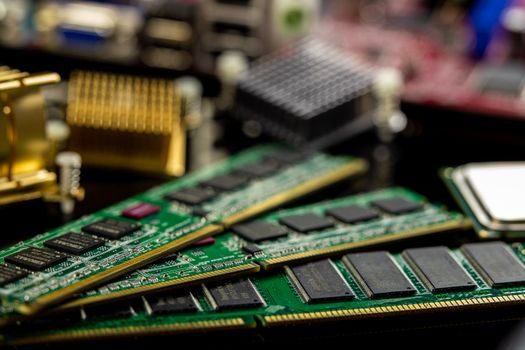
SEMI tracked a >200% year-on-year rise in power-semiconductor-related equipment spending during 2021, with double-digit growth projected to continue into 2022 and 2023, as the five overseas majors — Infineon, ON Semiconductor, STMicroelectronics, Mitsubishi Electric, and Fuji Electric — poured capital into 8-inch and 12-inch fabs [S3]. By Q2 2022 the same majors' average revenue growth had lifted to 21.67% YoY versus 19.14% in Q1, a clear signal that capacity was converting to revenue [S3].
At the same point, the 14 listed Chinese suppliers tracked by JW Insights saw YoY revenue growth collapse from 30.12% in Q1 2022 to 18.05% in Q2 2022, a 12-point drop in one quarter that caught several planners off-guard [S3]. The lesson is that headline fab capex understates the inventory cycle: spending leads revenue by 12–18 months, and consumer-driven destocking can erode that lead in a single half.
How the main supply archetypes compare on planning criteria
For a planner choosing where to book long-dated capacity, four archetypes behave very differently on lead time, technology mix, and automotive qualification depth. The table below lines up the archetypes that appear in JW Insights' 2022 ranking and the Allied 2026 forecast. [S1]
Top-five overseas majors (Infineon, ON Semi, ST, Mitsubishi, Fuji) score best on SiC and high-voltage IGBT depth, automotive AEC-Q101 and IATF 16949 audit history, and 12-inch processing, but carry the longest quoted lead times and the tightest allocation policy during up-cycles [S3]. Chinese listed suppliers such as CR Micro and Silan Micro lead on lead time for low- and mid-voltage MOSFETs, score well on cost-per-die, and offer 8-inch lines that are the industry's workhorse for industrial-grade power devices, but lag the majors on automotive-grade SiC qualification [S3].
Substrate specialists like NGK are not fabs but packaging-enablers, and their 2.5× AMB scale-up by FY2026 effectively removes one of the binding constraints on module-level throughput, with output destined for both Japanese majors and Chinese integrators [S1]. Foundry and IDM captives, the fourth archetype, are optimised for captive internal demand — planners outside those groups cannot book them. The relevant comparison is therefore overseas majors vs Chinese listed suppliers vs substrate/AMB specialists, with foundry captive slots inaccessible to merchant demand.
Inventory and the 2022 destocking precedent
Infineon's Q2 2022 revenue from mainland China and Hong Kong reached €1.031 billion ($985.72 million), up 39.1% year-on-year and 14.9% month-on-month, which exceeded the growth of leading Chinese players CR Micro and Silan Micro in the same period [S3]. The headline number looks bullish, but JW Insights research director Zhao Yi warned that supply tension would not fully relax until at least the second half of 2023, a view consistent with the consumer-electronics destocking visible in smartphones, PCs, and white goods through H1 2022 [S3].
The precedent matters because it shows how demand mix — not total demand — drives the cycle: when consumer MOSFET and diode channels de-stock, the same fab lines that were capacity-constrained in 2021 free up in two quarters, and quoted lead times on standard MOSFET packages can compress from 40+ weeks to 16–20 weeks. Planners building 2026 capacity decks need a similar mix-aware view rather than a single aggregate demand line.
Modeling approach: stochastic, multi-fab, multi-technology
Academic frameworks for semiconductor capacity planning published in IIE Transactions treat the problem as a multistage stochastic program with demand uncertainty per technology and capacity uncertainty per fab, optimising across 29 technology categories and five fab facilities in the published case study [S5]. The marketing-versus-manufacturing coordination problem — marketing reserves capacity to maximise profit while manufacturing allocates to minimise operating cost — is solved via internal-market pricing, a structure still in use at major US IDMs [S4].
For 2026 planners the practical takeaway is to keep technology-level resolution: do not aggregate SiC MOSFETs, IGBTs, and silicon MOSFETs into one "power semis" line, because their lead-time, qualification, and substrate dependencies diverge enough to break the model. Treat the AMB substrate line at NGK as a separate bill-of-material input, and overlay automotive versus industrial demand as a downstream filter, not a single forecast.
What to track next: substrate, SiC wafer, and inverter demand
Three signals are worth wiring into a planning dashboard. First, NGK's published monthly AMB substrate output progress against the FY2026 target of approximately 2.5× baseline, with the 2024-03-07 announcement as the baseline anchor [S1]. Second, Chinese listed power-semi players' quarterly revenue growth, which JW Insights tracked at 30.12% YoY in Q1 2022 and 18.05% in Q2 2022, a swing that signals the inventory turn in mid- and low-voltage MOSFET channels [S3]. Third, SiC wafer supply from the upstream epi houses, which the Allied 4.9% CAGR projection to $79.9B by 2032 implicitly assumes will scale with EV penetration [S6].
For related reading on downstream component selection, see the energy meter selection guide and a power meter vs energy meter spec map — both relevant where power modules feed metered distribution, while broader power-electronics context sits in the power transformer and power mixer reference pages, and grid-side instrumentation ties to the power meter and power cable encyclopaedia entries.