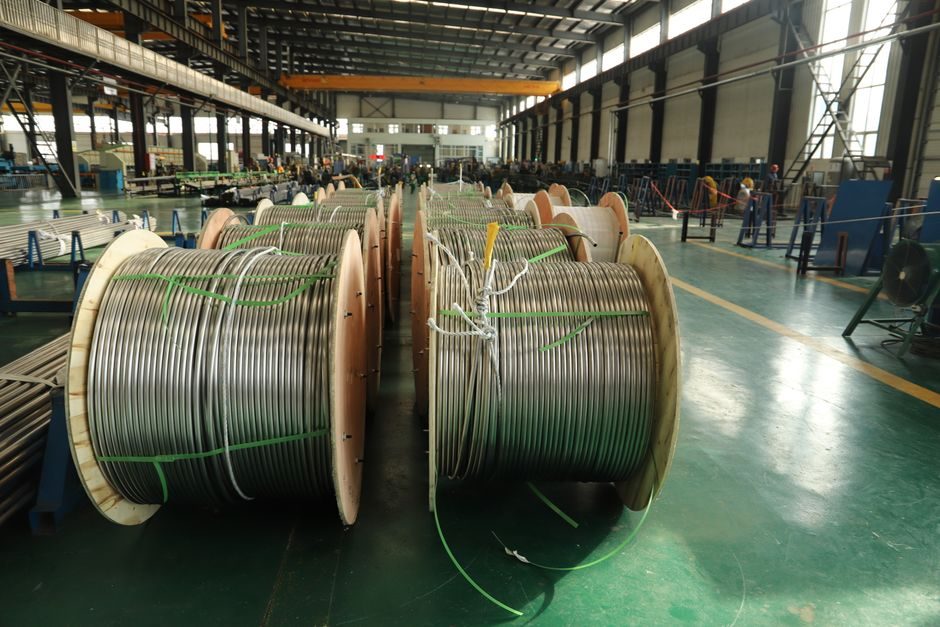
Spot pricing on finished PTFE seals on Made-in-China held at US$0.20/piece at a 100-piece MOQ in the 2026-05-13 supplier listing window [S3], with 3-hour response-time OEM factories still anchoring commodity gaskets, envelopes and skived sheet demand.
PTFE supply chains in 2026 split into three distinct tiers: upstream resin producers (3M/Dyneon, Solvay, Daikin, AGC, Gujarat Fluorochemicals) feeding Chinese compounders, mid-tier moulded-parts shops catalogued on Made-in-China and ChemicalBook, and downstream fabrication houses converting skived sheet, tube and rod into PTFE gaskets, linings and valve seats for chemical, semiconductor and pharmaceutical end-users [S1][S2][S3][S5].
Resin Grades and the Three Real Spec Families
PTFE resin is sold in four ASTM-defined families: granular (moulding/ billet), fine powder (paste extrusion for tube and wire), aqueous dispersion (coating, impregnation), and coagulated dispersion powder — each with a distinct melt flow, particle size and end-use band [S1][S5]. Buyers specifying a PTFE component without naming a family almost always get moulding-grade granular, which is unsuitable for thin-walled tube, skived film below 25 µm, or any part requiring paste extrusion.
Filtration-grade PTFE membrane modules appear in the Jinhua OEM catalog as "HC PTFE-155-51" with 51 tubes at 6.1 mm diameter, signalling a sintered-membrane cluster distinct from bulk resin or skived sheet [S1]. Reaction-vessel linings at FL 4000 mL / NW 150 mm in the ChemicalBook supplier index show the isostatic-moulded billet and turned-lining tier, where wall thickness tolerance and creep behaviour — not raw purity — drive the price gap [S2].
Supplier Tier Map: Where Each Buyer Should Land
Tier 1 — resin majors: 3M, Solvay, Daikin, AGC Chemicals, Gujarat Fluorochemicals, Halopolymer (Russia), Shamrock Technologies. Specs: ASTM D4894 granular, D4895 fine powder, D4441 dispersion. Lead-time 8-14 weeks. Tier 2 — Chinese compounders and moulded-parts shops clustered in Jinhua, Hangzhou, Dongguan and Shenzhen: mainly granular reprocessed/ virgin grades, MOQ 100 pieces for seals at US$0.20/piece, ≤3 h response, in-house R&D and own-brand/OEM [S3]. Tier 3 — laboratory-ware and niche fabricators (BRAND magnetic stirring bar retrievers, magnetic stirrer caps, filtration modules) [S6].
The mistake most first-time buyers make: comparing a Tier 1 virgin-resin quote against a Tier 2 reprocessed-filled quote. Reprocessed PTFE (re-grind, filled with glass, carbon, bronze, MoS₂) can drop cost 30-50% versus virgin, but creep, chemical resistance and dielectric strength all fall in proportion to the filler load. If a project datasheet does not say "100% virgin, no re-grind", the OEM will substitute. This is also why industrial valve seats and chemical-plant pressure transmitter diaphragms are almost never specified on a Tier 2 quote.
Filtration, Reaction-Vessel and Labware Sub-Clusters
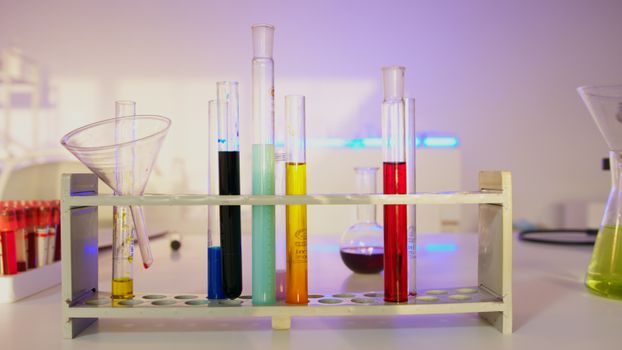
PTFE membrane filtration modules (HC PTFE-155-51 family) carry aggressive-water-treatment end-uses, with the Jinhua cluster delivering 51-tube, 6.1 mm-OD cartridges to industrial water-treatment buyers [S1]. Reaction-vessel liners at FL 4000 mL / NW 150 mm on ChemicalBook are the isostatic-moulded thick-wall segment, sold by job-shop moulders with optional jacketed-steel vessels for pharma and pilot chemical reactors [S2].
Labware tier — BRAND-class PTFE magnetic stirring bar retrievers — is a small but high-margin niche dominated by European and Chinese specialty fabricators, and is the most accessible entry point for buyers testing a new PTFE vendor on low-risk consumables before they release larger lining or seal orders [S6]. Tier-3 MOQs typically run 10-50 pieces, lead-time 2-4 weeks, versus 8-14 weeks for Tier 1 resin and 4-8 weeks for Tier 2 moulded parts.
Alibaba and Made-in-China Listing Behaviour in 2026
Alibaba's PTFE rubber-and-plastics category on 2026-05-13 surfaced 80+ pages of mixed-quality listings, with PT and PU consumer goods appearing ahead of industrial PTFE — a search-noise problem common to all commodity-fluoropolymer categories on B2B portals [S4]. Made-in-China's ptfe-seal directory on 2025-09-24 (carried into the 2026 Q2 feed) listed 77-employee plant areas with own-brand and OEM R&D, ≤3 h response, 100-piece MOQ, US$0.20/piece, and a trading-company overlay that lets OEM and trading entities share the same storefront [S3].
For sourcing managers, the practical reading is that Made-in-China is structurally cleaner than Alibaba for industrial PTFE, because filters expose response-time, employee count and trading-company flags — a similar pattern to what buyers see in PVC-U pipe sourcing, where portal noise dominates and verified plant data is the only reliable filter [S3][S4].
Application Matrix: What Each Spec Family Is Actually For
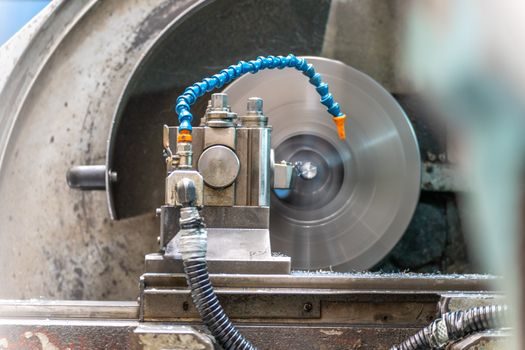
Granular PTFE → billets, sheets, rods, thick-wall tubes, valve seats and chemical tank linings where creep and dimensional stability dominate. Fine powder → thin-walled tube, wire insulation, spaghetti tubing, medical catheters. Aqueous dispersion → coatings, impregnated gaskets, fabric laminates. Coagulated dispersion powder → paste-extruded rod and tape for soft gaskets. The skived-film band sits between fine powder and dispersion grades, with 0.025-3.0 mm as the standard thickness window. [S1]
PTFE is the workhorse seal/gasket/liner material against EPDM, FKM/Viton, FFKM/Kalrez and graphite. EPDM is cheaper (typically 1/5 the cost) and handles steam/alkali, but fails on concentrated acids and mineral oils. FKM handles oils up to 230 °C but cannot touch hot caustic. FFKM (perfluoroelastomer) reaches 325 °C with near-PTFE chemical resistance at 10-50× the price. Graphite handles 450 °C but is brittle and needs anti-extrusion rings. For any pressure sensor or instrument diaphragm in hot acid, PTFE-faced EPDM or PTFE-encapsulated FKM is the realistic spec; FFKM is reserved for pharmaceutical and semiconductor duty where extractables and trace metals are non-negotiable.
Spec Levers That Move the Price 3-10×
The six parameters that actually shift PTFE part cost: (1) virgin vs reprocessed/filled resin — 1× to 0.5×; (2) tolerance band — ±0.05 mm vs ±0.5 mm shifts machining time 3-5×; (3) filler system — glass 15%, carbon 25%, bronze 40%, MoS₂ 5% each carries a different wear/thermal conductivity trade; (4) certifications — FDA 21 CFR, EU 1935/2004 food contact, USP Class VI, 3-A Sanitary, NSF/ANSI 61 — each adds audit and traceability overhead; (5) machining vs moulding — moulded is cheaper above 5000 pieces, machined is cheaper below; (6) post-sintering finishing — annealing ramps that stabilise crystallinity add 1-2 weeks. A buyer who does not write these into the RFQ will get the lowest-cost default and may not get the part they actually need. [S2]
For PLC panel sealing and instrumentation enclosures, the same PTFE selection logic applies: face-seal or encapsulated-O-ring geometry, virgin resin only, FDA or USP Class VI documentation if pharmaceutical, and an explicit "no re-grind" line in the PO. Buyers working through Chinese OEM clusters should plan 4-8 weeks of qualification time on first articles, identical to the 8-12 week cycles reported in the stacker crane supplier landscape and overhead bridge crane sourcing clusters [S3][S5].
Limits, Failure Modes and Common Substitution Traps
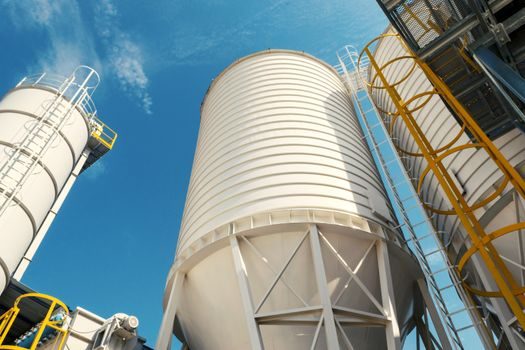
PTFE's real ceiling: continuous service ~260 °C, melting point ~327 °C, useful mechanical strength only to ~150 °C because of creep. Coefficient of thermal expansion ~10-12×10⁻⁵/°C — about 10× steel — meaning any constrained-PTFE design needs generous clearance slots. Radiation resistance is poor (halogenated grades like PFA and ETFE are better). Cold flow under sustained load is the single most common field-failure mode; that is why virgin unfilled PTFE is rarely used as a static gasket above 2 MPa without filler or a metal insert. [S3]
Substitution traps: FEP, PFA and ETFE are the melt-processable fluoropolymer cousins, not interchangeable with PTFE for thick-section or high-creep applications. PCTFE is the low-CTE, high-modulus fluoropolymer for cryogenic valve seats. PVDF is cheaper but loses chemical resistance above 120 °C. ECTFE and ETFE handle alkali better than PTFE does. For flow-meter liners in chemical service, PFA is the modern default over PTFE because the rotomoulding route gives a seamless, pinhole-free liner that sintered PTFE cannot match.
Trackable signals through 2026 Q3: (1) resin-major price-list revisions after the 2026 Q2 quarter-close, which historically move 4-8% on Daikin's Polyflon and Solvay's Algoflon families; (2) Chinese moulders' MOQ drift on Made-in-China ptfe-seal listings, where the 100-piece floor has been the floor since 2025-09 [S3]; (3) any new FDA or USP Class VI certification announcements from Jinhua or Dongguan clusters, which would unlock larger pharma-skid RFQs in 2026 H2 [S3][S5].