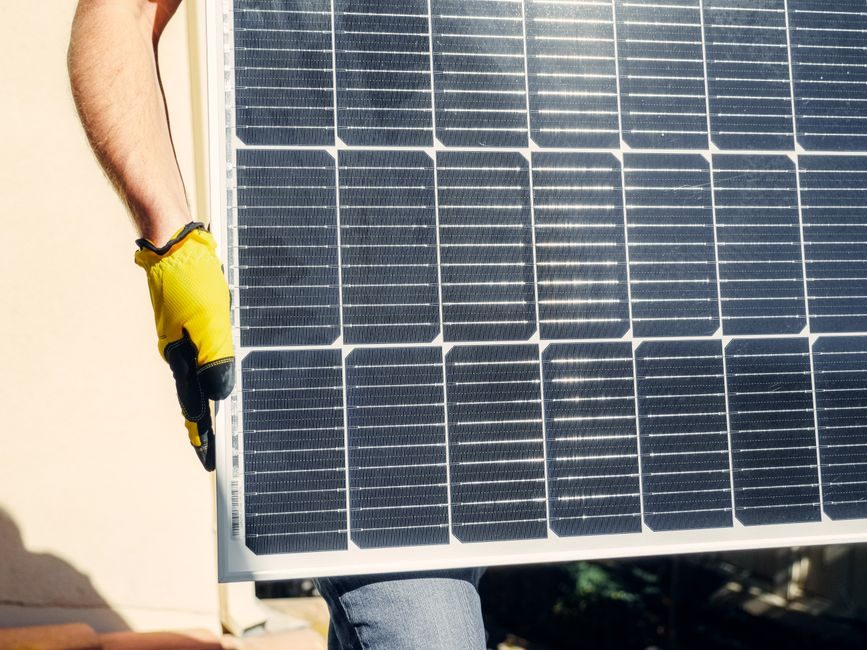
Photovoltaic module manufacturing lines in 2026 still run on the same backbone categories — ALD/PECVD automation, machine-vision inspection, wireless pneumatic motion subsystems, and IEC-qualified PV test chambers — but selection now tilts hard toward throughput, defect-classification accuracy, and wireless comms, all anchored to the 25–30-year service life that crystalline modules must deliver [S2][S8].
The line is divided into three functional blocks: upstream cell fab (wafer handling, ALD, diffusion, PECVD), midstream module assembly (stringing, lay-up, lamination, junction-box attach), and downstream characterization (thermal-cycling, humidity-frost, mechanical-load, and bypass-diode testers). A full turn-key c-Si PERC/TOPCon line in 2026 is typically evaluated on GW/year capacity, uptime, and OEE rather than on tool price alone.
Core equipment families and what each block actually does
Suzhou Chengtuo's ALD guide-film machine automates the interface between cassette ("flower basket") and the metal boat that feeds the ALD reactor, with explicit AGV-docking signal processing for line-side hand-off — a representative spec for the upstream cell block where particulate control dominates [S7]. The Newport photovoltaic manufacturing solutions catalog covers motion, optics, and laser sub-systems used inside cell fab: piezo linear stages, vacuum-compatible hexapods, and motorized fiber-alignment stages, with rail geometries including 19 mm dovetail, 26 mm steel 4-sided, and 95 mm structural rails, all used to position wafers and optics inside process tools [S1].
Midstream, Hebei Huitai's Hebei-based portfolio shows the typical BOM of structural and electrical accessories around the module — photovoltaic brackets, aluminum-alloy guide rails, photovoltaic cables, MC4 connectors, and junction boxes — with the junction-box station being the dominant single source of field failures, so spec emphasis is on flame-retardant, high-temperature-resistant housings [S5]. Cognex's photovoltaic cell-manufacturing page frames vision as a defect-classification problem, not a presence/absence problem: with a 25–30-year in-service life per panel, a single missed crack, hot spot, or solder anomaly compromises decades of energy yield, which is why high-resolution area-scan cameras and deep-learning classifiers are now baseline on stringer and lay-up stations [S2].
Selection criteria engineers should lock before vendor shortlisting
Three gates separate a viable line tool from a paper spec. First, throughput per GW and OEE; second, the defect-class taxonomy the vision system can resolve (micro-crack, snail trail, cell break, ribbon misalignment, encapsulant delamination); third, qualification against the relevant IEC family — IEC 61215 for c-Si module design qualification and IEC 61730 for safety — both of which are referenced explicitly across PV test-chamber selection [S8].
For upstream ALD/PECVD, look for cassette-to-boat hand-off automation with AGV signal pass-through, particulate class cleanroom compatibility, and boat-loading cycle time [S7]. For midstream vision, require an open defect library, frame rate matching line speed (typically 1500–3600 modules/hour on modern stringers), and a deep-learning inference path that can be retrained on customer-specific defect sets [S2]. For test, require chambers that cover thermal cycling, humidity-frost, UV-sunlight simulation, mechanical load, and bypass-diode testing as separable test sequences rather than as a single black-box rig [S8].
Wireless pneumatics and motion subsystems on the line
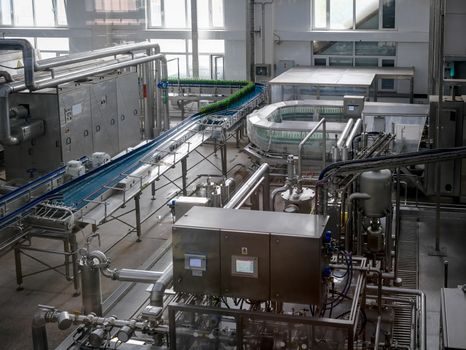
SMC's photovoltaic-industry solution page argues for wireless pneumatic and I/O subsystems on solar lines, citing two failure modes that wired plants hit repeatedly — broken communication cables and electromagnetic-noise-induced errors — and positions wireless as the way to avoid production interruptions on long, cable-hostile module lines [S3].
Inside the motion stack, Newport's screw-drive and direct-drive linear stages, plus vacuum-compatible hexapods, give the positioning accuracy required for wafer alignment in cell fab and for laser-based edge isolation, with rail options from 19 mm dovetail up to 100 mm dovetail to match the structural envelope of each tool [S1]. For automation engineers who need cross-vendor actuator guidance, our linear guide reference covers load, accuracy class, and lubrication regime, while crossed-roller guide entries are the right starting point for high-stiffness wafer-handling stages where face-loading and moment capacity dominate.
Inspection and AI: where the 2026 spec lift is concentrated
Cognex's framing — "one missed solar panel defect can jeopardize decades of dependable energy production" — is the line engineer's justification for spending on AI-assisted vision [S2]. In practice, that means a vision system designed for high-speed, high-resolution inspection across a wide range of manufacturing applications, with deep-learning software sitting next to traditional rule-based vision, not replacing it.
For process control around the cell-to-module loop, the solar panel process control reference lays out the instrument stack, while the broader Solar Panel Industry 4.0: AI metamodels, IIoT stack, and IEC/ISO gating piece maps the data and standards gating that 2026 PV plants are buying into. Cognex positions its VisionPro deep-learning image-inspection software as the AI layer for cell and module inspection lines, used to classify the long tail of cosmetic and electrical defects that rule-based systems reject [S2].
Test chambers: matching chamber to standard

Photovoltaic test equipment falls into separable chamber types: solar-module thermal-cycling chambers, humidity-frost chambers, UV-sunlight-simulation chambers, mechanical-load testers, and bypass-diode testers, all of which exist to verify that production modules meet industry performance and safety standards [S8]. The line-side discipline is to keep these as discrete tests so that a failure in one chamber maps to one root cause, rather than running a single combined-stress rig that hides which stress actually broke the module.
Where the line is also building junction boxes and encapsulant assemblies, the additive manufacturing material reference is useful for jigs and fixtures, while the flow meter and pressure transmitter pages cover the utility-side instrumentation on the gas and chemical delivery that ALD and PECVD tools depend on. Enlog's positioning as a supplier of "essential materials for high-quality photovoltaic module manufacturing" — encapsulants, backsheets, sealants — sits in the same BOM conversation as the junction-box and cable decisions in [S6].
Comparison map: equipment type vs decision criteria
The four main equipment families — ALD/cell-fab automation, machine-vision inspection, wireless pneumatic subsystems, and PV test chambers — line up against four selection criteria as follows. On throughput-per-GW, ALD automation and vision scale linearly with line speed, while test chambers are a per-batch bottleneck. On defect taxonomy, vision is the only family that can resolve the full micro-crack/snail-trail/ribbon-misalignment set; ALD automation is judged on cassette-exchange reliability, not on defect coverage. On standards gating, test chambers map directly to IEC 61215 / IEC 61730 sequences; motion and pneumatic subsystems are governed by their own machinery and EMC rules, with SMC calling out ISO 13849-1 for safety-rated pneumatic valves on PV lines [S3][S8]. On field-life risk, junction-box and BOM decisions carry the longest-tail warranty exposure, which is why Huitai's flame-retardant, high-temperature-resistant junction-box housings are a spec line item, not an accessory [S5].
Who this equipment is for — and who should not buy it

Turn-key c-Si cell/module fabs, TOPCon and HJT retrofits, and Tier-1 module integrators are the right buyers for the ALD automation, vision stacks, and wireless pneumatic subsystems described above; the throughput math only works above roughly 500 MW/year, and below that the OEE advantage does not pay back the integration cost. EPC firms building utility-scale PV plants are not the buyer for cell-fab equipment — they consume modules, not build them — and should instead focus their capex on IEC 61215/61730-verified supply and on plant-side IIoT stacks, where the Solar Panel Industry 4.0 reference maps the gating. [S2]
For process control on the cell-to-module handoff, the solar panel process control article pairs the right sensor stack with the right inspection point. Research labs and pilot lines can buy standalone PV test chambers and partial Newport motion/optics kits without committing to a full line [S1][S8]. One hard "do not" rule: do not pair VisionPro-class deep-learning inference with a motion stage that cannot hold micron-class stability over a 24-hour shift — the AI will surface vibration as a phantom defect class, and the line will reject good modules.
Two trackable signals close the loop. First, watch whether 2026 TOPCon retrofits standardize on AGV-docked ALD cassette hand-off, since the Chengtuo-style guide-film/AGV signal architecture is currently the most concrete published spec in that niche [S7]. Second, watch the published IEC 61215 and IEC 61730 test-sequence revisions and the chamber SKUs that ASLI and peers list against them, because chamber-to-standard mapping is where the next 12 months of qualification decisions will be made [S8].