The dominant light rare earths (La, Ce, Pr, Nd) and the heavy subset (Dy, Tb, Y and the yttrium-group) demand different process chains because of the chemical similarity of adjacent lanthanides.
Bastnasite (a fluorocarbonate) and monazite (a phosphate) remain the two feedstocks that drive the bulk of global REO output; xenotime is the principal heavy-REE carrier. After mining and physical concentration, the ore is cracked — either by acid bake (typically with concentrated sulfuric acid at 200–250 °C) or by caustic soda fusion at roughly 150 °C followed by water leaching — to put REEs into solution as either sulfate or chloride liquor, which then feeds separation [S2]. For a complementary look at how metal-bearing feedstocks move through the plant, see the 3D printing smart manufacturing and automation 2026 platform stack.
Cracking and impurity removal: monazite vs bastnasite routes
Monazite is normally opened by NaOH fusion at ~150 °C to convert REEs to hydroxides and reject phosphate as trisodium phosphate, with thorium and uranium co-precipitated and routed to a dedicated radioactive-byproduct line; bastnasite is more typically roasted to drive off CO2, then acid-leached with HCl to deliver a mixed RECl3 liquor [S2]. The thorium/uranium split is not optional: monazite carries 5–7% ThO2 equivalent and must be segregated before the solvent-extraction train to avoid downstream cross-contamination and regulatory exposure.
Process selection between these two routes is driven by feedstock mineralogy rather than by a single universal recipe. Bastnasite (Mountain Pass–type) is carbonate-hosted and produces a high-La/Ce ratio liquor, which simplifies the early La–Ce split; monazite (Bayannur, Sri Lanka, Australian mineral sands) is phosphate-hosted, lower in the middle REEs, and forces an extra U/Th rejection stage. Caustic fusion dominates monazite because the phosphate byproduct (Na3PO4) is saleable; sulfuric acid bake is favoured for low-Th concentrates where reagent cost matters more than the byproduct credit.
Separation technology: SX trains, ion chromatography, and the rare-earth-free bypass
Solvent extraction (SX) is the incumbent industrial separation method, using multi-stage mixer-settler or centrifugal contactor trains with extractants such as D2EHPA (di-(2-ethylhexyl) phosphoric acid) and PC88A (2-ethylhexyl phosphonic acid mono-2-ethylhexyl ester) to separate adjacent REEs by exploiting the small stepwise change in distribution coefficients across the lanthanide series. A typical light-REE separation train runs 50–80 stages for the La/Ce/Pr/Nd split, and heavy-REE separation can exceed 100 stages because Dy/Tb/Ho/Er have nearly identical extraction behaviour [S2]. Stage-level flow meter monitoring at the settler overflow keeps the aqueous/organic phase ratio inside the design envelope.
RETi's stated 2026 differentiation is a continuous ion-chromatography process (continuous ion chromatography using a resin-based stationary phase and an eluent chemistry tailored to the lanthanide series) positioned as a lower-waste, lower-acid-load alternative to long mixer-settler trains [S2]. The same separation chemistry also underpins the rare-earth-free track, where the dominant 2026 EV-motor development effort targets induction machines with die-cast copper rotors and synchronous reluctance machines that remove NdFeB from the drivetrain entirely; the REFREEDrive programme documents induction and synchronous reluctance designs alongside flat-wire copper winding architectures for the same application envelope [S1]. Compare the metallurgical complexity against the wider metal-component map in the slewing ring bearing vs roller bearing sourcing guide.
Reduction, alloying and NdFeB magnet sintering
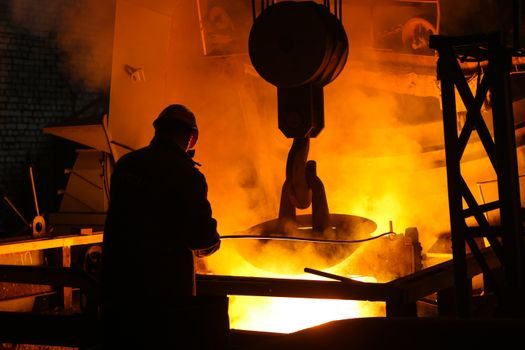
Neodymium metal is then alloyed with iron and boron under an inert atmosphere, melt-spun into Nd2Fe14B flake, jet-milled to ~3–5 µm single-crystal powder, aligned in a magnetic field, pressed, and sintered at 1,050–1,150 °C before a two-stage annealing cycle (typically ~900 °C and ~500 °C) to optimise the hard-magnetic phase boundary. [S1]
Samarium-cobalt magnets (SmCo5 and Sm2Co17) use a different alloy system and a higher sintering/protection temperature band, traded for higher Curie temperature and intrinsic coercivity; they dominate in aerospace and defence applications where thermal stability matters more than raw energy product. Grain-boundary diffusion with Tb or Dy is the standard 2026 approach to push coercivity of sintered NdFeB to 1,500–2,000 kA/m for traction motors, but the process has to handle 1,000 ppm-class heavy-REE inventory in the diffusion source.
Option comparison: SX vs ion chromatography vs rare-earth-free
The three process paths align against four decision criteria: feedstock flexibility, capex intensity, environmental footprint, and end-product (REE) purity. Solvent-extraction is the reference route: high feedstock flexibility across bastnasite, monazite and xenotime, very high capex (50–80 stages, large settler banks, multi-MW acid duty), and 3–5 m3 of acidic wastewater per tonne of separated REO; ion chromatography trades capex for resin replacement cost and aims at sub-1 m3 waste per tonne; the rare-earth-free EV-motor route bypasses the entire chain and accepts the motor performance trade-off (lower torque density per litre, no rare-earth supply risk) [S1][S2].
End-product purity is the discriminator that keeps SX dominant for high-purity Y, Eu, and Dy, where ≥99.999% purity is the default magnet-grade and lighting-grade requirement. The rare-earth-free route is therefore complementary, not substitutional: it removes the NdFeB burden from high-volume traction motors (where synchronous reluctance and copper-rotor induction are competitive) but does not displace SmCo in aerospace or Dy/Tb in high-coercivity grain-boundary-diffusion grades. The wider material-flow logic is the same one operators run for Vibrating Conveyor 2026 buying guide drive type trough geometry and selection gates applications, where process choice is driven by throughput and contamination tolerance rather than by a single best-in-class metric.
Standards, sourcing and environmental controls
REE separation plants are typically rated under REACH (EU) for chemical management and the U.S. Toxic Substances Control Act (TSCA) inventory, with process emissions and wastewater discharges governed by local permits; the radioactive byproduct line (Th, U) from monazite cracking is regulated separately as a source material under IAEA safety standards and the relevant national nuclear-safety code. Process flow is documented in the multifunction process calibrator reference for instrumentation tiers that a hydromet plant specifies at the leach and SX train interfaces. The dominant engineering consultancies for REE process design are concentrated in North America, with TRU Group's rare-earth engineering team positioned as a long-standing process-engineering consultancy for REE/REO separation and markets [S3].
Specifying engineers should treat the SX-train chemistry (extractant type, saponification degree, stage count) as the dominant design variable, not the kiln or the cell. Acid consumption for SX is 1.5–3.0 t HCl per tonne of separated REO; ammonium hydroxide or lime for neutralisation roughly doubles the reagent load. Stage-by-stage pressure transmitter feedback ties the chemistry to the actual settler hydraulics, so the 80+ stage heavy-REE cascade stays inside its design envelope. A plant built around 99.5% REO output can use 30–40 stages; a 99.999% lighting-grade plant needs 80+ stages, longer residence time, and tighter temperature control (typically 25–45 °C across the train) to hold the separation factors in the right window.
Limitations, failure modes and 2026 watchlist
The dominant process failure mode is not throughput loss but cross-contamination between adjacent lanthanide stages: a 0.5 °C temperature drift at the Dy/Tb interface can push Dy purity from 99.9% to 99.5%, disqualifying the fraction for grain-boundary-diffusion use. The third is the heavy-REE supply concentration: Dy and Tb are produced as byproducts of Y and the yttrium-group, so any drop in Y demand propagates upstream as a Dy/Tb shortage — a structural risk that the rare-earth-free EV-motor track explicitly hedges against [S1].
Trackable signals for the next 12 months: commercial-scale deployment of continuous ion chromatography for at least one heavy-REE separation line; the share of traction motors using rare-earth-free topologies (induction with die-cast copper rotor or synchronous reluctance) in new European BEV platforms; and the published capex delta between a greenfield SX plant and an equivalent continuous ion chromatography plant. None of these is a guaranteed outcome, but all three are concrete engineering variables a specifier can track from 2026 vendor disclosures.