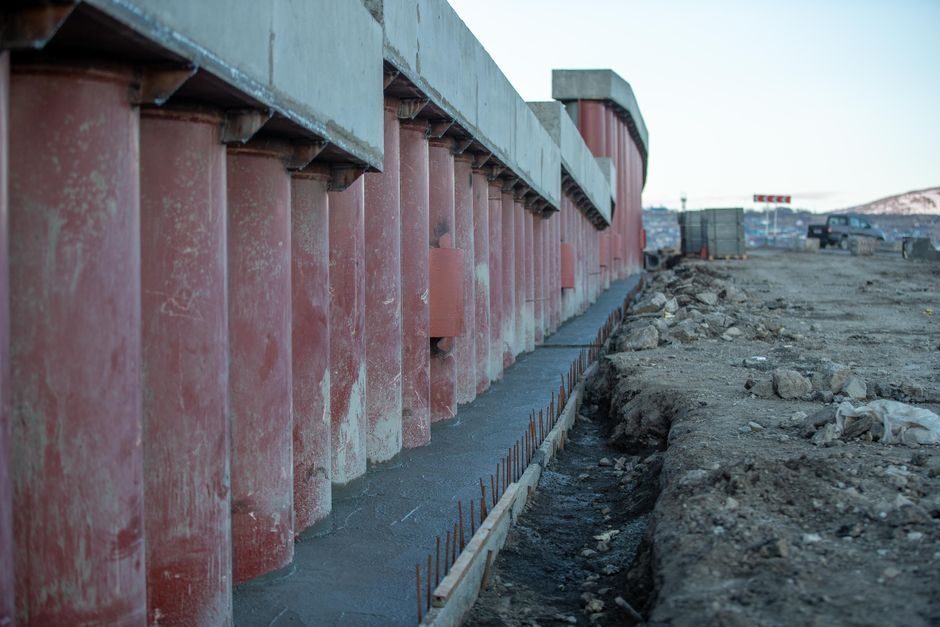
Specifying ready-mix concrete for prefabricated construction centers on three performance gates: minimum 24-hour compressive strength for strip-out, 90-minute slump retention at site, and total W/C ratio held at or below 0.45 for precast grades [S6].
Ready-mix concrete (RMC) is a batched, transit-mixed, ASTM C94-delivered product rather than site-mixed mud, and the structural uniformity it offers is the core reason precast and modular builders in the U.S. moved away from on-site batching over the last decade [S7][S2].
Precast Mix Design: Strength, W/C, and SCM Windows
Precast plants typically specify 5,000–10,000 psi (35–70 MPa) 28-day mixes with 24-hour strip strengths in the 2,500–4,000 psi window, requiring a W/C ratio of 0.32–0.40 and 6–10% silica fume replacement of cement weight [S6]. Sunwest Redi-Mix's commercial fleet out of La Pine, Oregon dispatches custom-mix loads in 10-yard drum trucks — a common U.S. batch size that keeps the concrete batching plant cycle inside the ASTM C94 90-minute discharge envelope [S3][S8].
Supplementary cementitious materials (SCMs) — Type F fly ash (15–25%) and slag cement (25–50%) — are used to control heat of hydration in thick precast elements, since mass pours above 24 inches are common in modular column and beam fabrication.
Admixture Strategy: Slump Retention vs. Set Acceleration
initial slump without raising water demand, and a re-dose at 60 minutes can extend workability past the standard 90-minute transit limit [S7]. Accelerators (calcium nitrite or non-chloride Type C) are used when ambient temperatures fall below 50 °F (10 °C), and are typically dosed at 1–2% by cement weight to maintain the strip-strength schedule [S3].
The decision to include or omit concrete admixture packages is a project-specific call driven by exposure class, not a default [S6][S7].
Fiber Reinforcement: When Steel or Synthetic Pays Off

Steel fiber at 25–40 lb/yd³ (15–25 kg/m³) replaces light temperature-shrinkage mesh in precast wall panels, with hooked-end fibers rated ASTM A820 contributing residual flexural strength of 300–500 psi per the EN 14889-1 dose-response curve. For thin-shell architectural precast, micro-synthetic concrete fiber at 1.5–3.0 lb/yd³ (0.9–1.8 kg/m³) is standard to control early-age plastic shrinkage cracking without interfering with surface finish [S6].
Macro-synthetic structural fiber (40–65 mm length) is gaining acceptance in modular floor plates where fire rating and impact resistance matter, with dosage rates of 5–8 lb/yd³ (3–5 kg/m³) yielding equivalent residual flexural strength to welded wire mesh in non-structural applications. Glass fiber is restricted to architectural GFRC skins and is not used in load-bearing precast because of long-term alkaline degradation in the cement matrix [S6].
Logistics: Truck Cycle, Plant Layout, and QC Window
Most U.S. precast and modular yards contract with regional ready-mix suppliers within a 20–30 mile radius to keep the concrete batching plant cycle inside the 90-minute discharge window defined by ASTM C94 — beyond that limit the mix is rejected and the load discarded. Mar-Con Products' San Diego operation runs ten 10-yard drum trucks paired with three crane trucks, which is the typical fleet ratio for a mid-volume modular yard producing 80–120 yd³ per day [S8].
Slump loss on hot-weather pours (>85 °F / 29 °C) runs 1–2 in. per hour, so cold-water batching, ice addition (up to 100 lb/yd³), and retarding admixtures are standard practice when ambient conditions push the concrete above 90 °F at placement. Conversely, winter pours below 40 °F (4 °C) require heated aggregates and accelerators to keep form-strip times on schedule [S3][S7].
QC: Cylinder Tests, Slump Checks, and Acceptance Bands
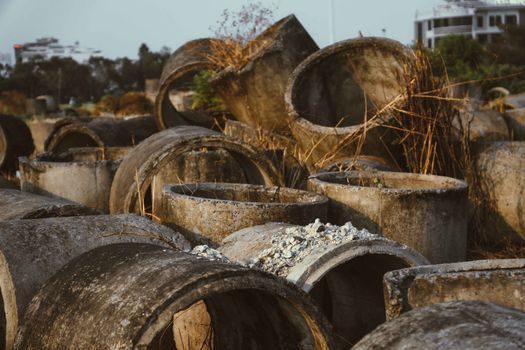
Standard QC on a precast batch is one set of three 4×8 in. cylinders per 100 yd³ or per pour, with breaks at 24 hours (strip-strength gate), 7 days (intermediate), and 28 days (acceptance). Slump is checked at truck arrival and again at 30-minute intervals, with the acceptable band set ±1.5 in. from the mix-design target [S7].
Air content, unit weight, and concrete temperature are logged on every truck; rejection thresholds are typically slump below 3 in. at placement, concrete temp above 95 °F (35 °C) on hot days, or arrival time beyond 90 minutes from water-on-cement contact. Plant-side cure cycles use a concrete curing compound at 150–200 ft²/gal coverage, or wet burlap with 7-day continuous moisture for structural precast [S3][S7].
Ready-Mix vs. Volumetric vs. Site-Mix: Decision Matrix
Three delivery formats compete for the modular yard: traditional drum-truck ready-mix (ASTM C94), volumetric mobile mixers (ASTM C685), and on-site batched mud. Drum-truck RMC delivers tightest quality control with certified plant scales and laboratory-batched mix designs, but is bound to the 90-minute discharge clock [S6][S7].
Volumetric mixers (mobile batch plants on a truck chassis) extend placement window indefinitely by batching fresh concrete on site, but the QC discipline shifts to the operator and the plant is generally excluded from structural precast because of variability in mix proportions at the auger. Site-mixing is the cheapest option per cubic yard but ties up labor, requires a silo or bulk cement storage, and is rejected by most commercial modular yards because of strength variability. For a project weighing structural precast against school or hospital pours, see Specifying Ready-Mix Concrete for Hospital Construction for adjacent QC benchmarks, or Specifying Ready-Mix Concrete for School Builds for low-rise comparison data [S3][S6].
Common Failure Modes and How Specs Defuse Them
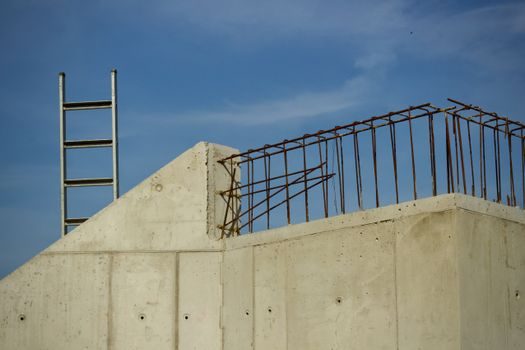
Three failure modes drive the most rework in prefab: cold joints from delayed placement, honeycomb from low slump, and delayed strength from under-cured steam cycles. Each is addressable in the mix specification before the truck rolls: target 7–9 in. slump at the form, not at the plant, by adding 1.5–2 in. of workability margin; require 100 lb/yd³ of ice or chilled water when ambient exceeds 85 °F; and specify a minimum 6-hour wet cure at 140 °F steam for accelerated precast cycles [S7].
For warehouse or cold-storage slab pours adjacent to a precast yard, see Cold Storage Warehouse Concrete: Mix Spec, Delivery Window, and Slab Detail Map for slab-on-grade comparison data [S6].
What to Lock In the Purchase Order
Final spec for prefab ready-mix delivery should include: mix code with 28-day and 24-hour strength targets, W/C ratio ceiling, SCM percentages, admixture type and dose rate, slump at placement (not at plant), max discharge time of 90 minutes, concrete temperature limits tied to ambient, and acceptance criteria for unit weight, air content, and cylinder breaks. Two trackable signals to watch: ASTM C94 revision ballots on the 90-minute clock, and Type III cement pricing through the next 6 months, which together set the cost ceiling on accelerated precast cycles. [S2]