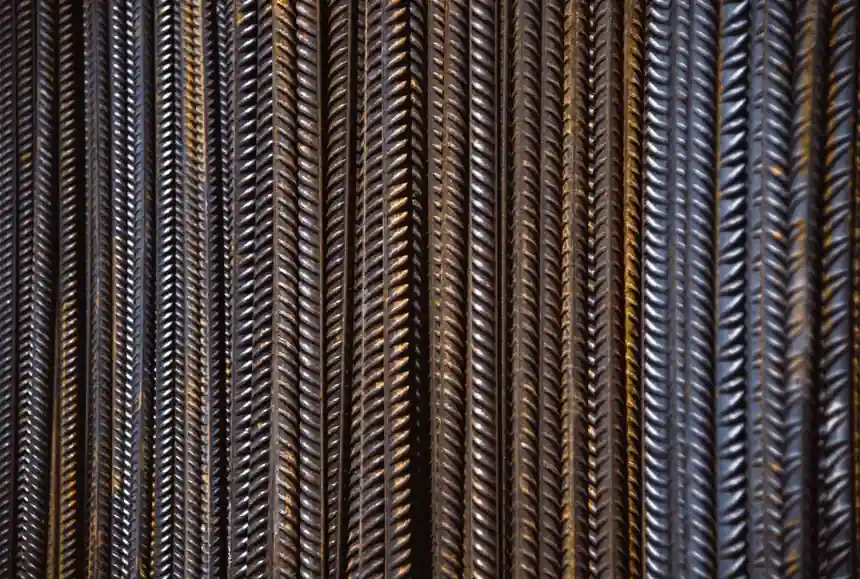
A rebar bender operator on a fabrication shop floor runs production through shearlines, table benders, auto-benders, and stirrup benders, cutting and bending stock to length and angle per the project schedule and tag list.
The core scope is machine operation rather than field placement: the operator sets up the machine, feeds stock, verifies dimensions against the cut sheet, and hands off tagged, ready-to-ship bundles [S2]. A typical shop is built around 40 ft (12 m) or 60 ft (18 m) stock lengths landed from the mill and processed on equipment rated for the local mains supply, commonly 480 V 3-phase in the USA and 575 V 3-phase in Canada [S4].
Core Tasks in a Production Day
Operators run shearlines, table benders, auto-benders, overhead cranes, and small power tools to produce rebar to quantity, size, and shape per the production sheet, with product accuracy verified against project specifications at the machine [S2]. Each piece is tagged or marked with an ID before it leaves the cell so downstream yard crews and field tiers know where it goes [S2].
The physical demands are spelled out in shop job postings: stand, bend, crouch, stoop, and kneel for most of the shift, push and pull steel into position with both hands and arms, and occasionally lift 50 lb (≈23 kg) [S2]. Tool fluency expected on day one includes a tape measure, pliers, wire reels, sledgehammers, pry bars, and pipe wrenches [S2].
Reading the Paperwork: Cut Sheets and Tags
Geometry appears in 100% of surveyed rebar tier job postings, alongside hoisting at 100% and construction knowledge at 50%, which sets the math baseline every operator must clear [S3]. The output of that math is a bent piece: a stirrup bender takes programmed dimensions and forms the bar around two dies, typically running a first 90° bend and then a second 90° bend to close the shape [S5].
Stirrup machines can reduce operator hours by automating the cut-and-bend sequence for high-volume shapes, freeing the operator to manage changeovers and quality checks rather than hand-feeding every bar [S4]. For routine, lower-volume work, a standalone shear plus a table bender is often the entry kit before the shop moves to a more automated line [S4].
Equipment the Operator Touches Daily
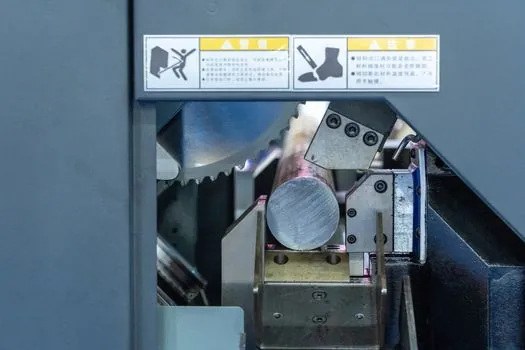
The bench tool kit is a manual rebar cutter and rebar bender for short runs and field-style work, with hand tools and pneumatic tools alongside the bench [S2]. Automated stirrup benders such as the Bar Form 616 3D form Type 125, 126, and 139 standees hands-free and can twist the bar in either direction, with the operator loading stock and removing finished pieces while the machine runs the sequence [S5].
Stock handling is part of the job. A 10-ton overhead crane with a spreader beam or two traveling bridges and hooks is the most efficient way to move 60 ft (18 m) stock, and 24 ft (≈7.3 m) of hook-to-floor clearance is preferred so bundles can be lifted clear of trailers and shearlines [S4]. A bundle of 60 ft #3 (10 mm) bar sags enough that it must be supported in two spots during the lift [S4].
Material Flow: From Stock Rack to Truck
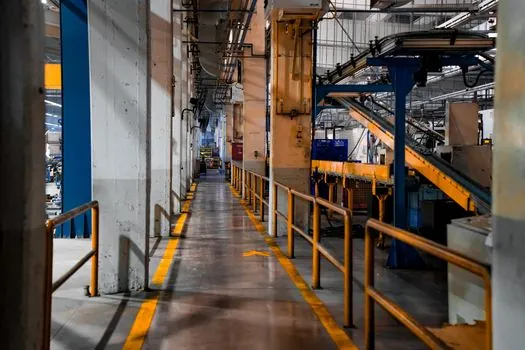
Most efficient shops use a parallel bay layout with stock under one crane way and fabrication under a second parallel crane way, giving shorter crane travel, no turning of the stock, and easy future expansion [S4]. Cross-bay layouts work when a lot of stock needs to be stored under roof, while straight-through shops suit longer single-bay buildings [S4].
Power and access drive the rest: enough ceiling height to lift bundles to and from trailers, tractor-trailer ingress and egress, and the right mains supply for the equipment on the floor [S4]. A shop running a rebar straightener ahead of the bender also needs space for the in-feed and out-feed tables, plus a rebar coupler station if the project list includes mechanical splices. Forklift-only operations are usually capped at 40 ft (12 m) stock, with a 10-ton truck needed to load and unload shearlines and trailers [S4].
Quality, Safety, and the Changeover Cadence
Entry-level fabrication assistants are expected to participate in on-the-job training to certify safe operation of equipment and learn safe work practices, with the role set up as a stepping stone to independent operator and rebar fabricator status [S2]. Daily quality checks run on the operator, not the machine: machine setups and finished products are inspected for accuracy and conformance to the project spec before the tag goes on [S2].
Responsibility spans loading, unloading, and changing over machines for the next production run, which keeps the operator close to the equipment and to the cut sheet at the same time [S1][S2]. Standing role, recurring 50 lb lifts, and constant push/pull on steel means the role is filtered through a physical-demand screen on hire [S2].
Career Path and Where Operators Move Next
The Rebar Fabrication Assistant role is structured as a promotion pipeline: with good performance and accumulated experience, the assistant moves to Rebar Fabricator 1, picking up independent machine operation and full fabrication duties [S2]. Apprentice rebar tiering is the more common on-site entry path, usually requiring a high school diploma or GED before an apprenticeship program [S3].
Surveyed rebar tier postings put the average salary at $36,747 with 0–1 years of typical experience, and the role spans buildings, bridges, and roads, with employers including general contractors, rebar fabrication shops, and self-employed trades [S3]. Promotion out of the fabrication shop, into a floor grinder prep crew for slab work, or into a rebar inspection role are common lateral moves once the operator has run the full machine set.
Limits of the Role and Common Failure Modes
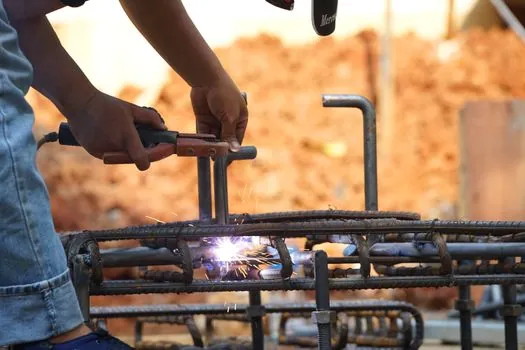
Operator scope stops at the dock door: a rebar tier on a fabrication shop floor bends and tags, while a field rebar tier places and ties [S3]. Reading construction blueprints to determine placement is a field skill, not a bench skill, and the two roles share the same tool vocabulary but very different daily output.
Bottlenecks show up in three places: stock length the building cannot support, crane capacity that cannot lift a full bundle, and a single-bay layout that forces turning of long stock [S4]. For a bench operator, the practical ceiling on output is set by the stirrup bender's cycle time and the operator's changeover speed, not by raw bending force [S5].
Trackable signals to watch on a fabrication shop floor in the next planning cycle: hoisting and geometry requirements staying pinned at 100% in rebar tier postings [S3], continued movement from standalone shear plus table bender kits into stirrup and auto-bender cells as production volumes rise [S4], and the parallel-bay layout remaining the default reference footprint for greenfield rebar shops [S4].
See also our earlier report, 2026 electricity price volatility and industrial demand response: what process plants.