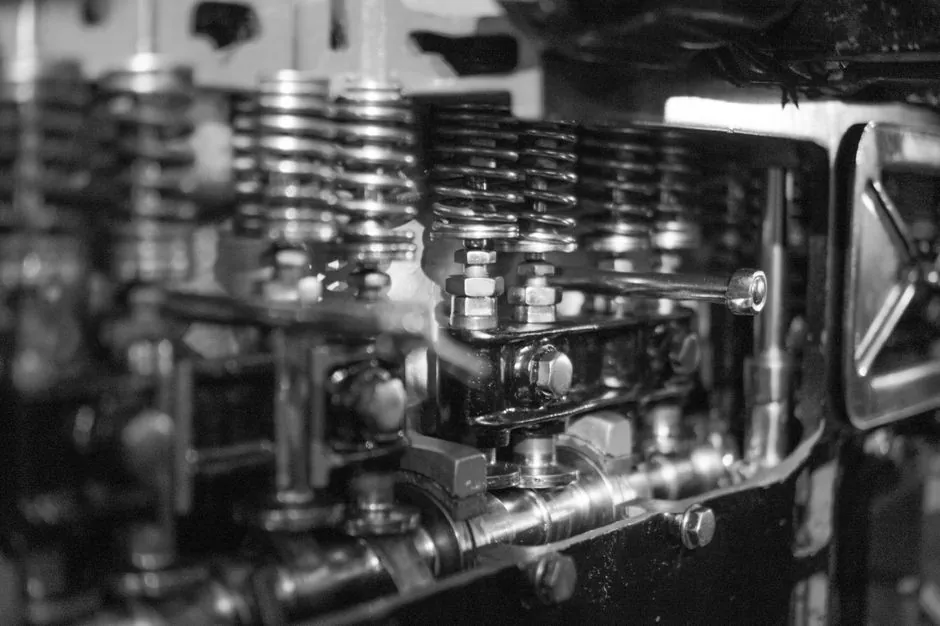
A compensator inside an automatic level is a gravity-suspended prism or mirror that automatically redirects the optical line of sight to true horizontal, even when the instrument body is tilted by a small residual angle after the circular bubble has been roughly centered [S2][S4].
The mechanism replaces the slow, manual fine-tuning of older dumpy levels, where even a slight setup error produced systematically wrong readings; in a modern automatic level the user only needs to get "close enough" for gravity to finish the job [S3][S4].
What the Compensator Actually Is and What It Swings
The compensator is not the bubble, and it is not the foot screws. It is a small prism or mirror hanging freely inside the telescope, referenced entirely by gravity, and in most designs suspended on fine wires or delicate pivots [S1][S4].
When the telescope body is tilted by a small residual amount after rough leveling, the suspended optic swings under gravity so the outgoing light path is bent back to horizontal. This is the entire reason automatic levels became the default instrument for site leveling, benchmark work, and construction grading [S3][S4]. For context on how this differs from a digital line of sight, see the automatic level overview.
The defining behaviour is that line-of-sight correction happens passively and continuously, with no input from the operator after the initial rough setup. The compensator therefore converts a "roughly level" mechanical base into a precisely horizontal optical reference [S1][S2].
Damping: Why the Prism Does Not Just Oscillate
A freely hanging prism will not simply settle, it swings, and an undamped compensator would smear every staff reading. Automatic levels solve this with a magnetic eddy-current damping system, a small magnet and conductor arrangement that generates eddy currents whenever the compensator moves, producing a force that opposes the motion [S4].
That damping is what lets the compensator settle within roughly one to two seconds after a tilt event, which is fast enough that the operator does not have to wait between rough-leveling and taking a reading [S4].
The trade-off is mechanical fragility. Compensator suspensions rely on fine wires or delicate pivots, and a broken suspension can leave an instrument that still powers up and displays numbers while quietly handing out wrong readings, the failure mode that makes the field tap test so important [S2][S4].
What the Compensator Is For, and What It Is Not For

The compensator is designed to correct small residual tilts, typically on the order of a few arcminutes around the roughly leveled position, not to replace the circular spirit level and foot-screw rough leveling [S1][S2].
It is the right tool for differential leveling, benchmark runs, setting grades for drainage, checking concrete form levels, and floor or foundation elevation work, the everyday horizontal-alignment jobs that dominate construction and civil engineering sites [S3].
It is the wrong expectation for compensating a badly leveled setup. If the circular bubble is far off, the compensator reaches the end of its designed correction range, and the line of sight is no longer guaranteed horizontal, even though the cross hair may still appear stable in the eyepiece [S2][S4].
Field Check: The Two-peg Test and the Tap Test
Every automatic level should be checked before it is trusted on a benchmark or precise leveling task, and the standard field check is the two-peg test, which compares readings from two setups to expose a collimation or compensator error that a single setup would mask [S2].
The quicker go/no-go check is the tap test. Briefly nudge the telescope or turn a foot screw slightly, and watch the cross hair: a healthy compensator deflects and returns to the same staff reading, while no deflection, or a deflection that does not return, signals a sticking or failed compensator that must be serviced before further work [S2][S4].
A sticking compensator is one of the classic field failure modes listed in equipment check-and-adjustment procedures, because it produces readings that look plausible but carry a systematic error proportional to the uncompensated tilt [S2].
Compensator Behaviour on Three-Screw vs Four-Screw Bases

Most modern automatic levels use a three-screw leveling base, supported entirely by the foot screws themselves, while older four-screw bases are supported by a center bearing instead [S4].
The difference matters mid-survey: adjusting the foot screws on a three-screw instrument changes the height of the line of sight, while on a four-screw instrument the center bearing carries the load and the line-of-sight height stays essentially fixed, so operators moving between the two designs need to recalibrate their muscle memory or risk introducing height-of-instrument errors [S4].
Both base styles rely on the same gravity-referenced compensator for the final horizontal correction, so the compensator design is independent of base type, but the operational behaviour is not [S1][S4].
Compensator vs Digital Level Sensors and Laser Levels
Optical automatic levels use a mechanical, gravity-suspended compensator. Digital levels replace the optical readout with a CCD or CMOS line sensor that reads a bar-coded staff, but they still rely on a pendulum-style compensator to keep the line of sight horizontal before the image is captured; the sensor is a readout, not a level [S3].
Rotating and line laser levels use an entirely different levelling approach, usually a gimbal-mounted prism or a servo-driven pendulum plus electronic inclinometer, more akin to a self-leveling laser level than to the wire-suspended prism in a surveyor's automatic level.
For long-distance or non-line-of-sight work, an infrared level or non-contact level measurement instrument is a different category altogether, and comparing its specifications to an optical automatic level is an apples-to-oranges exercise; the automatic level's compensator only has meaning for a visible staff at line of sight.
Failure Modes, Limits, and Servicing Signals
The most common compensator failure is a sticking or sluggish swing, usually caused by contamination, a bent suspension wire, or a weakened magnet in the damping system; the symptom is a cross hair that does not return cleanly after the tap test [S2][S4].
The most dangerous failure is a broken suspension that leaves the optic jammed at a fixed offset: the instrument continues to operate and produces stable-looking staff readings that are systematically wrong by an amount proportional to the uncompensated tilt, which is why no-deflection on the tap test is treated as a stop-work signal, not a green light [S2][S4].
Operating range is also finite. Outside the compensator's designed tilt window, typically a small fraction of a degree around level, correction collapses and readings become unreliable, so the circular bubble is still a hard prerequisite, not a decoration [S1][S2].
Quick Selection Criteria for Buyers and Site Engineers
For construction grading and form-work checks, a standard 20x-32x automatic level with a wire-suspended or pendulum compensator and magnetic damping is sufficient and is the default specification on most sites [S3][S4].
For higher-order differential leveling or benchmark networks, specify instruments whose compensator working range and settling time are published, and require a documented two-peg test result before the instrument is accepted on the job [S2][S4].
Avoid the trap of buying on magnification alone. Compensator accuracy, damping behaviour, and base style (three-screw versus four-screw) do more for real-world line-of-sight stability than an extra few x of magnification, and they are also the items most often left off a vendor's marketing sheet [S3][S4].
For an instrument that does not even need a separate optical readout, look at the level switch and automatic molding line categories as a contrast: those are point-level detection and process-control devices, not survey optics, and the term "automatic level" in those product names refers to a completely different function.
On a busy site, the compensator is the part of the instrument that quietly turns a roughly leveled base into a precise horizontal reference; the rest of the optical chain only has to preserve what the compensator has already established, so a healthy compensator and a clean tap test are the cheapest insurance a survey crew can buy [S1][S2][S4].
This topic is covered further in Transit Mixer, Agitator, and Ready-Mix Truck: Spec-Level Differences.