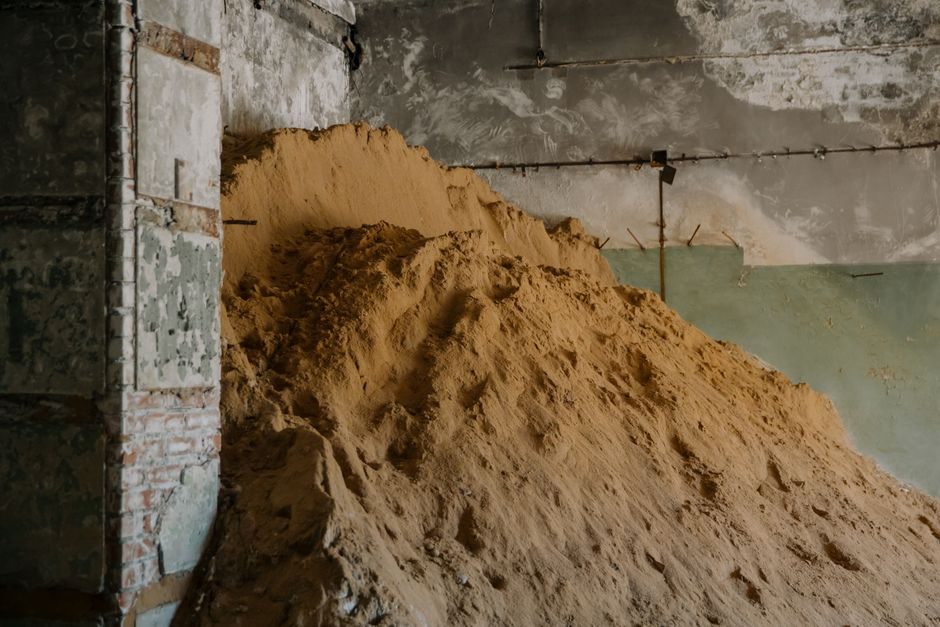
The 2026 buyer's split comes down to one question: does the casting need a reusable sand mold or a one-shot EPS foam pattern? Resin sand (furan/no-bake/alkaline phenolic) lines, catalogued under resin-sand-line, shape chemically-bonded sand around a wood, metal or plastic pattern; lost foam lines, indexed under lost-foam-casting-line, vaporize a single-use expanded-polystyrene (and in 2026 increasingly STMMA copolymer) pattern inside unbonded dry silica sand as molten metal fills the void [S2][S4].
Both are sand-using foundry flows, both sit alongside green-sand and automatic-molding-line cells on a 2026 shop floor, but the pattern economics, surface finish, dimensional tolerance and pattern-cost curves diverge by an order of magnitude on some jobs. Engineers selecting between them should anchor on alloy family, batch size, surface-finish class and pattern tooling lead time, not on a single headline "productivity" number.
Process principle and the sand that actually does the work
A resin-sand-line mixes silica sand (typically AFS 40-70 fineness) with a thermosetting binder (furan/phenol-formaldehyde for acid-cured, alkaline phenolic for ester-hardened, or urethane no-bake cold-box) and hardens the mix around a pattern on a vibrating table or flaskless shooter [S3]. Throughput on a single-station line is generally 5-15 molds/hour for a 1 t flask, scaling to 30-50 molds/hour on a flaskless automatic cell [S1][S3].
Lost foam casting (LFC) inverts that logic. The pattern is expanded polystyrene bead foam, density roughly 18-25 kg/m³, coated with a refractory slurry (zircon, aluminosilicate or fused-silica based, 0.5-1.5 mm dried thickness), placed in a vented flask and surrounded by loose, dry, unbonded silica sand that is compacted by vibration to a bulk density near 1.55-1.65 g/cm³ [S2]. Molten metal (commonly gray iron, ductile iron, carbon steel and some aluminum alloys) burns the foam pattern out as a gas front and replaces it; the binder is not in the sand, it is in the pattern [S2][S4].
Pattern tooling, lead time and unit cost curves
Resin sand patterns are usually wood, aluminum, cast iron or steel master patterns mounted on a pattern plate. The pattern survives thousands of cycles and the per-mold pattern-amortization cost is small at high batch volume.
Lost foam patterns are EPS foam shapes cut on a hot-wire CNC, or molded EPS bead pre-forms. Lead time on a single foam pattern is 1-5 working days; tooling for the bead-mold (steam chest) is 3-8 weeks. Pattern unit cost is low in absolute terms but consumed per casting, so lost foam is cost-strong on short runs and complex one-offs, weaker on long runs where the recurring pattern cost compounds. Castchem's STMMA copolymer pattern resin, introduced for direct-pour ductile iron, is a 2026-spec change to the polymer side of the economics: the higher melt strength tolerates the higher pouring temperature of ductile iron (≈ 1380-1450 °C) without foam collapse [S4].
Tolerance, surface finish and draft/parting line behavior
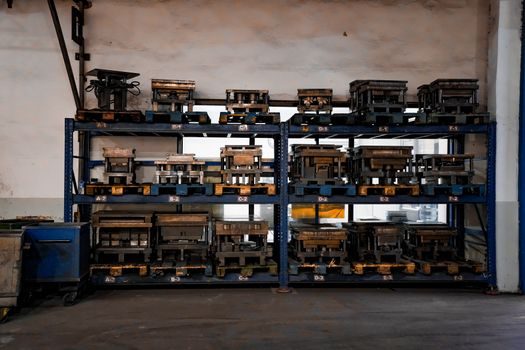
Resin sand castings land at roughly CT 9-11 (ISO 8062) dimensional tolerance and surface roughness Ra 12.5-50 µm, with draft of 1-3° and an open parting line that requires a machining cleanup. Flaskless automatic resin-sand lines narrow the tolerance window by removing flask mismatch as a variable [S1]. The geometry envelope is limited only by the pattern itself: deep pockets are fine, but undercuts, internal cavities and very thin walls add pattern cost and binder-related defect risk (veining, gas).
Lost foam is the geometry-freedom line. Because the foam pattern is sacrificial, there is no draft, no parting line and no flash, and internal passages (water jackets, oil galleries) can be cast net-shape in foamed cores. Tolerances are typically CT 8-10, surface roughness Ra 6.3-25 µm, and the achievable minimum wall thickness on gray iron is in the 3-5 mm band versus 6-8 mm on resin sand. The trade is a defect menu that resin sand largely avoids: foam-collapse fold defects, pyrolysis-gas porosity (carbon and hydrogen pick-up in the melt), and white-carbide streaks in ductile iron that drive the demand for the newer STMMA resin [S2][S4].
Productivity, energy and labor profile per ton of casting
A typical 2026 resin-sand flaskless line discharges a 1 t mold roughly every 90-180 s (20-40 molds/hour) and consumes 60-90 kWh/t of casting for sand mixing, reclamation and mold handling, plus binder make-up of 12-18 kg/t [S1][S3]. Labor content drops on PLC-controlled automatic lines: the operator's job moves from active molding to flask change, pattern lubrication and reclaim tower monitoring, with the molding cell running 2-4 operators per shift at full output [S1].
Lost foam lines are pattern-bound, not mold-machine-bound. The bottleneck is the foam pre-form shop and the vibrating compaction table; for a 100-200 kg casting, typical cycle time on the casting cell is 3-6 min/flask, with a higher absolute energy demand in the pattern side (steam chest, hot-wire cutters, dryers) of 40-70 kWh/t of casting excluding foundry-side auxiliaries. Foam pattern material cost is roughly 0.4-0.8% of casting weight as EPS, more with STMMA [S2][S4].
Decision matrix: choose resin sand or lost foam by job profile

Engineers writing the 2026 process spec usually land on one of these four columns. (1) Long-run carbon-steel or gray-iron housings > 5 t per part, machined surfaces, conventional pattern tooling: choose resin sand — cheapest per-kg at volume, well-understood defect list. (2) Complex ductile-iron components with internal passages and ≤ 5000 parts/year: choose lost foam with STMMA pattern resin to skip coring and machining stock [S4]. (3) Short-prototype runs of 5-100 castings where pattern lead time gates the project: lost foam, foam pattern in days. (4) Very large castings > 10 t per part with deep pockets: resin sand in a heavy flask, often an automatic-molding-line configuration, with core assembly; lost foam is constrained by the foam pattern's structural mass and the flask compaction limit.
A side check on alloy and defect tolerance: if the part is ductile iron, the choice between furan resin sand and lost foam hinges on graphite-nodule count and section sensitivity. Resin sand + furan binder adds sulfur and nitrogen pickup that can lower nodule count in thin sections; lost foam adds carbon pickup and hydrogen-driven pinholes unless the line is properly vented and the pattern resin is the higher-purity STMMA grade [S4]. For aluminum, both lines are viable, but the foam pattern's high specific surface area means gas-handling discipline is heavier on lost foam.
Standards, certification and 2026 sourcing signals
Buyer-side acceptance is usually written to ISO 8062 (dimensional tolerance classes CT 1-16, here CT 8-11 in scope), ISO 4986 (steel castings surface quality) and, for ductile iron grade verification, ISO 1083 / ASTM A536 (matrix + nodularity, with the chemistry ceiling on sulfur and magnesium that pushes buyers toward low-sulfur binder systems) [S1]. Pattern shops exporting to EU/US foundries increasingly run on OEM-supplier audits against ISO 9001 with PPAP-style first-article inspection; sourcing pages on Alibaba and Chinese foundry-equipment sites list PLC-controlled cells, with a 2026 catalog emphasis on "flaskless" and "high productivity" [S1][S3].
The verifiable 2026-06 sourcing signals are: (a) Castchem positions STMMA copolymer pattern resin as a ductile-iron-capable upgrade over EPS, with the trade-off being higher pattern cost and steam-chest cycle time [S4]; (b) GDM Technics markets the lost-foam line as one of two flagship foundry offerings alongside V-Process, which means buyers comparing lines are being asked to also benchmark against vacuum-mold dry-sand lines, not only resin sand [S2]; (c) the broader equipment catalog still lists self-hardening (no-bake) resin sand, green-sand and synthetic-resin sand systems as adjacent process options, so most 2026 tenders are written as multi-process specs [S3].
Limitations, failure modes and the questions buyers must ask the vendor

Resin sand failure modes are well-catalogued: veining, expansion scabs and gas porosity are binder and sand-mix problems, so the audit should ask for binder supplier name, binder-to-sand ratio in production, reclaim tower temperature, and AFS fineness trend on the used sand. A bench-mark question is whether the line is sold as "complete" — pattern plate, sand mixer, reclamation, PLC — or as a single station; most 2026 buyers paying for a full line will have seen the molding-line catalog page first [S1][S3].
Lost foam failure modes are pattern- and metal-flow-driven: foam collapse, fold defects, lustrous carbon films, hydrogen pinholes and carburization in ductile iron. The audit must cover pattern-bead density (kg/m³), coating thickness and permeability, venting strategy, pouring temperature and metal filtration. The 2026-specific question is whether the pattern resin is EPS or STMMA and whether the foundry has a documented first-article nodule count above 80/mm² in the thinnest section [S2][S4].
Closing practical signals to track: 1) confirm whether the 2026 quote is for a flaskless high-output cell (resin sand) or a pattern-shop-bundled line (lost foam), because total installed cost differs by pattern-shop equipment, not by the casting cell; 2) request a sample casting in the buyer alloy before contract signature, since the resin-sand vs lost-foam choice is dominated by a defect check on the actual section sizes, not by a catalog productivity figure. For an in-depth cross-comparison that puts these two lines up against automatic-molding-line cells, see the related 2026 spec cut: Lost Foam vs Automatic Molding Line.