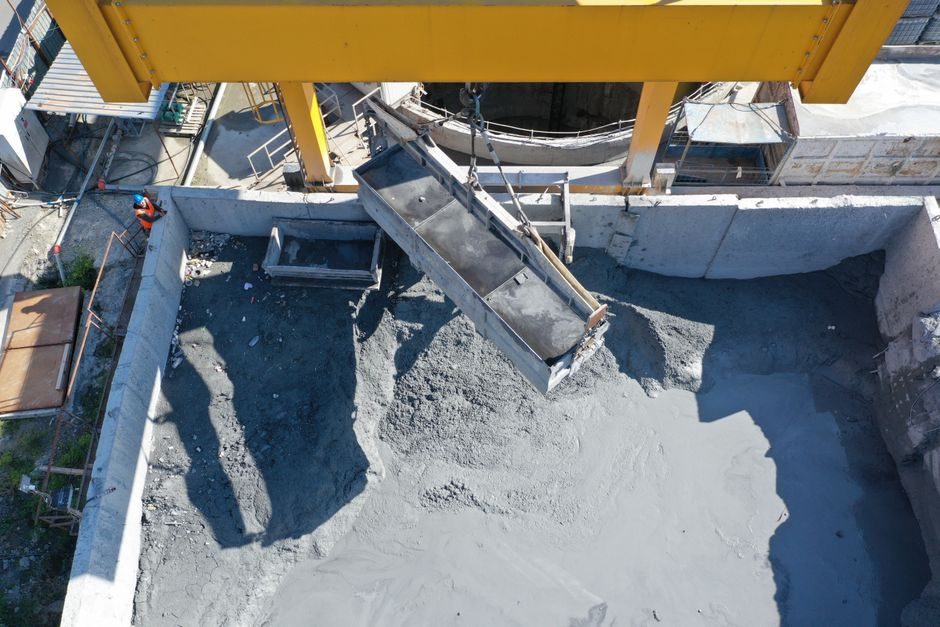
Lost foam casting (LFC) and automatic flaskless molding lines target different jobs in a foundry: LFC uses expanded polystyrene (EPS), expandable polypropylene (EPP) or expandable polyethylene (EPE) foam patterns vaporised by molten metal to produce near-net complex castings, while an automatic molding line compacts green sand around a wood or metal pattern in a flaskless cycle. Grede Holdings reports its LFC process yields heavy-truck components up to 30% lighter and up to 40% lower cost than conventionally cast equivalents [S4]. For a deeper primer on the LFC end of this pair, see the lost foam casting line reference page.
The two systems rarely substitute for each other on the same job. LFC fits low-to-medium volume runs of complex steel or iron castings where the foam pattern is justified by geometry or weight savings, whereas an automatic molding line suits high-mix-to-high-volume green-sand work where flaskless cycles below 60 s per mould and 24/7 lights-out operation dominate the cost model. Buyers comparing capital lines should weigh pattern cost, sand system complexity, defect rate and the metallurgical envelope of each process before committing.
Process boundary: foam pattern vs flaskless green sand
LFC places a coated polymeric foam pattern into a one-piece unbonded sand bed; the molten metal decomposes the pattern and replaces it, producing a single casting with no parting line. Patterns are typically machined EPS, EPP or EPE blocks, with density selected for alloy and section thickness [S3]. The pattern is consumed every cycle, so recurring pattern cost is structural to the process.
An automatic molding line uses a permanent pattern plate, a shooting head and a squeeze or jolt-squeeze unit to compact green sand (bentonite + water + coal dust) into a flaskless mould, then closes the mould and rolls it to the pouring line. Sand is automatically reclaimed, mulled and returned. For a higher-level overview of the machine category, see the molding line entry. The pattern is a one-off capital item; the recurring cost is sand, binders and energy per mould.
Cycle time, throughput and labour model
Flaskless automatic molding lines are typically rated 120-240 moulds per hour on standard flask sizes (e.g. 600 x 500 mm to 1000 x 800 mm), with cycle time governed by shooting, squeezing, stripping and mould-closing strokes [S2]. A single operator can supervise multiple cells, and full auto-mould-handling lines integrate mould assembly, pouring and pallet return without manual intervention at the flask.
LFC cycles are slower because they include pattern placement, coating drying, sand filling, vacuum draw and pour; pattern coating alone often needs controlled drying before the foam is embedded. Sand is dry and unbonded (no mulling step), which simplifies the sand treatment and reclamation side of the line, but the foam-pattern storage, adhesive bonding of cluster assemblies and recoating stations add a parallel labour stream upstream of moulding. Grede's heavy-truck LFC components cover engine, transmission, steering, chassis and axle applications where the geometry premium offsets the longer cycle [S4].
Cast alloy and metallurgical envelope
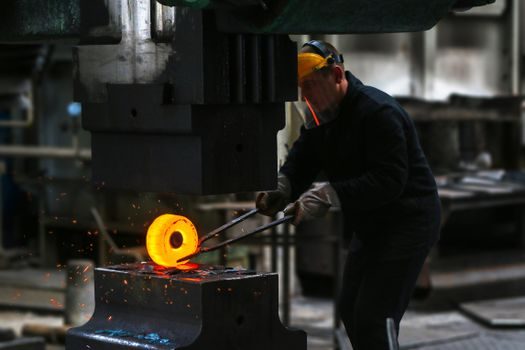
LFC is well established for grey iron, ductile iron, low-carbon steel (e.g. A216 Grade WCB in the 2018 study) and aluminium alloys such as A356; A356 LFC castings are documented to suffer porosity and coarse microstructure that researchers tie to pattern density and refractory coating choice [S3]. Carbon pick-up from EPS/EPP/EPE decomposition is a known metallurgical variable, with low-carbon steels showing measurable surface and sub-surface carbon contamination when pattern density is not controlled [S3].
Automatic green-sand molding lines are alloy-agnostic within the ferrous range (grey iron, ductile iron, malleable iron, low-to-medium carbon steel) and tolerate a wide melt temperature window. Defect modes diverge: LFC defects cluster around fold, misrun, gas porosity and carburisation; green-sand flaskless defects concentrate on sand inclusions, mould hardness variation, and blows from moisture or gas evolution. The GDM Technics operation explicitly runs LFC and V-Process (VPC) side-by-side, illustrating that foundries often hold both processes for different alloys and part geometries [S6].
Pattern cost vs tooling cost
LFC patterns are inexpensive per part in low volumes because they are foam-machined, but they are consumed each cycle, so recurring pattern cost is high in high volume. Foam pattern design is the controlling engineering input, and pattern shops like Luoyang Liishi (national standard-setting unit for lost foam moulds, founded 2001, holding 6 invention patents and 20 utility model patents) supply the dedicated tooling [S5].
An automatic molding line absorbs the pattern cost once in a pattern plate and cope-and-drag set; recurring tooling cost is near zero. This makes the break-even crossover between LFC and an automatic molding line a function of annual volume, part weight (foam cost scales with part size), and the value of weight or geometry savings. For heavy-truck components where Grede documents up to 30% weight reduction, the crossover volume is high; for thin-wall complex castings it is often low [S4].
Footprint, sand system and utility load

An automatic flaskless molding line is sand-intensive: a 120 mould/h line with 30-40% return sand rate may circulate 30-60 t/h of green sand through moulding, cooling and reclamation. Power draw is dominated by sand plant, moulding machine hydraulics/pneumatics, and dust collection. Qingdao Shengmei's product line, including vacuum-process casting, LFC machines, resin-sand reclamation and dust collection, illustrates the typical auxiliary stack attached to a Chinese foam-casting supply house [S1].
LFC skips the muller and most of the green-sand bond control, but adds a vacuum pump train, EPS foam storage (EPS is flammable, so pattern storage is a fire-classified area), a coating dipping/drying station, and foam-pattern assembly lines. Foundries producing LFC at scale still need shot blasting, dust collection and sand cooling, mirroring the auxiliary set found on a conventional green-sand line. Capital cost per square metre of floor space is similar for both process types; the difference shows up in the upstream pattern workshop versus the downstream sand plant.
Comparison table: LFC vs automatic molding line
Across four decision criteria, the two processes split cleanly. (1) Geometry fit: LFC excels at complex, near-net castings with internal cavities and no parting line; automatic molding lines handle moderate complexity with a defined parting line. (2) Volume: automatic flaskless lines win above roughly 5,000-10,000 castings per year per part number; LFC wins below that threshold where pattern cost amortises. (3) Weight: LFC's documented weight savings (up to 30% in heavy-truck applications) apply when foam-enabled redesign replaces assembled fabrications [S4]. (4) Defect signature: LFC defects are gas-, fold- and carbon-related; flaskless green-sand defects are sand-, hardness- and moisture-related. Buyers who need internal passages and tight as-cast tolerances usually look to LFC; buyers who need consistent high-volume dimensional repeatability usually look to an automatic molding line [S3][S6].
Standards, sourcing and supplier signal

No single ISO or ASTM standard dictates which process a foundry must use, but material and process standards still apply: A216 Grade WCB is a referenced low-carbon steel casting grade in the LFC literature, and the same material is delivered under ASTM A216 when specified [S3]. Buyers specifying ductile iron for LFC truck components normally reference ASTM A536 grade and dimensional standards on the print. Sourcing patterns from a designated standard-setting supplier (e.g. Luoyang Liishi's lost-foam mould work) is a defensible technical differentiator when audit trails are required [S5].
For an at-a-glance reference on the foam-side equipment, the shell molding machine and static pressure molding machine entries cover the resin-shell and static-pressure alternatives that some buyers cross-check against LFC. For process-control hardware on either line, see the Programmable Logic Controller vs Safety PLC: Spec Cut for Specifiers write-up, which addresses the safety-rated PLC architecture used on modern automated cells. Track the next node by watching two signals: (a) foam-pattern machine throughput at suppliers such as Qingdao Shengmei [S1] and (b) flaskless molding machine cycle-time data published by integrators like the ZOOMZU automatic-moulding line at autocastmold.com [S2].