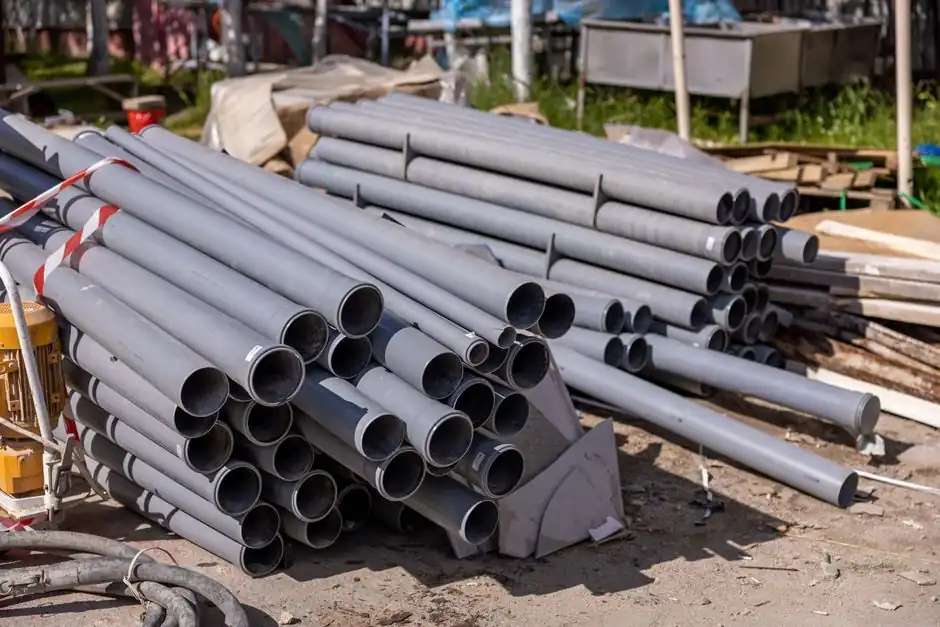
Reverse osmosis (RO) membranes in the 2026 industrial supply chain remain dominated by thin-film composite (TFC) structures built on a cross-linked fully aromatic polyamide separation layer, with a sub-μm protuberance morphology and sub-nm water channels dictating both water flux and solute rejection [S1].
Seawater desalination and wastewater reclamation account for the largest deployment volumes, while analytical laboratories and pharmaceutical water reuse are emerging as a second, higher-purity demand axis for the same membrane chemistry [S1][S2]. Specification work in 2026 is therefore pivoting from a single "rejection vs. flux" decision to a multi-axis gate that includes chlorine tolerance, biofouling control chemistry, and trace-organics analytical compatibility [S3].
Core chemistry: polyamide TFC remains the supply baseline
The functional layer of a standard RO membrane is a cross-linked fully aromatic polyamide formed by interfacial polymerization, characterized quantitatively by sub-μm protuberance structures and sub-nm water channels that have been mapped by advanced TEM, neutron scattering, and molecular dynamics [S1]. Water molecules in the water-rich polyamide system stay well connected to one another to form continuous channels, a structural finding that directly underpins the permeability ceiling that 2026 procurement teams work against [S1].
Hydrated structures form by complex intermolecular interactions between polymer chains and water molecules, and the relationship between protuberance morphology and membrane performance has been quantified in peer-reviewed work, giving specifiers a defensible link between nanoscale geometry and plant-level flux [S1].
Polyester TFC: the chlorine-resistant alternative gaining spec weight
Polyamide TFC membranes structurally deteriorate under continual exposure to active chlorine, the standard biocide used in municipal supply, wastewater reuse, and seawater desalination pretreatment, which is the single most cited service-life constraint in 2026 RO tenders [S3]. A 2021 Nature Sustainability study demonstrated a poly(isophthalester) TFC RO membrane fabricated by layer-by-layer interfacial polymerization of 3,5-dihydroxybenzoic acid with trimesoyl chloride, achieving 99.1 ± 0.2% salt rejection and 2.97 ± 0.13 L·m⁻²·h⁻¹·bar⁻¹ water permeability after biofouling-prevention chlorination at 50 mg/L NaOCl for 15 min [S3].
Mechanistically, strong steric hindrance and an electron-withdrawing group in the polyester backbone prevent direct aromatic chlorination, while residual OH groups are capped with isophthaloyl dichloride to preclude reaction with active chlorine, a design logic distinct from polyamide surface coating approaches [S3]. For plants that dose chlorine routinely for biofouling control, this chemistry class is the credible path to multi-year element life without sacrificing salt rejection; for plants that already dechlorinate upstream with sodium metabisulfite, conventional polyamide remains the lower-cost baseline [S3].
Selection criteria by duty point: seawater, brackish, reuse, and analytical
For seawater desalination duty, the operating envelope is set by feed TDS of roughly 35,000 mg/L and applied pressures typically 55-80 bar, where standard polyamide elements continue to dominate the qualified supplier list and the focus is on energy recovery device pairing rather than membrane chemistry substitution [S1]. For brackish groundwater and industrial reuse, where feed TDS commonly sits 1,000-10,000 mg/L and operating pressure falls to 10-30 bar, the trade-off between flux and rejection is more sensitive, and boron rejection targets above 90% frequently push specifiers toward seawater-grade elements run at lower recovery [S1].
For wastewater reuse with direct or indirect potable reuse targets, chlorination tolerance becomes a procurement gate because most utility RO trains run intermittent chlorine shock to control biofouling, and polyamide lifetime is then capped by cumulative chlorine exposure, not by flux decline, which is where the polyester chemistry begins to displace incumbent TFC [S3]. For analytical and pharmaceutical water duty, RO membrane-based pretreatment has been validated for concentration and clean-up of N-nitrosodimethylamine (NDMA), a carcinogenic constituent found in recycled water, with the membrane step enabling continuous monitoring of trace-level organics in high-matrix samples [S2]. Reference sizing math on imported elements uses 1 in = 25.4 mm, 1 ft = 304.8 mm, 1 ft² = 0.0929 m², and membrane pore size typically expressed in 10⁻⁶ in = 2.54 × 10⁻⁶ mm, unit conversions that procurement should lock into RFQ templates to avoid element-fit errors on retrofit skids [S4].
Standards, failure modes, and what is NOT in the data
No industry-wide standard revision date for RO membrane performance test conditions is established in the research material reviewed, and the peer-reviewed literature emphasizes morphological and chemical descriptors over standardized benchmark revisions [S1][S3]. Failure modes most consistently identified in the underlying studies are polyamide structural deterioration under active chlorine, flux decline linked to biofouling and compaction, and trace-organic breakthrough in analytical configurations where the membrane is used as a clean-up step rather than a barrier [S2][S3].
What the 2026 research does not establish is a market-share split between polyamide and polyester chemistries, a region-by-region installed-base figure, or any single supplier's percentage of global RO element capacity; any such number in marketing material should be treated as unverified against the underlying science [S1][S3]. For procurement, the engineering gate that holds across all chemistries is the morphological correlation between sub-μm protuberance geometry, sub-nm water channel connectivity, and field flux/rejection, which is the only quantitative link between a membrane's measured performance and its nanoscale design [S1].
Procurement and engineering links across the broader industrial chain
RO membranes are part of a wider treatment and materials chain, and 2026 specifiers increasingly run RO selection in parallel with upstream feed screens and downstream reuse trains rather than as a stand-alone purchase; a full upstream feed and downstream reuse chain map for 2026 is available in the membrane water treatment chain guide, and RO skid instrumentation is commonly a magnetic flow meter price 2026 decision, while high-purity analytical trains may also use a Coriolis flow meter selection guide for the concentrate recirculation line. Adjacent process data on thermowell assembly price is useful for RO skid temperature and pressure instrumentation, and reference material on waterproof membrane selection can help distinguish building-envelope membranes from process-water RO elements that look superficially similar in supplier catalogs. [S1]
For utilities and EPC teams operating in cold or chemically aggressive environments, adjacent material gates for structural and process components, including cold chain pallet rack selection and engineering plastic selection, share the same chemistry-versus-environment logic that governs chlorine-tolerant RO selection, which is why procurement teams increasingly bundle these specification decisions into a single review cycle.
Trackable signals for the next procurement cycle: peer-reviewed publication of full-scale poly(isophthalester) retrofit data at municipal reuse plants beyond the 50 mg/L NaOCl bench test, and any supplier datasheet revision that publishes protuberance morphology metrics alongside flux and rejection rather than flux alone [S1][S3].
For the relevant spec sheets and selection criteria, see modified bitumen membrane, and power supply.