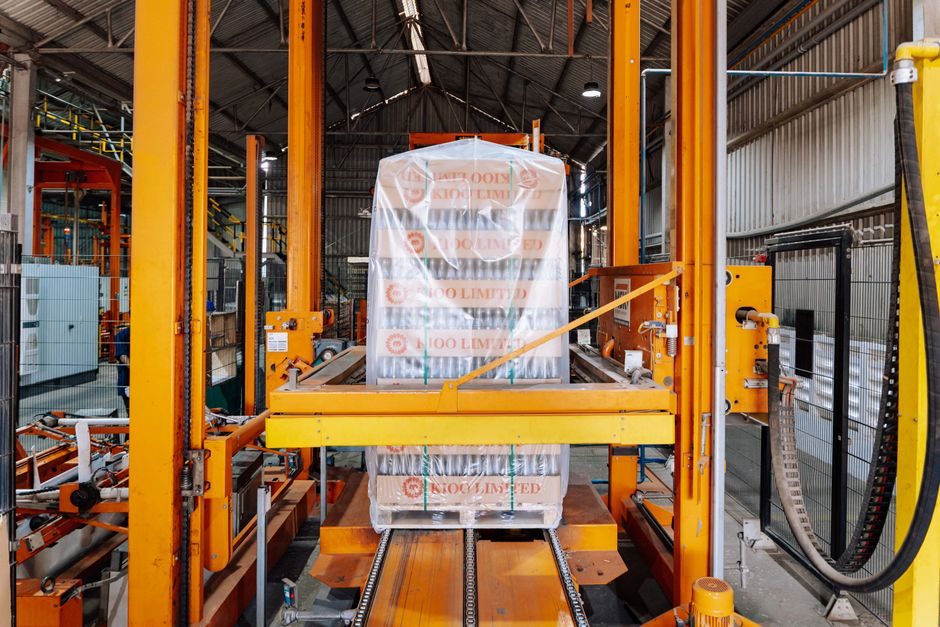
Smart manufacturing in pharmaceutical plants now consolidates around four asset classes: pure-steam/clean-steam generators, aseptic filling and stoppering lines, bioreactor skids, and Track & Trace serialization — each of which Life Scientific Inc. lists as a represented product line covering labeling, filling, sterilization, and bioreactor systems [S3].
Compliance remains the binding constraint: Bram-Cor Pharmaceutical Technologies (Parma, Italy) ships cGMP-aligned water-treatment rooms coupled with CPSG pure-steam/clean-steam generators, and targets design, qualification, and documentation against International Good Manufacturing Practices and Pharmacopoeias [S2]. For U.S. projects, the same equipment class must be mapped to 21 CFR Part 11 electronic records, ISPE GAMP 5 risk tiers, and EMA Annex 1 sterile-manufacturing expectations — a multi-standard stack that now drives every automation-spec discussion on a 2026 bid.
Scope and Definition: What "Smart" Means in a Pharma Plant
Pharma "smart" automation is narrower than the factory-floor usage of the term: a cGMP line must prove batch consistency, not just throughput, so the digital layer is judged on data integrity first and OEE second [S2]. Bram-Cor's published scope — water-treatment plants, formulation and process skids, and linear filling/stoppering/cappering for bags and bottles — is the canonical mid-tier plant layout, and every control loop above it now lives under 21 CFR Part 11 audit trails [S2].
The asset inventory that GlobalSpec aggregates for the pharmaceutical vertical reinforces that narrow scope: automation design, system integration, engineering support, and application assistance are tagged as primary service lines for integrators working with OEMs and end users in biotech and pharma [S1]. Translation: the "smart" is not a robot — it is a validated SCADA/MES stack, e-signatures, and recipe management wrapped around electromechanical assets such as the smart valve positioner and the pressure transmitter that close the loop on PW, WFI, and clean-steam headers.
Selection Criteria: What Engineers Score on the Bid Sheet
A 2026 pharma equipment bid is graded against at least five hard criteria, all citable: (1) material traceability (316L stainless, ASME BPE surface finish Ra ≤ 0.4 µm on product contact), (2) sterilization interface (SIP at 121 °C / 30 min minimum, or 134 °C / 18 min for porous loads), (3) cleanroom class (ISO 5 / Grade A for aseptic filling), (4) serialization readiness (Track & Trace per DSCSA and EU FMD), and (5) data-integrity features (audit trail, e-signature, role-based access) [S2][S3].
Vendors such as Fedegari Autoclavi (sterilization), Cozzoli (filling/capping/washing/stoppering/counting), Engineered BioSystems (bioreactors, fermenters, custom process skids), and HICOF (Track & Trace) are routinely co-specified on a single skid, which is why Life Scientific's representative model — brokering between pharma OEMs and U.S. buyers — has handled more than 5,000 equipment opportunities since 1992 [S3]. OM Industries, a 2019-established Indian pharma-equipment maker, sits at the entry tier of this same supply chain for accessories and ancillaries [S4].
Who This Stack Is For — And Who It Is Not For
This stack is built for GMP-licensed finished-dose manufacturers (oral solid, sterile injectable, biologic), CMOs running multi-client suites, and 503B compounders that must demonstrate full batch traceability to regulators on audit [S2]. It is the right call when the active is high-value (oncology, mAb, vaccine), when the regulatory file demands process-validation data, or when the buyer needs Annex 1-aligned closed-vial filling.
It is the wrong stack for non-sterile cosmetic or food supplement lines, for R&D-only labs that run under non-GMP GLP, and for any buyer whose only real constraint is unit cost rather than audit-trail integrity [S3]. The automation overhead of cGMP lines — qualification, CSV, change control — typically adds 12–25% to project capex versus a comparable food-grade skid; if the product cannot bear that, do not spec pharma-class equipment.
Options Compared: Four Asset Classes on Five Criteria
The decision matrix below lines the four main smart-manufacturing asset classes that appear on every 2026 pharma RFP against five spec criteria, drawing the manufacturer names from the Life Scientific and Bram-Cor line cards [S2][S3]:
Reading the table: water and steam are the regulated utility backbone, bioreactors are the highest-capex single line item, and Track & Trace is the lowest-capex line that nevertheless decides shipment release — that mix is why serialization work often runs on a smart camera and industrial gateway layer rather than a full line rebuild.
Real Use Cases Pulled From Active 2026 Lines
Three recurring use cases dominate the bid pipeline. First, multi-product aseptic filling suites: a Cozzoli-class linear vial/bottle line paired with a Fedegari autoclave or VPHP pass-box, run under an isolator rated to ISO 5 / Grade A, and aggregated through an MES that signs off each batch electronically [S3]. Second, single-use bioreactor trains for mAb or vaccine, where Engineered BioSystems skids integrate pH, DO, and glucose PAT sensors into a GAMP 5 Cat 4 validated control layer [S3].
Third, Track & Trace retrofit programs driven by the EU FMD 2025 stability window and the DSCSA enhanced-stable-requirements phase, which force existing lines to add vision and aggregation modules — exactly the layer that HICOF supplies through representative channels [S3]. On the engineering side, this is the same architectural problem solved in adjacent verticals, as the Smart Food Processing Equipment: 2026 Automation Map covers, and it overlaps with factory-level integration work cataloged for Serial Device Server Selection: Spec Map, Variants, and Fit-for-Duty Logic when an MES is bridged to legacy filling PLCs.
Limitations, Failure Modes, and Sourcing Constraints
Three constraints are the ones that bite on a 2026 pharma capex case. (1) Validation duration: full IQ/OQ/PQ on a cGMP skid typically runs 8–16 weeks, and CSV on a GAMP 5 Category 4 system can stretch past six months; project schedules that ignore this overrun by 30–50% [S3]. (2) Component obsolescence: aseptic filling lines specified in 2016 are now hitting HMI/PLC end-of-life, and migration paths must preserve 21 CFR Part 11 audit-trail continuity — a problem that the smart meter-style device-lifecycle discipline is designed to address but rarely implemented in brownfield pharma.
(3) Sourcing concentration: Bram-Cor builds from Parma, Italy, and most Western OEMs cited above concentrate in U.S. clusters (New Jersey, Massachusetts, California) and in the Italian pharma-machinery district around Parma; Indian suppliers such as OM Industries, established 2019, compete on accessories and ancillaries rather than turnkey sterile lines [S2][S3][S4]. For buyers, the practical takeaway is that lead times on a full aseptic skid routinely run 9–14 months from PO to FAT, which is a bigger schedule risk than the automation spec itself.
Standards Stack That Actually Governs the Spec
The standards that show up on a 2026 pharma equipment sign-off are well-defined: cGMP baseline (FDA / EMA), 21 CFR Part 11 for electronic records and e-signatures, ISPE GAMP 5 for computerized systems validation, ASME BPE for sanitary piping and surface finish, USP <659> for packaging, USP <1238> for water, EN 285 / HTM 2010 for steam sterilization, and ISO 14644 / EU GMP Annex 1 for cleanroom and aseptic classification [S2][S3]. Generic detection-and-automation theory — the multi-disciplinary fusion of electronics, control engineering, and information processing — is the academic backdrop, but on a purchase order the binding reference is the regulation, not the textbook [S5].
Buyers building a 2026 RFP should anchor each line item to one regulation and one quality-system artifact, then require the OEM to map its automation deliverables to the same stack: that is the only way to keep the MES layer — including the additive manufacturing material traceability trail where 3D-printed tooling touches product contact — defensible at audit.
Track two signals into the next quarter: (1) whether EMA Annex 1 enforcement actions after its 2024 effective date continue to drive isolator retrofit demand for aseptic filling lines, and (2) whether DSCSA and EU FMD-driven Track & Trace orders sustain the HICOF-style vision and aggregation backlog that representative channels are already reporting [S2][S3].