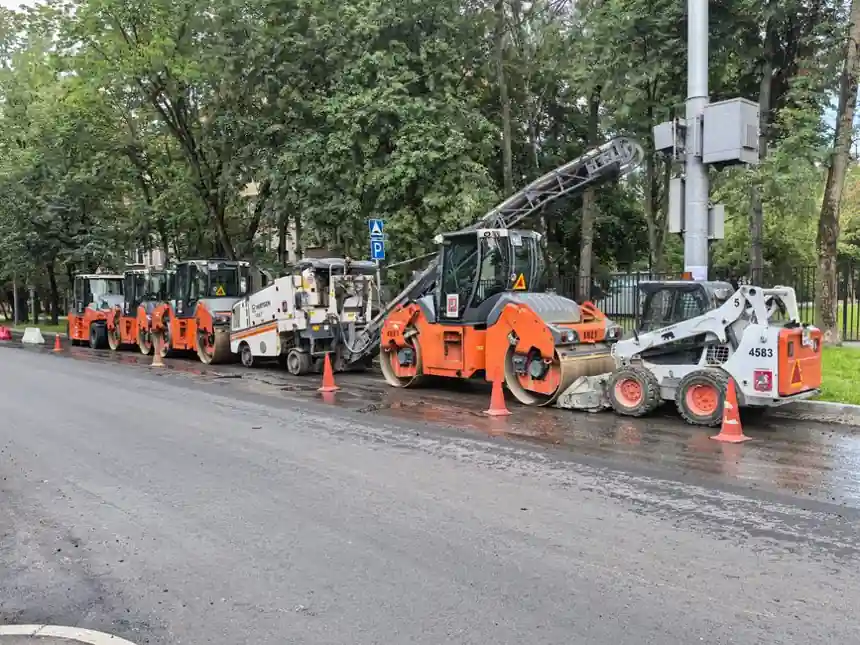
A disciplined road roller commissioning procedure runs in four layers, visual walk-around, fluid and system checks, cold-engine startup, and low-speed functional verification of steering, braking, and vibratory circuits, before any production pass is allowed on lift one [S3][S1].
Roller class matters: single-drum, tandem, and pneumatic-tire machines share the same logic but differ on drum wear checks, water-spray system verification, and tire-pressure targets; a road roller reference is the fastest way to lock the machine class before writing the ITP.
Pre-startup walk-around and fluid checks
A documented daily visual inspection must verify drum surface condition (no flat spots, dents, or cracks), scraper bar cleanliness against the drum, and the lubrication state of all moving parts, with any leak path flagged before ignition [S1][S3]. Hydraulic hoses, fittings, and the steering circuit are checked for leaks, chafe, and uneven fluid level, and the operator's manual is consulted before any top-up because recommended grades vary by make and model [S1]. On pneumatic-tire rollers, the release-agent tank level and water-spray pump function are verified; a failed spray system causes drum pick-up, which translates directly into cracked or uneven mat surfaces [S1].
Fuel and engine oil levels are confirmed within the OEM band, and the cabin is cleared of debris so mirrors and windows give full visibility before any movement command is given [S3].
Startup sequence and engine warm-up
Operator mounting uses steps and handrails, never a jump, and the seatbelt is fastened before the key turns [S3]. The parking brake is verified fully engaged, the transmission is confirmed in neutral, and the engine is allowed to idle for several minutes, longer in cold weather, so oil pressure stabilises across bearings and the hydraulic charge circuit before load is applied [S3].
On vibratory rollers, the vibration system is engaged only after the engine has reached operating temperature and the parking brake test has been signed off; engaging vibration on a cold drum against a loaded mat is a common cause of bearing and exciter-shaft damage [S3].
Steering, brake, and service-brake commissioning
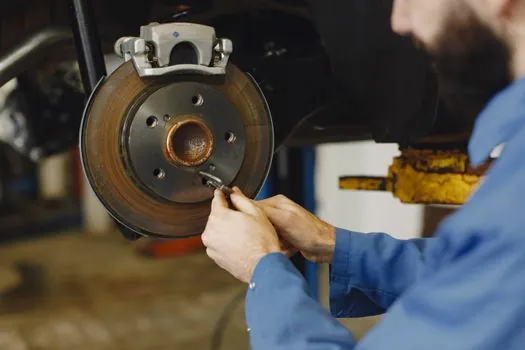
Two distinct brake tests are required at first start of shift, parking brake and service brake, and both must be logged [S1]. The parking brake test confirms the machine holds on the rated grade without drift; the service brake test confirms stopping distance and feel under a low-speed run, with any pulling, sponginess, or excessive pedal travel flagged for hydraulic investigation [S1].
Steering is checked by turning the wheel lock-to-lock at idle, listening for pump cavitation, unusual noises, and excessive free play; any of these symptoms routes the machine to maintenance, not production [S1]. Lights, alarms, reverse indicator, and the seatbelt switch are then energised one by one, since site regulations typically require all audible-visual devices functional before the unit is released to the work face [S3].
Vibratory circuit and compaction-function verification
For vibratory rollers, the commissioning step that catches the most field failures is a no-load amplitude/frequency check on a flat pad, confirming that the eccentric weights rotate evenly, that the dual amplitudes (low/high) both engage from the cab, and that the dashboard readout matches a handheld tachometer reading on the exciter housing [S3]. Uneven vibration across the drum typically points to a failed exciter bearing, a loose weight bolt, or a hydraulic motor imbalance, and the machine stays parked until the cause is documented [S3].
Uniform drum pressure is the next check: a static load test on a calibrated scale pad confirms that the wheel load falls within the OEM band for the target lift thickness, and that left/right split on a tandem does not exceed the published tolerance [S3].
Drum, scraper, and water-spray commissioning

Drum replacement and reassembly follow a defined sequence, pre-replacement preparation, controlled disassembly, and torque-checked reassembly, with scraper-to-drum clearance set to the OEM gap so that built-up material cannot drag across the freshly placed mat [S2]. A water-spray commissioning pass confirms even coverage across the full drum width at idle and at working speed; streaky coverage is a direct indicator of clogged nozzles or a failing pump and is corrected before any asphalt lift is rolled [S1][S2].
First production pass and acceptance criteria
First-pass acceptance is density-based, not visual: a nuclear gauge or sand-cone reading on a test strip must hit the specified relative compaction (commonly 92-97% of maximum dry density for subgrade and base, 95-98% for asphalt lifts) before the roller pattern is approved for production [S3]. Pattern variables that must be recorded are speed (typically 2-5 km/h for vibratory on asphalt), number of passes, vibratory on/off, and overlap, with one log line per lift so a spec auditor can reconstruct the compaction energy delivered [S3].
For a project-scale reference, the same disciplined cold-start-to-first-pass logic used here is also applied to other commissioning-heavy equipment, and a recent spec-first walkthrough of cut-off machine commissioning shows the same checklist-and-gate structure. Plant and yard equipment selection also feeds in: a compact wheel loader feeding the roller must be sized to keep the roller moving at a steady, non-stop pace, or the mat cools and the density window closes.
Who this procedure is for, and where it falls short

This sequence is built for site engineers and OEM service techs commissioning a single-drum soil compactor, a tandem asphalt roller, or a pneumatic-tire roller on a new project; it is not a substitute for the model's service manual, which must remain the controlling document for torque values, fluid grades, and controller passwords [S1][S3]. It is also not adequate for high-frequency tamping rollers or for rollers equipped with intelligent compaction (IC) GNSS-mapped systems, where additional calibration of the ICM accelerometer and temperature sensor is required before the first mapped pass [S1].
Trackable next nodes: (1) lock the model-specific service manual section to the ITP before mobilization, (2) capture a baseline nuclear-density reading on the test strip within the first 24 hours of production rolling, and (3) log the first exciter-bearing temperature after 50 operating hours as the trend baseline for the rest of the project [S1][S2][S3].
Spec-level background on the components involved: tensile testing machine, and construction machinery and equipment.